Mamdani denounces Hamas chants, but his delay draws scrutiny
The New York City mayor’s delayed condemnation of pro-Hamas chants has Jewish New Yorkers — and some allies — wondering what guardrails are in place
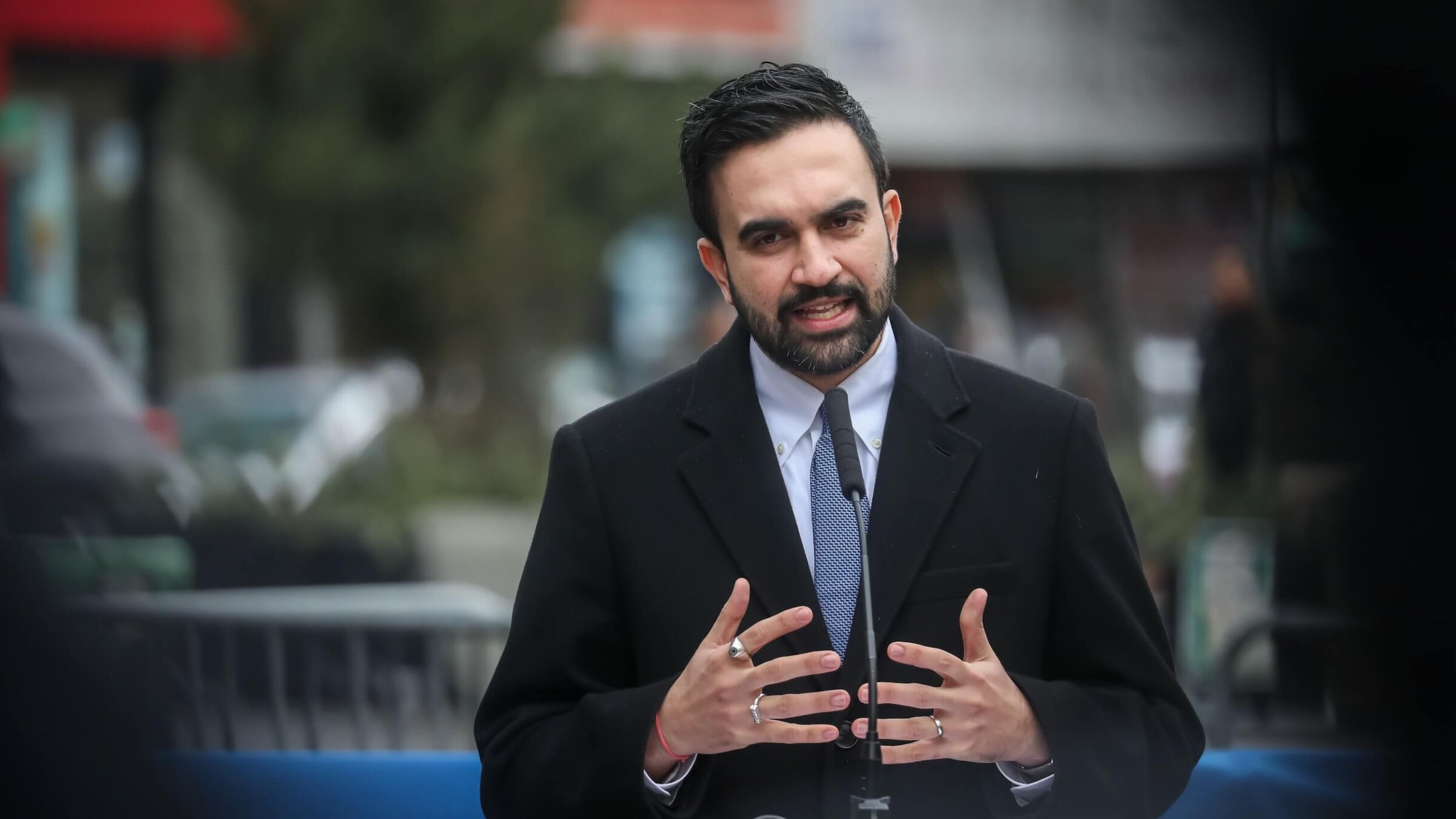
New York City Mayor Zohran Mamdani on Jan. 7. Photo by Michael Nagle/Bloomberg via Getty Images

By Jacob Kornbluh January 11, 2026
New York City Mayor Zohran Mamdani is facing mounting scrutiny after a delayed response to a protest in which demonstrators chanted pro-Hamas slogans. The episode reopened lingering doubts among Jewish leaders and voters who have watched Mamdani stumble through earlier flashpoints.
In a statement shared with reporters Friday evening, Mamdani condemned the language used during a protest outside a Queens synagogue Thursday night. The demonstration targeted an event promoting real estate investment in Israel, including in the Jewish community of Ma’ale Adumim, a settlement in the occupied West Bank, and featured chants of “Say it loud, say it clear, we support Hamas here.”
Mamdani said the rhetoric and displays at the protest were “wrong and have no place in our city.” An hour later, amid criticism that he had not explicitly named Hamas, he followed up in a post on X, “Chants in support of a terrorist organization have no place in our city.”
It echoed a similar episode after Mamdani’s election in November, when he issued a mixed response to a demonstration outside Manhattan’s Park East Synagogue that featured anti-Israel and antisemitic slogans. He initially questioned the use of a sacred place for an event promoting migration to Israel. He later clarified his statement and said he would consider legislation limiting protests outside synagogues.
Critics said the response, which took nearly a day, was slow and undercut Mamdani’s repeated pledges to protect Jewish New Yorkers, and raised fresh questions about what kind of mayor he intends to be. New York City is home to the largest concentration of Jews in the United States. New York Police Department data shows that antisemitic acts made up 57% of all reported hate crimes citywide in 2025.
A week earlier, on his first day in office, Mamdani — a democratic socialist whose strident criticism of Israel deepened rifts within New York City’s Jewish community during the election — had already drawn criticism from mainstream Jewish organizations for revoking two executive orders by former Mayor Eric Adams that adopted a controversial definition of antisemitism that includes some forms of anti-Zionism, and another penalizing city contractors who engaged in boycotts of Israel.
Mamdani’s response to the Thursday night Hamas chants was issued around 5 pm on Friday. By the time, many Shabbat-observant New Yorkers did not see the mayor’s condemnation until Saturday night.
Some allies who accepted Mamdani’s ideological position privately expressed surprise that the mayor did not immediately denounce the chants, given the predictability of the backlash and the stakes involved. During the election, Mamdani came under fire for his refusal to explicitly condemn the “globalize the intifada” slogan used at some pro-Palestinian protests, perceived by many as a call for violence against Jews.
Adam Carlson, a political polling and research expert, called Mamdani’s statement denouncing the Hamas chants reasonable but “not perfect,” after spending much of the day criticizing the mayor’s lack of response, even as Democratic elected officials and some of Mamdani’s progressive allies issued fierce condemnations. “This is not only hurtful to me,” Carlson wrote on X, “but it’s bad politics and distracts from his agenda.”
Former City Comptroller Scott Stringer, who is Jewish and ran in last year’s Democratic mayoral primary, was even more blunt. “I have never been as concerned about the direction of our city as I am today,” Stringer said in an interview. “We are not up to a strong start in bringing the city together.”
Stringer, who was an active leader in combating anti-Muslim hatred after 9/11, said he had hoped that Mamdani would focus on affordability and issues that unite New Yorkers across communities. “But if that’s not to be, then we will fight politically,” he said. He pointed to the upcoming June primaries for Congress and the State Assembly, in which some of Mamdani’s socialist allies — and candidates he has endorsed — could pay a political price. In New York, Stringer said, “we are at the epicenter of Jewish hate, and we’re not going to stand down and allow this to unfold without a political response.”
Speaking with reporters on Saturday, Mamdani declined to address why he didn’t respond immediately, but said his statement was “consistent with my own politics and my own policies.”
A recent poll found that 55% of non-Jewish voters in New York City say Jewish concerns about feeling threatened by Mamdani’s statements on Israel are an overreaction fueled by politics. By contrast, among a smaller sample of 131 Jewish respondents, 53% say they have reason to feel that way, given Mamdani’s statements and associations.
What other city leaders said
While Mamdani remained silent through much of Friday, other city leaders moved quickly. City Council Speaker Julie Menin, City Comptroller Mark Levine, Gov. Kathy Hochul and Attorney General Letitia James all issued statements strongly condemning the pro-Hamas chants.
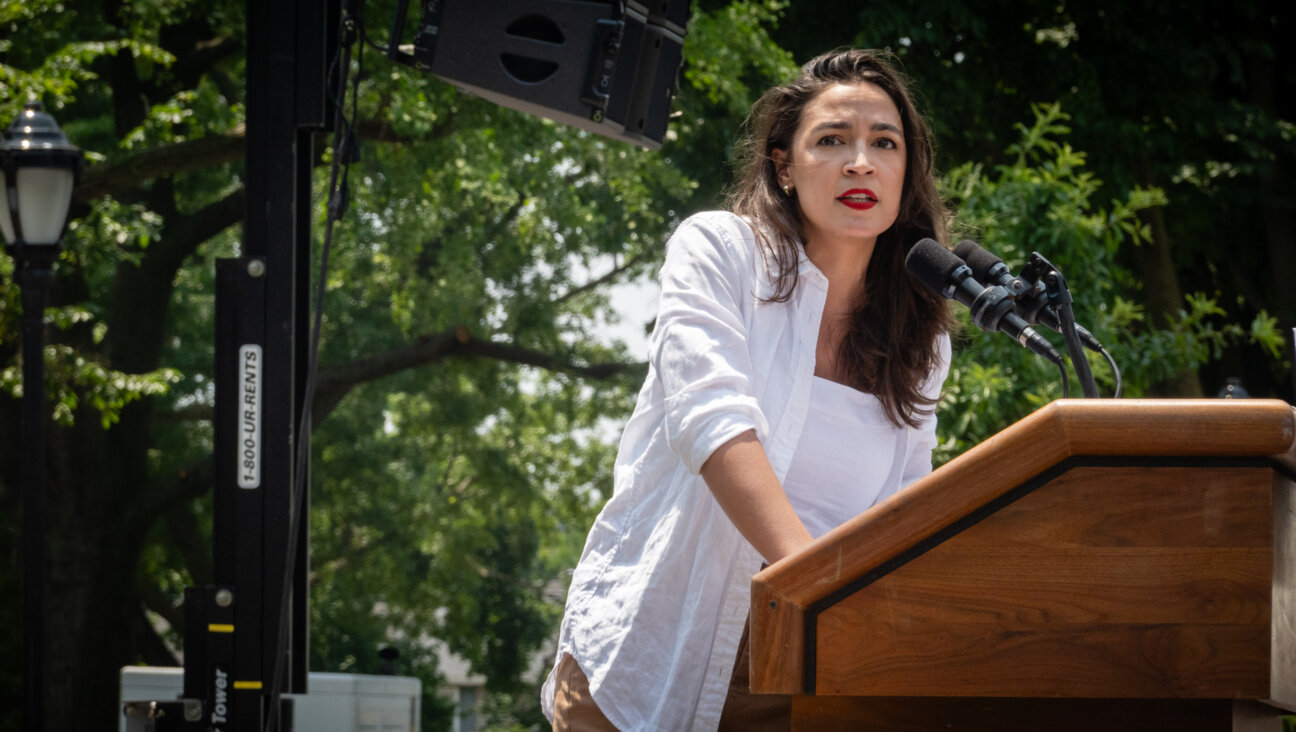
Rep. Alexandria Ocasio-Cortez — Democrat from New York and, like Mamdani, a critic of Israel — called the protest antisemitic. “Hey so marching into a predominantly Jewish neighborhood and leading with a chant saying ‘we support Hamas’ is a disgusting and antisemitic thing to do,” she posted on social media Friday. “Pretty basic!”
Speaking Friday night at Park Avenue Synagogue in Manhattan, Menin, who is the first Jewish speaker in the council’s history, was cautious but optimistic about collaborating with Mamdani on issues related to antisemitism in Israel.
“The Torah reminds us that leadership does not emerge from a place of peace, but from a place of struggle,” Menin told congregants. “When it comes to fighting for our Jewish community, I promise I will be the leader that you can count on — one who stands up to hate, who is not afraid to speak out, and who will not look away when it is uncomfortable or inconvenient.”
Levine, who is also Jewish, said, “There is no ambiguity” in condemning the support of a terrorist organization. “This cannot be normalized or excused,” he wrote on X. “Truly reprehensible.”
Hochul, who is running for reelection this year, said in a joint appearance with Mamdani last week that in her upcoming State of State address on Tuesday, she will announce safety zones around houses of worship “where people can go freely to a safe place without threats of violence or protests.”
Correction: An earlier version incorrectly included the city of Modi’in, which is located inside the Green Line.
This is a moment of great uncertainty. Here’s what you can do about it.
We hope you appreciated this article. Before you go, we’d like to ask you to please support the Forward’s independent Jewish news this Passover. All donations are being matched by the Forward Board - up to $100,000.
This is a moment of great uncertainty for the news media, for the Jewish people, and for our sacred democracy. It is a time of confusion and declining trust in public institutions. An era in which we need humans to report facts, conduct investigations that hold power to account, tell stories that matter and share honest discourse on all that divides us.
With no paywall or subscriptions, the Forward is entirely supported by readers like you. Every dollar you give this Passover is invested in the future of the Forward — and telling the American Jewish story fully and fairly.
The Forward doesn’t rely on funding from institutions like governments or your local Jewish federation. There are thousands of readers like you who give us $18 or $36 or $100 each month or year.
Support our mission to tell the Jewish story fully and fairly.