Reese’s Pieces are now kosher pareve. Carnivores rejoice.
A morsel of good news for kosher consumers
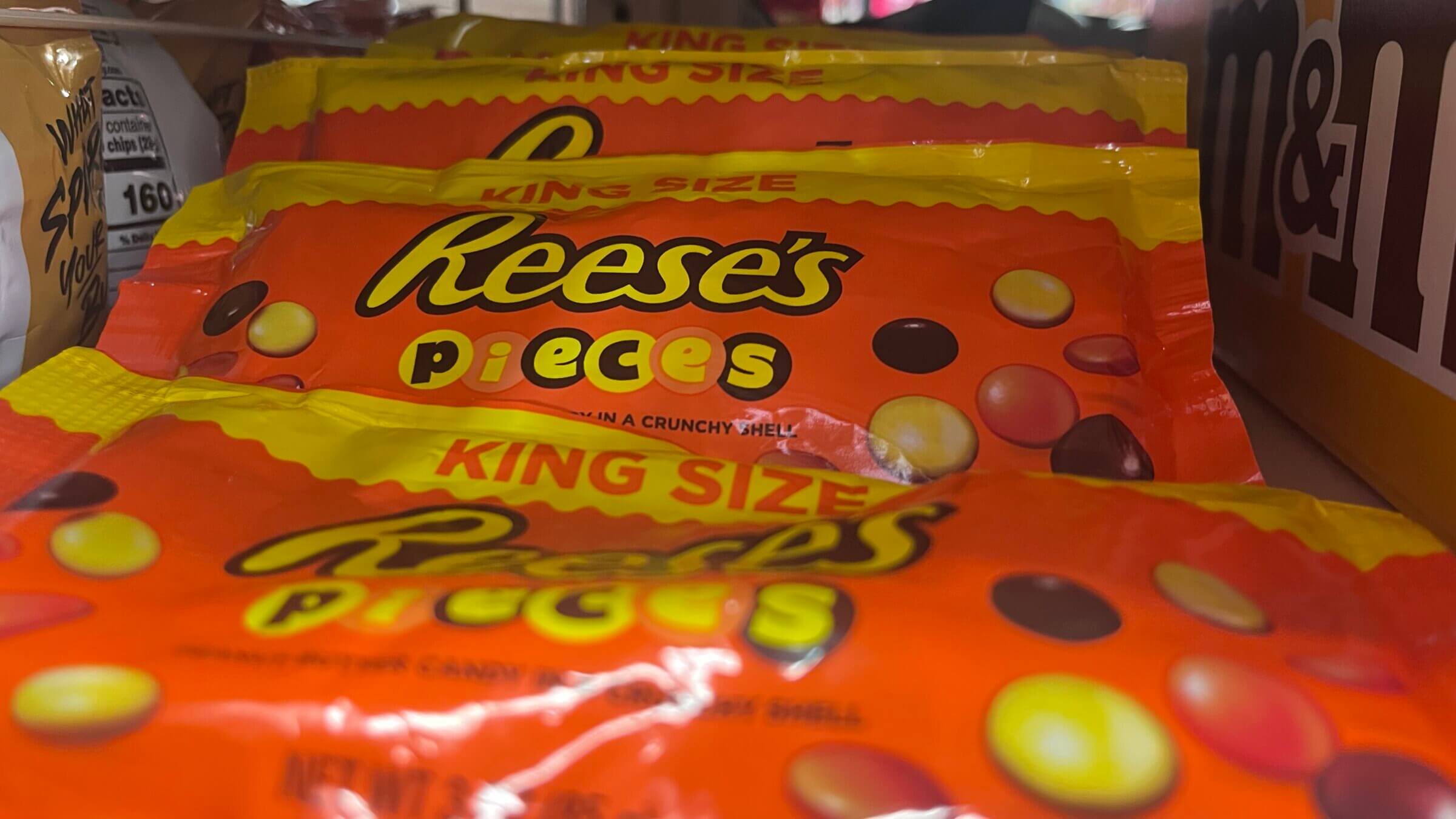
It’s gonna be weird having these after a burger. Photo by Louis Keene

By Louis Keene March 26, 2026
Antisemitism is on the rise. There’s a war raging in the Middle East. Passover is bearing down on us and gas prices are higher than ever.
And yet one morsel of good news came to Jewish faithful this month: Reese’s Pieces are now certified kosher pareve.
OU Kosher, the largest kosher certifier in the U.S., announced March 12 that the candy-coated peanut butter candies are no longer considered dairy despite packaging that labels them as such.
The implications for kosher consumers are as momentous as they are simple: Reese’s Pieces can be eaten immediately after meat — or for the deeply adventurous stomach, alongside it — without the hourslong period Orthodox Jews wait before eating dairy again.
The status change unfolded over the last year, when Reese’s parent corporation, the Hershey Company, informed OU Kosher that it was changing the candy’s ingredients.
“Reese’s decided on their own that there are a lot of consumers that don’t like the fact that it’s dairy,” explained Rabbi Moshe Elefant, OU Kosher’s chief operating officer. “Once they decided that they’re removing the dairy from Reese’s, it became a great possibility for them to be OU-Pareve.”
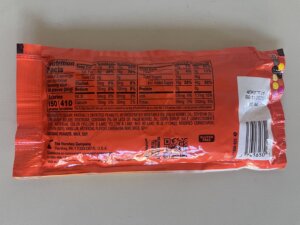
Reese’s Peanut Butter Cups and other Reese’s brands remain dairy, and Elefant said the Reese’s Pieces packaging, which currently shows OU-D, will be updated later in 2026. For those concerned about any old bags lying around, the OU said to check the ingredient list or allergen statement — if it doesn’t include milk, you’re good.
The change occurs amid wider changes in Hershey, Pennsylvania, where the company that makes Reese’s is headquartered. Some Reese’s products, like the Reese’s Mini Hearts and Peanut Butter Eggs, are no longer being made with milk chocolate due to the rising cost of cocoa, inciting controversy and drawing criticism from the Reese’s family. (Those candies remain certified dairy because they contain other milk ingredients, the OU said.)
Reese’s Pieces, on the other hand, never had chocolate in them to begin with.
Meanwhile, the OU Kosher hotline had fielded countless phone calls in recent weeks from home chefs about the change — some to verify the update, and some just to say thanks. The last time there was this much excitement over a status change, Elefant said, was when Oreos became kosher. (The cookies contained animal fat until the late 1990s.)
The Forward reached out to the Hershey Company for comment.
Elefant said there had been some debate within OU Kosher — which is a branch of the Orthodox Union, a leading umbrella organization for Orthodox Judaism — about whether to announce the candy’s pareve kosher status before the candy’s packaging itself could be updated. The organization’s advisory essentially instructs consumers to temporarily ignore the “D” on the packaging.
His team considered whether it would undermine the OU’s authority or confuse people to practice disregarding the certification printed on the product. But on some level, the decision was made for them.
“This is one of the situations where we had to think about the welfare of the Jewish people,” Elefant said. “And the welfare of the Jewish people was that they need Reese’s to be pareve.”
Kosher consumers typically wait between three and six hours after eating meat to have dairy; now one could get a hamburger on the way to the movies and then house fistfuls of the classic peanut-butter candy in the theater. Watching E.T.: The Extraterrestrial, perhaps. (I’m not saying this is healthy. Just that it’s kosher.)
But the impact will likely be received most gratefully on Shabbat, when meat-based meals force dessert makers to get creative. And while the bite-sized brown, orange and yellow rounds have always been kosher, Reese’s Pieces becoming pareve means Jews who observe cholov yisroel restrictions — only consuming milk that was milked by a Jewish person — can enjoy them now, too.
Time will tell whether the update truly transforms kosher baking — or turns Reese’s Pieces into a de facto pareve chocolate chip — but a new, easy-to-find garnish for any confection was sweet on the ears of OU Kosher’s Instagram followers.
“YESSSSS! This is a win for the non-dairy queens like me!!!” wrote one.
Said another, using a Jewish name for God: “This is how I know Hashem loves me.”
This is a moment of great uncertainty. Here’s what you can do about it.
We hope you appreciated this article. Before you go, we’d like to ask you to please support the Forward’s independent Jewish news this Passover.
This is a moment of great uncertainty for the news media, for the Jewish people, and for our sacred democracy. It is a time of confusion and declining trust in public institutions. An era in which we need humans to report facts, conduct investigations that hold power to account, tell stories that matter and share honest discourse on all that divides us.
With no paywall or subscriptions, the Forward is entirely supported by readers like you. Every dollar you give this Passover is invested in the future of the Forward — and telling the American Jewish story fully and fairly.
The Forward doesn’t rely on funding from institutions like governments or your local Jewish federation. There are thousands of readers like you who give us $18 or $36 or $100 each month or year.
Support our mission to tell the Jewish story fully and fairly.