This Passover, try a big, glorious spring salad for the karpas
Instead of that sad leaf and salt water, use foraged and home-grown greens
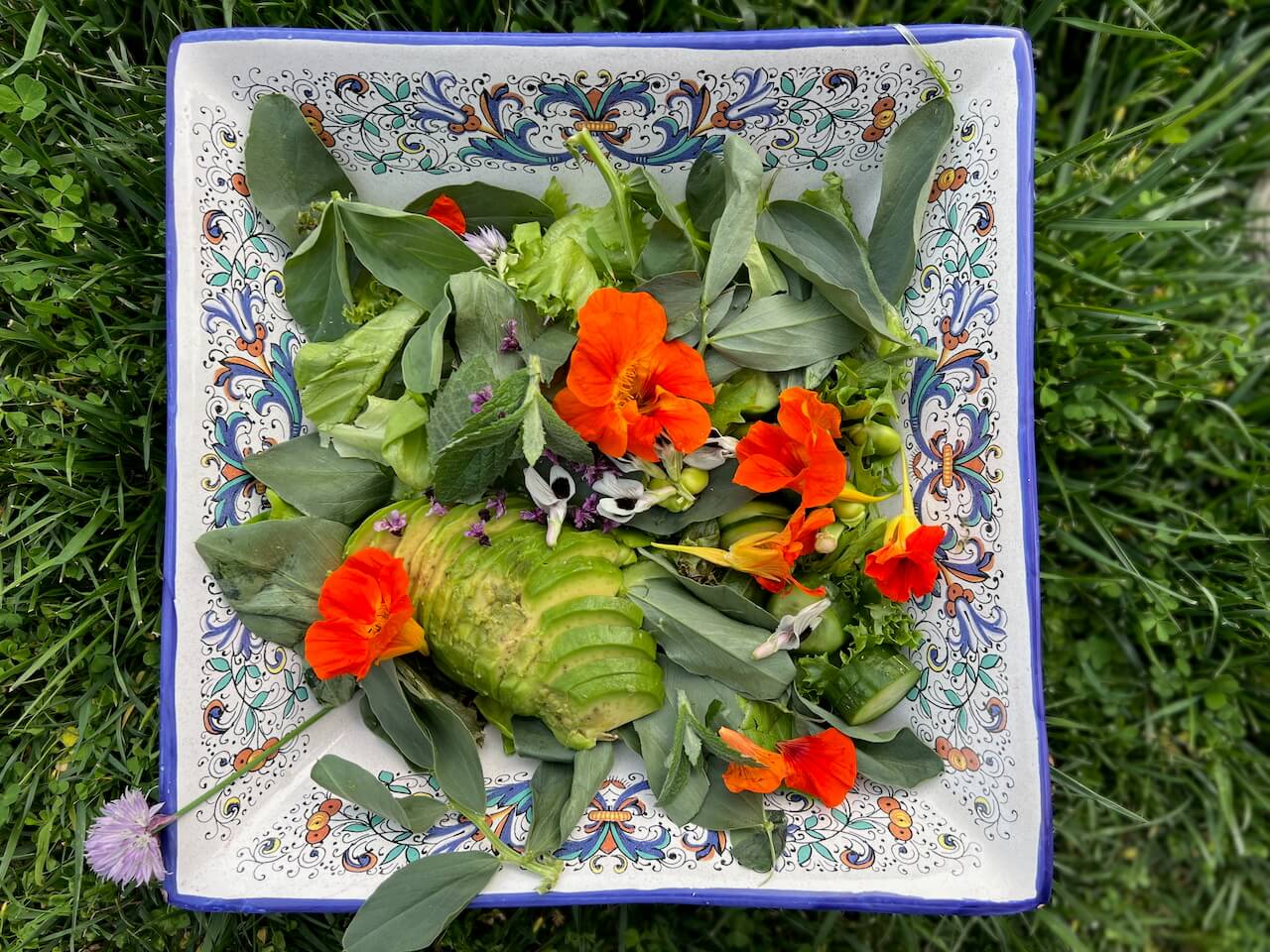
A Passover salad with nasturtium, wild and homegrown green and herbs and avocado. Photo by foodaism.com

By Rob Eshman April 7, 2025
In the waning days of COVID-19, my wife and I held our Passover seder at a long table in our backyard, and it occurred to me — Passover really wants to be outside.
That year, 2022, instead of passing out a single leafy vegetable for the karpas ritual, I served a plate of colorful salad — some foraged, some homegrown and some store-bought. I picked many of the ingredients from my vegetable garden, not a foot away from where we sat, sang and ate.
The karpas salad turned out to be one of the few unforeseen benefits of the global pandemic, along with increased outdoor restaurant seating and — well, that’s about all.
That experience did lead me to wonder if Jews have it all wrong. We eat outside on Sukkot, in late fall, just as the weather gets cold and rainy. But, on Passover, as the days lengthen and the weather warms, we spend hours inside cleaning, cooking and sitting around the table.
The karpas salad was my way of deepening the connection of the holiday to nature, of bringing spring to the table.
Karpas is the part of the seder ritual when, traditionally, Jews dip a leafy vegetable — usually a bit of lettuce, parsley or celery — into salt water, which symbolizes the tears of the Israelites in slavery. The blessing we recite over the dipped karpas for the One “who creates the fruit of the earth,” speaks to all of spring, when the dead land reawakens and brings forth food. One sad piece of parsley just doesn’t do that miracle justice, but a big, beautiful salad does.
Plus, the karpas ritual comes about a third of the way through the seder reading, meaning the full dinner is still many pages of Haggadah away. Your guests could use a little sustenance by then. I serve the dressing on the side so people can dip first, as the ritual demands.
The karpas salad provides a satisfying, sensory course and, like so many parts of the seder, the salad can provoke questions: What’s that flavor? Where did you find that herb? How do you grow it?
The answer is that some of the ingredients you forage, some you buy, and some you grow yourself.
And if someone asks, “Why bother to garden?” I like the answer the essayist Rebecca Solnit once gave:
“If war has an opposite,” she wrote, “gardens might sometimes be it.”
Wild Karpas Salad
(Serves four)
- 2 cups mixed wild and domestic greens (dandelion, purslane, celery leaf, mallow, watercress, arugula, fava bean leaves, pea shoots, sorrel, chickweed, mugwort)
- 1 cup mixed wild and domestic herbs (fennel, mint, tarragon, parsley)
- 1 handful edible flowers (nasturtium, chive blossoms, basil blossoms)
- 2 radishes, shaved
- 1/2 avocado, sliced
Dressing:
- 1/2 cup best-quality extra-virgin olive oil
- 1/2 teaspoon salt
- Pepper to taste
- 2 1/2 tablespoons fresh lemon juice or red wine vinegar
Make sure all the ingredients are well-washed and dry. Compose the salad ingredients in a large bowl and, if desired, plate individually.
Whisk together the dressing ingredients and distribute in small dipping bowls to the guests.
Please follow these ethical guidelines for sourcing wild ingredients safely and responsibly.
This is a moment of great uncertainty. Here’s what you can do about it.
We hope you appreciated this article. Before you go, we’d like to ask you to please support the Forward’s independent Jewish news this Passover. All donations are being matched by the Forward Board - up to $100,000.
This is a moment of great uncertainty for the news media, for the Jewish people, and for our sacred democracy. It is a time of confusion and declining trust in public institutions. An era in which we need humans to report facts, conduct investigations that hold power to account, tell stories that matter and share honest discourse on all that divides us.
With no paywall or subscriptions, the Forward is entirely supported by readers like you. Every dollar you give this Passover is invested in the future of the Forward — and telling the American Jewish story fully and fairly.
The Forward doesn’t rely on funding from institutions like governments or your local Jewish federation. There are thousands of readers like you who give us $18 or $36 or $100 each month or year.
Support our mission to tell the Jewish story fully and fairly.