How our Yiddish group uses the Forverts podcast to learn the language
For each text, I design activities to promote comprehension as I did when I taught Spanish to college students.

Photo by pexels
When the Iowa City Yiddish Group began meeting at the start of the COVID-19 pandemic, I was one of the absolute beginners. Six years later, I lead the enthusiastic group of some 12-15 retirees and produce lesson plans for each class that incorporate a variety of activities to promote listening and Yiddish speaking skills.
Each class draws from printed, auditory, and visual texts: songs, excerpts from interviews in the Wexler Oral History Project at the Yiddish Book Center, advertisements in old issues of Der Forverts, poems, folk tales, film clips, and the like. For each text, I design activities to promote comprehension, get students interacting with the text and with each other, and learn a bit of grammar, much as I did for many years when I taught Spanish to college students.
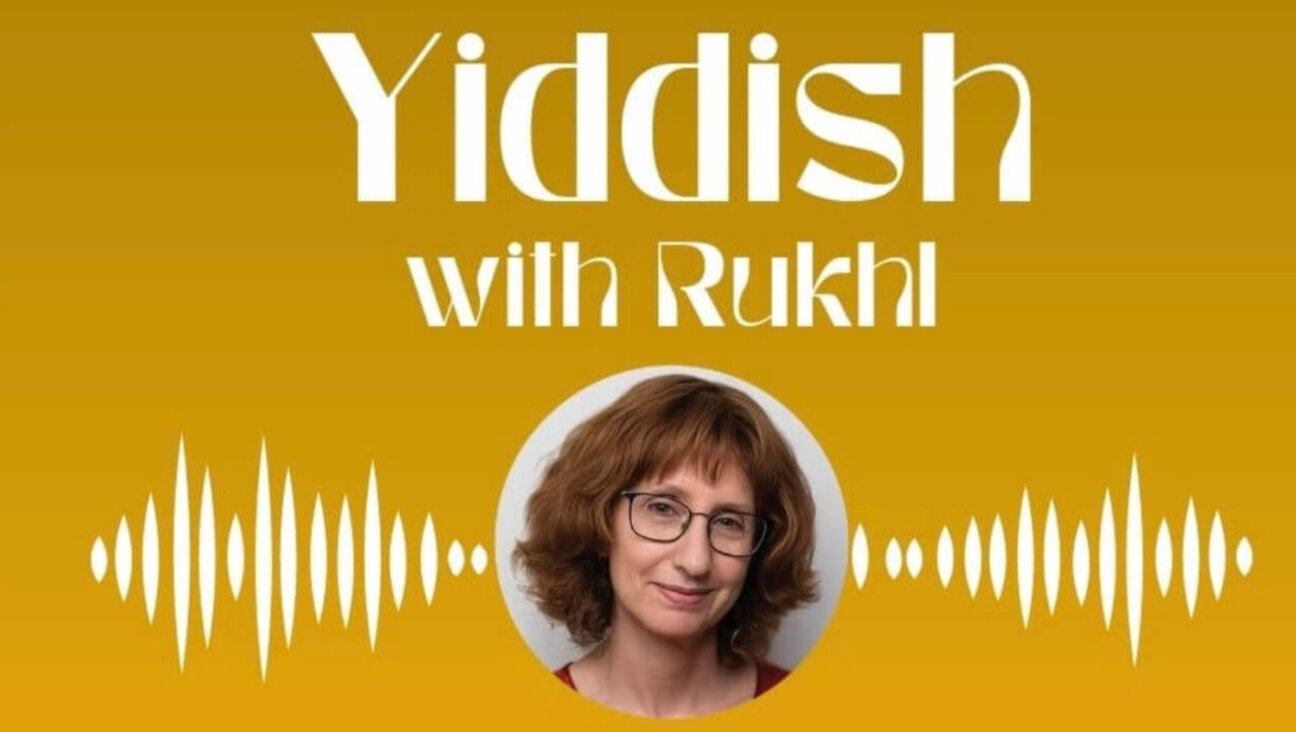
When I discovered that the Forverts had introduced a podcast intended for intermediate-level students, Yiddish with Rukhl, I knew I could use it to help the group learn.
One of the challenges of working with authentic texts — that is, texts produced by native speakers for native speakers, not for language learners — is that they are often frustratingly difficult for students. In addition, there are particular challenges with texts that students listen to rather than read or view, since listening happens in real time with no way to pause to look up a word or ask a question, nor can listeners rely on visual elements (as one could do with a film) to get clues to meaning. But Yiddish with Rukhl avoids those issues.
The format is straightforward: In each episode, editor Rukhl Schaechter reads two articles on a topic clearly at a relatively slow pace. Because the articles were previously published in the Forverts, I could use the audio recording and printed texts in tandem, which our group particularly appreciates.
A frequent topic of conversation among language teachers is how to come up with class activities that can bridge the gap between students’ comprehension levels and texts that the students would struggle to understand on their own. This is especially true for authentic texts, but also applies to any text students find somewhat difficult. With the first podcast episode, devoted to coffee, I created activities for the first half of the first article, Di kave-hoypshtot fun der velt (“The Coffee Capital of the World”) by Leyzer Burko.
This was my lesson plan:
- I started with a pre-listening activity, whose purpose was to introduce students to the themes of the audio text so that some of the information they would then hear would already be familiar to them. In this case, I wrote some open-ended questions to get the students talking (oyf yidish) about their feelings about coffee as children, their current coffee-drinking routines, and what the term kave-kultur means to them. The Iowa City Yiddish group is made up of smart people, and they had a lot to say about coffee culture in Europe, both past and present, that they then heard in the podcast.
- Then, I played five minutes of the podcast, which corresponded to the first half of the article. Depending on the platform one chooses (Spotify, Apple Podcasts, etc.), you can modify the playback speed, which can be helpful if a group finds the pace too fast. Although the students had the printed text in front of them, I asked them to close their eyes and focus just on comprehension. A quick self-assessment revealed that most understood 70-80%, which I consider ideal for learning.
- I played the recording again, and this time asked the students to follow along in their printed texts and circle words they did not know.
- We then read the text aloud, stopping at words that needed explanation. Each time I asked someone who already knew the word to derklern oyf yidish; that is, explain the meaning of the word without recourse to English. Paraphrasing, or using language you know to explain something you do not have the words for yet, is a skill that language learners at all levels need, and it is also a way for me to conduct as much of the class as possible in Yiddish.
- Finally, I used the printed text to teach grammar. Our group has never warmed to learning grammatical patterns in isolation, so I have turned instead to teaching such topics as inflection of nouns and pronouns, word order, and separable-prefix verbs by showing students how they work in texts to make meaning. This activity is the only one we did in Yiddish; the rest of the class was conducted almost entirely in Yiddish.
When we worked on Zikhrones fun an unterban-pasazhir (“Memories of a Subway Passenger”) by Rukhl Schaechter, I opted to focus exclusively on listening comprehension. Rather than activities based on the printed text (lesson plan steps 3, 4 and 5), I designed a series of collaborative listening activities. The narrative structure of the article was a good match for collaborative listening, because events in chronological sequence are often easier to understand and remember.
After a couple of pre-listening activities to orient students to the content of what they were about to hear, they focused on understanding as much as they could while listening to the audio of the article.
I then divided them into breakout rooms, where their task was to collaboratively create a list in simple Yiddish of the pieces of information they had understood in the six-minute article. We then got back together and I played the audio again with the goal that they would confirm their comprehension, notice and understand what their group mates had contributed, and pick up additional new pieces of information. They then returned to their breakout groups to expand on what they had written earlier. The final step was to return to the whole group once again and combine the groups’ lists to recreate as full a picture as possible of the content of the article.
The members of the Iowa City Yiddish group have expressed enthusiasm for working with the podcasts, and I plan to design lessons for more of them over the coming months. The relatable topics, appropriate difficulty level, and clear audio quality make them ideal for a community Yiddish group.
This is a moment of great uncertainty. Here’s what you can do about it.
We hope you appreciated this article. Before you go, we’d like to ask you to please support the Forward’s independent Jewish news this Passover.
This is a moment of great uncertainty for the news media, for the Jewish people, and for our sacred democracy. It is a time of confusion and declining trust in public institutions. An era in which we need humans to report facts, conduct investigations that hold power to account, tell stories that matter and share honest discourse on all that divides us.
With no paywall or subscriptions, the Forward is entirely supported by readers like you. Every dollar you give this Passover is invested in the future of the Forward — and telling the American Jewish story fully and fairly.
The Forward doesn’t rely on funding from institutions like governments or your local Jewish federation. There are thousands of readers like you who give us $18 or $36 or $100 each month or year.
Support our mission to tell the Jewish story fully and fairly.