Rachel Simmons on the Truths of Girls’ Lives
Graphic by Angelie Zaslavsky
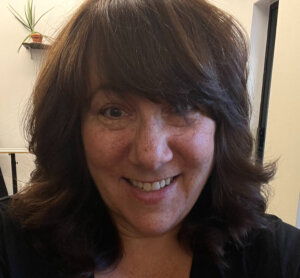
By Debra Nussbaum Cohen January 3, 2010
One of the country’s foremost experts on the lives of American girls is Rachel Simmons, a 35-year-old alumna of Vassar College and Oxford University who also attended the Charles E. Smith Jewish Day School through high school. Her mother is Israeli, and, she says, she was raised in a “Conservative-Israeli” kind of household. Graduate school investigation of aggression in teenage girls led her to write “Odd Girl Out: The Hidden Culture of Aggression in Girls,” and later, to write “The Curse of the Good Girl: Raising Authentic Girls with Courage and Confidence,”, and establish the Girls Leadership Institute.
Last week Simmons hosted the PBS show “A Girl’s Life”, which looks at the complicated lives of four teenagers: basketball player Annaluz, who struggles with being plump even as she’s athletic and strong; an inner-city young mother named Carla, who gets involved in vicious, scarring physical fights with other young women; Sonia, the daughter of Mexican illegal immigrants whose mother gets her into the Young Women’s Leadership School in East Harlem, which leads to college; and Libby, a popular girl whose former best friend becomes her cyber-bully, with painful results.
Simmons, who calls Park Slope home, spoke with The Sisterhood from South Africa, where she was teaching and spending time with her partner.
Sisterhood: What’s the number one challenge girls face?
Girls have to find a balance between their needs and other’s needs, and find the right mix of knowing and advocating for their own values and their desire to be connected with other people, whether it’s a friend or someone they’re dating. Many girls think that if they say what they really think, they’ll lose the relationship with that person. Many sacrifice what they think and feel to maintain relationships.
What is the most important thing for parents to understand about raising teenage girls?
That connection is the fundamental thing that girls need.
What about boys?
Boys too. Adolescence is a time perceived as a time of separation, but it’s important to remember that for girls, psychological health and wellness is directly related to how connected they are to people around them. Connection is key no matter how it comes. Even if you’re fighting, it’s still connection.
What’s the number one question parents ask?
Parents often say ‘What do I do if my kid won’t talk to me?’ Just spending time with them and even having an unsuccessful conversation, it doesn’t feel rewarding for you as a parent, but they are listening.
What from your Jewish background and education contributes to your work?
Jewish women and girls have more permission to assert themselves. There’s a tradition of supporting outspokeneness in Jewish women and girls, and that’s a lot of what I’m teaching girls, to speak their truths. In my own upbringing my mother and grandmother played powerful roles, and they’re both outspoken Jewish women. I’m not sure I’d be doing what I’m doing today if I didn’t have that tradition of truth telling behind me.
This is a moment of great uncertainty. Here’s what you can do about it.
We hope you appreciated this article. Before you go, we’d like to ask you to please support the Forward’s independent Jewish news. All donations are still being matched by the Forward Board - up to $100,000 until April 24.
This is a moment of great uncertainty for the news media, for the Jewish people, and for our sacred democracy. It is a time of confusion and declining trust in public institutions. An era in which we need humans to report facts, conduct investigations that hold power to account, tell stories that matter and share honest discourse on all that divides us.
With no paywall or subscriptions, the Forward is entirely supported by readers like you. Every dollar you give is invested in the future of the Forward — and telling the American Jewish story fully and fairly.
The Forward doesn’t rely on funding from institutions like governments or your local Jewish federation. There are thousands of readers like you who give us $18 or $36 or $100 each month or year.

Support our mission to tell the Jewish story fully and fairly.