Why isn’t a pro-Israel lobbying group considered a foreign agent?
Tucker Carlson and Ted Cruz debate how AIPAC should be classified

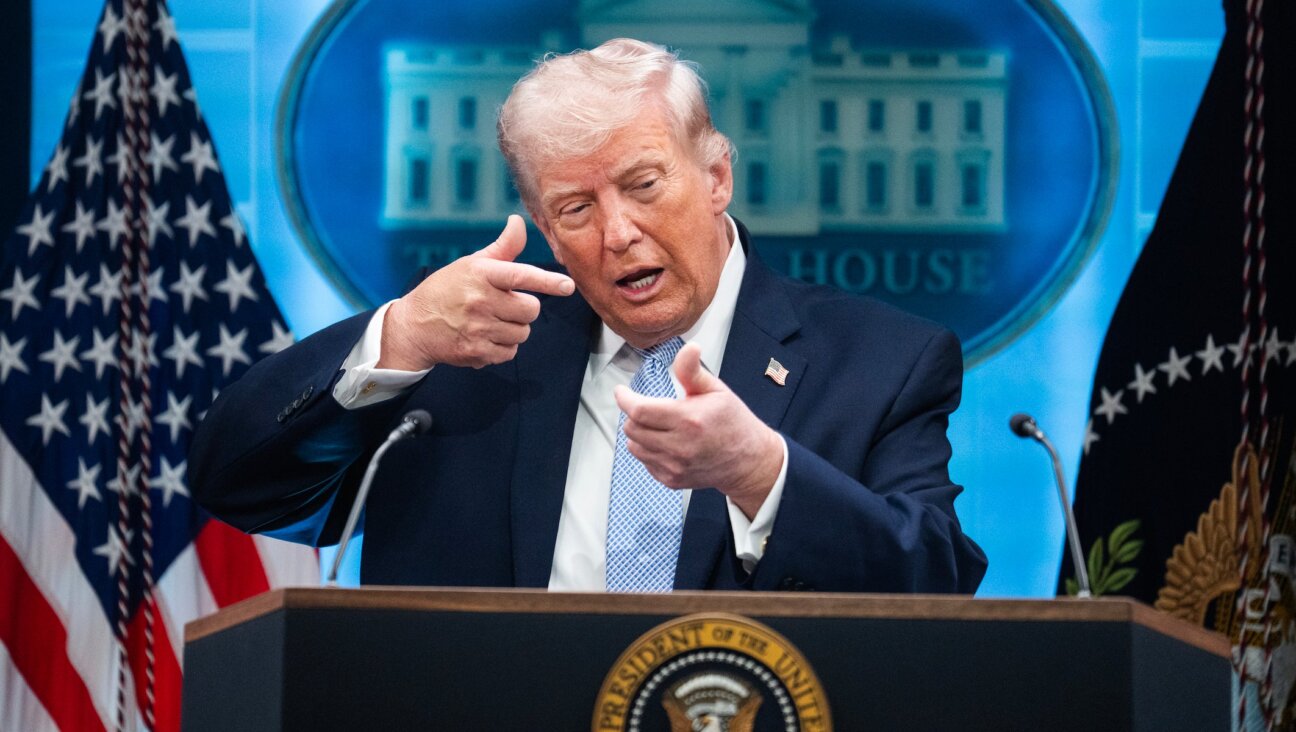
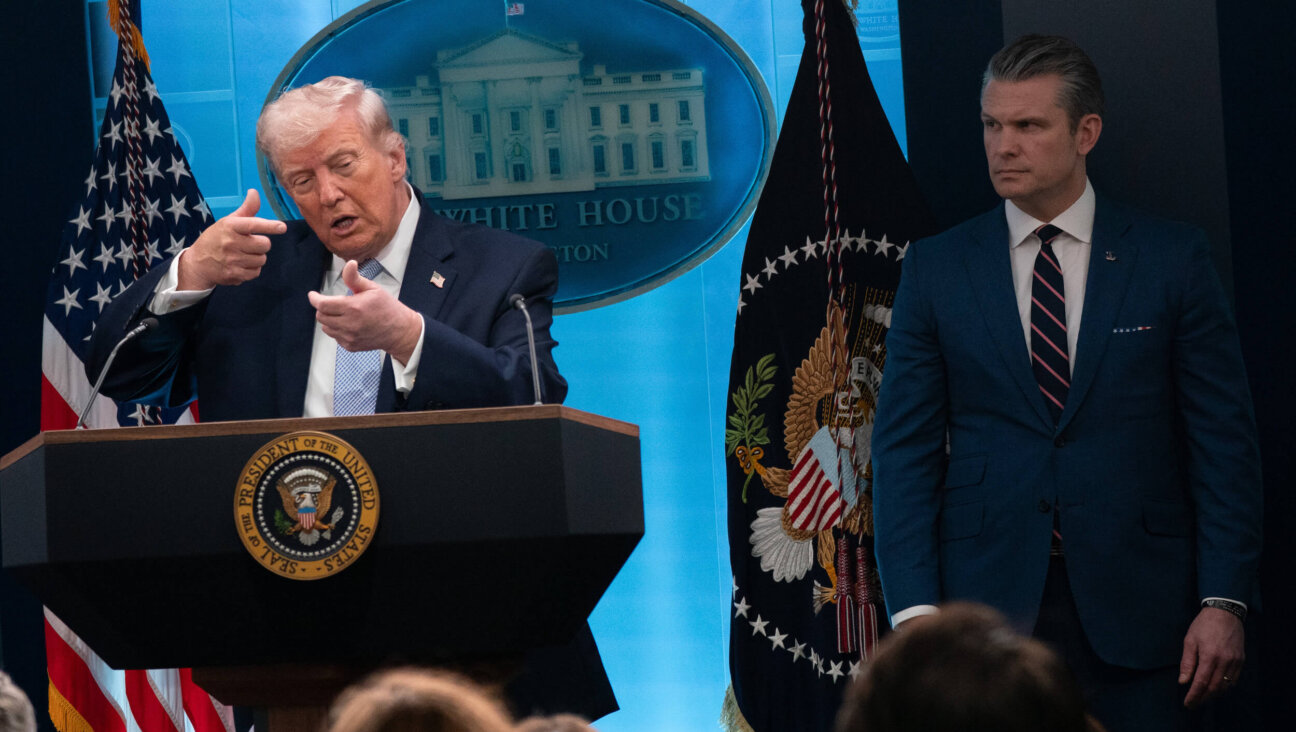
In an extended interview, Tucker Carlson and Ted Cruz debated U.S. involvement in Iran and whether AIPAC should be classified as a foreign agent. Image by screenshot/YouTube

By Hannah Feuer June 19, 2025
Tucker Carlson’s heated interview with Sen. Ted Cruz this week is drawing attention for highlighting a growing rift among MAGA supporters about to what extent the United States should intervene in the escalating conflict between Israel and Iran.
But another disagreement between Cruz and Carlson is also going viral: Should the American pro-Israel lobbying group AIPAC be considered a foreign agent?
“I don’t understand why we don’t just be honest and say they’re lobbying on behalf of foreign government,” Carlson tells Cruz during the interview.
“That is not only not true — that is false,” Cruz replies.
At the heart of the legal question is the Foreign Agents Registration Act, a 1938 law originally designed to block Nazi Germany’s propaganda efforts in the United States. The question of whether AIPAC should have to register as a foreign agent under the law has been a point of contention for years. AIPAC-hostile groups and individuals have periodically petitioned the government to get AIPAC to register under FARA. The efforts have never got traction. The debate led to dueling op-eds in the Forward in 2018.
But according to Matthew Sanderson — a lawyer at Caplin & Drysdale in Washington, D.C. who specializes in advising clients on the Foreign Agents Registration Act — the law is clear that AIPAC does not have to register as a foreign agent. (AIPAC is not a client of Sanderson).
While the law does have some grey areas, he said, this is not one of them.
“If you just look at the law and don’t know anything about it, then, sometimes it can lead people to misapply it,” he said. “That’s absolutely what’s happening in this case.”
What is the Foreign Agents Registration Act, and how might it apply to AIPAC?
The Foreign Agents Registration Act, or FARA for short, defines a foreign agent as someone who acts “at the order, request, or under the direction or control” of a foreign government to influence U.S. policy or public opinion.
When determining if an organization falls under that definition, Sanderson said, the government considers factors like foreign funding, contractual ties to foreign governments, and foreign control of the organization’s board.
AIPAC, or the American Israel Public Affairs Committee, is an influential pro-Israel lobbying group with interests that often align with the Israeli government’s. But since it doesn’t receive money from the Israeli government or have Israeli government officials on its board, it’s not legally a foreign agent, Sanderson said.
Many other diaspora communities in the United States establish lobbying groups with foreign interests supported by American donors, and they are not registered as foreign agents either, he said.
“It just happens to be that quite a few Americans, both financially and otherwise, support the state of Israel, and that does not create any kind of Foreign Agent Registration Act issue,” he said. “It has to be the foreign government is directing and controlling the U.S. organization — so it’s not enough just to have common interests.”
What are the stakes?
Registering as a foreign agent doesn’t have many practical implications, Sanderson said, besides needing to fill out a few additional forms. Foreign agents are required to register with the U.S. Department of Justice and disclose their relationship with foreign actors.
The difference, he said, may instead be largely rhetorical.
“It’s become a bad faith interpretation, a trope used by Israel’s critics,” he said. “Rather than acknowledge that this is an organization that is funded by Americans and run by Americans, they want to paint it as a foreign directed, foreign controlled effort.”
This is a moment of great uncertainty. Here’s what you can do about it.
We hope you appreciated this article. Before you go, we’d like to ask you to please support the Forward’s independent Jewish news this Passover. All donations are being matched by the Forward Board - up to $100,000.
This is a moment of great uncertainty for the news media, for the Jewish people, and for our sacred democracy. It is a time of confusion and declining trust in public institutions. An era in which we need humans to report facts, conduct investigations that hold power to account, tell stories that matter and share honest discourse on all that divides us.
With no paywall or subscriptions, the Forward is entirely supported by readers like you. Every dollar you give this Passover is invested in the future of the Forward — and telling the American Jewish story fully and fairly.
The Forward doesn’t rely on funding from institutions like governments or your local Jewish federation. There are thousands of readers like you who give us $18 or $36 or $100 each month or year.

Support our mission to tell the Jewish story fully and fairly.