A new bill would ban protests near synagogues. Is that legal?
The proposal would ban demonstrations within 25 feet of houses of worship
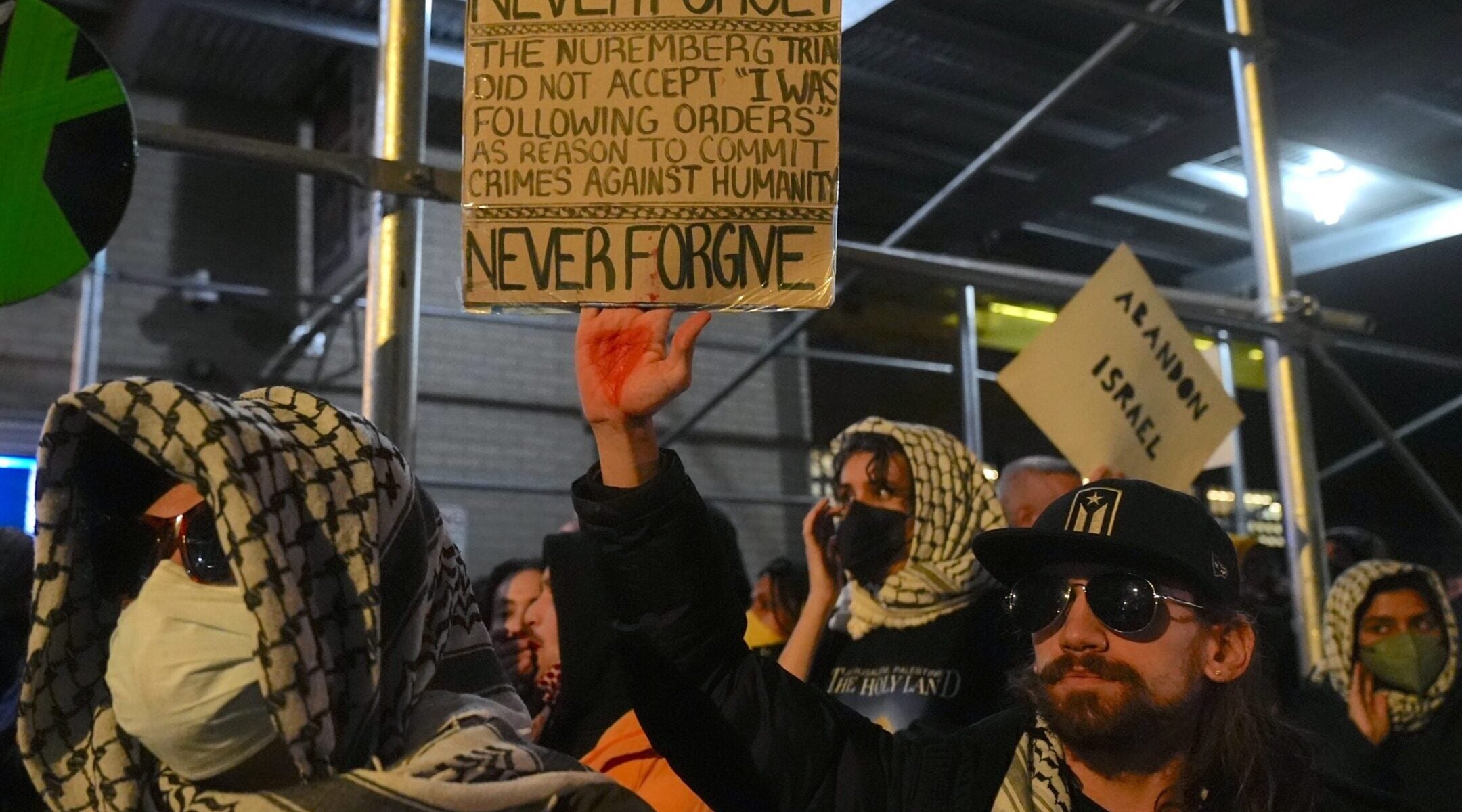
Protesters objecting to an event promoting immigration to Israel gather at Park East Synagogue in Manhattan in November. Photo by Selçuk Acar/Anadolu via Getty Images

By Hannah Feuer December 10, 2025
A protest outside a prominent New York City synagogue has prompted a bill that would ban demonstrations within 25 feet of houses of worship and reproductive health care clinics. But free speech advocates say the proposed restriction raises constitutional concerns that could put the measure on shaky ground.
“This bill, especially as written, would ban an enormous amount of protests in New York and contradict pretty well established First Amendment protections for protest on sidewalks and public streets,” Carolyn Iodice, legislative and policy director for the Foundation for Individual Rights and Expression, told the Forward.
If passed, the bill could tee up a legal clash over how to balance the protection of worshippers with protesters’ First Amendment rights.
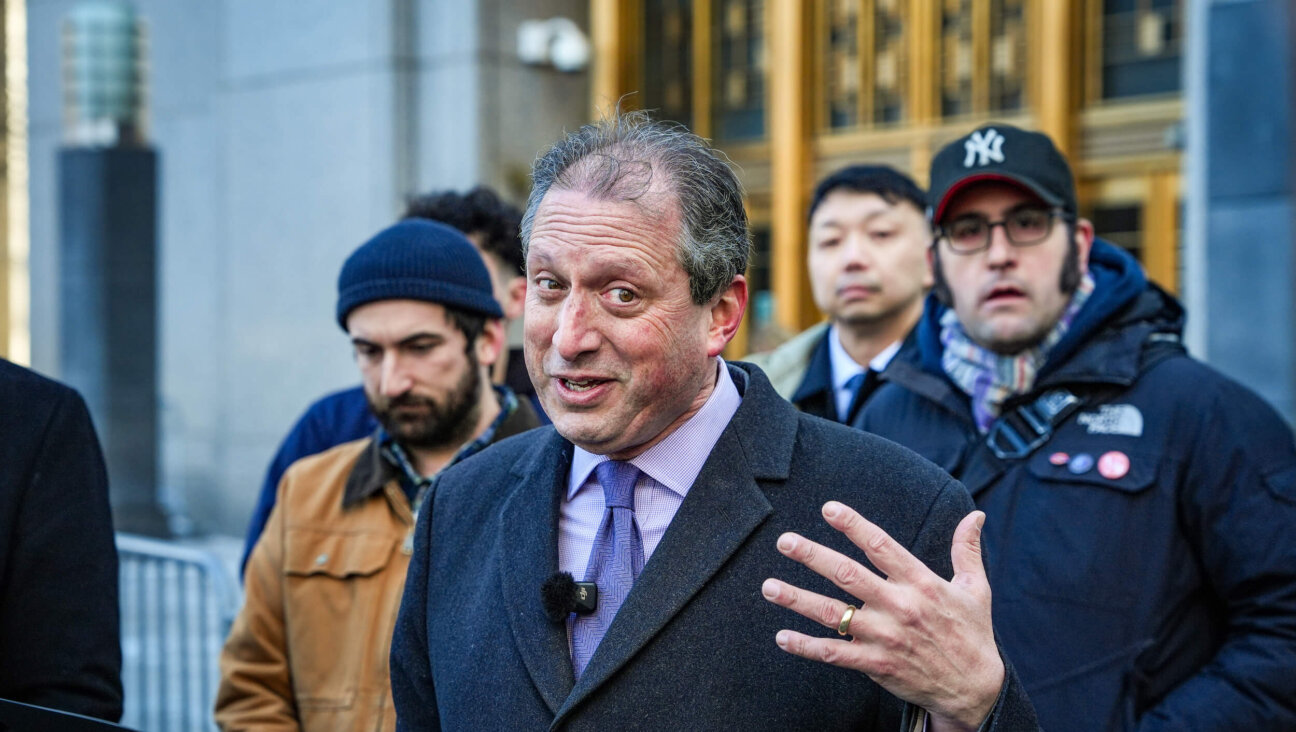
State Assemblyman Micah Lasher, who introduced the bill, defended it in an interview with CNN: “There needs to be some reasonable space so that people who are trying to enter a house of worship or reproductive care facility can do so without having to run a gauntlet,” he said.
Mayor-elect Zohran Mamdani was reportedly receptive to the idea of limiting protests near houses of worship during a conversation with Rabbi Marc Schneier, the son of Park East Rabbi Arthur Schneier. Later, Mamdani told the Forward that he would consult community leaders and legal experts before determining whether he supports the legislation.
Why was the bill introduced?
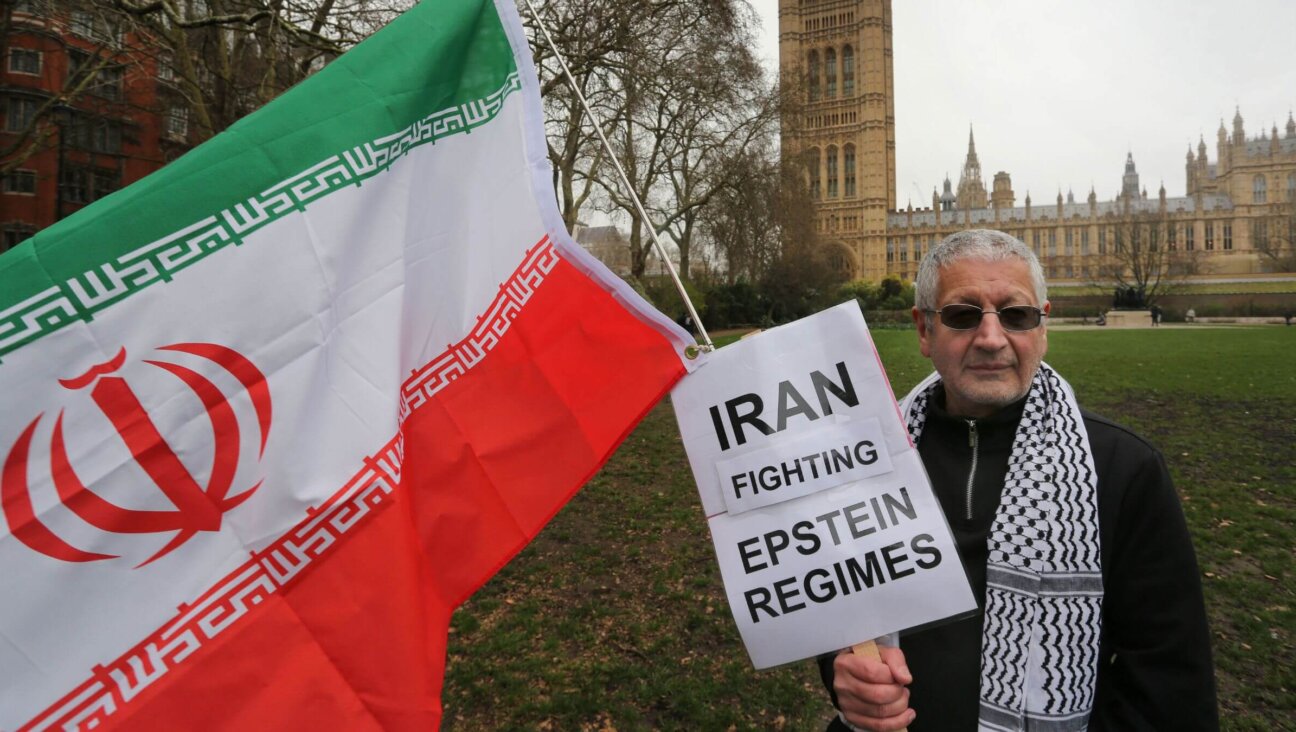
Lasher said he introduced the legislation partly in response to a protest outside Park East Synagogue, where demonstrators objected to an event inside promoting immigration to Israel. Protesters chanted slogans like “death to the IDF” and “globalize the intifada.”
Mamdani condemned the demonstration and said New Yorkers should be free to enter houses of worship without intimidation. But he also said that “sacred spaces should not be used to promote activities in violation of international law,” referring to the promotion of Jewish settlements in the Israeli-occupied West Bank.
That statement drew outrage from some Jewish leaders who view making aliyah, or immigrating to Israel, as a core Jewish value. Two weeks later, UJA-Federation of New York hosted a rally outside Park East Synagogue, where speakers condemned the protesters’ rhetoric.
Speaking to the crowd, Rabbi Arthur Schneier backed the legislation and urged attendees to call their representatives to express support.
“Legislators, keep your eyes open,” Schneier said. “This is what we want.”
What are the constitutional concerns?
In weighing constitutionality, courts consider whether a law restricts more speech than necessary to achieve the government’s interest.
In this case, if the state’s goal is simply to ensure physical access to places of worship, there are already laws in place, according to Iodice. A 1994 federal law, the Freedom of Access to Clinic Entrances Act, makes it illegal to use force, threats, or physical obstruction to block access to reproductive health services or houses of worship.
If the government’s goal is to ensure congregants can worship without emotional distress, the bill may be too broad, according to Alan Brownstein, a constitutional law scholar and professor emeritus at UC Davis School of Law.
“Suppose you had three people and they had a sign that said, Reconsider attending this house of worship, because the clergy oppose same sex marriage. And that’s all you had, three people with signs and they’re 20 feet away,” Brownstein said. “Is that traumatizing? Is that so disturbing to people who are going to attend a house of worship that we have to prohibit it?”
It’s also unclear what the bill means by “demonstrating,” he said. Some definitions — like two or more people engaging in expressive conduct — could apply to a wedding ceremony outside a synagogue as easily as a protest.
Legislators also cannot ban speech they dislike while allowing speech they approve. So if the bill only targets protests but permits supportive demonstrations, that creates another legal problem, Brownstein said.
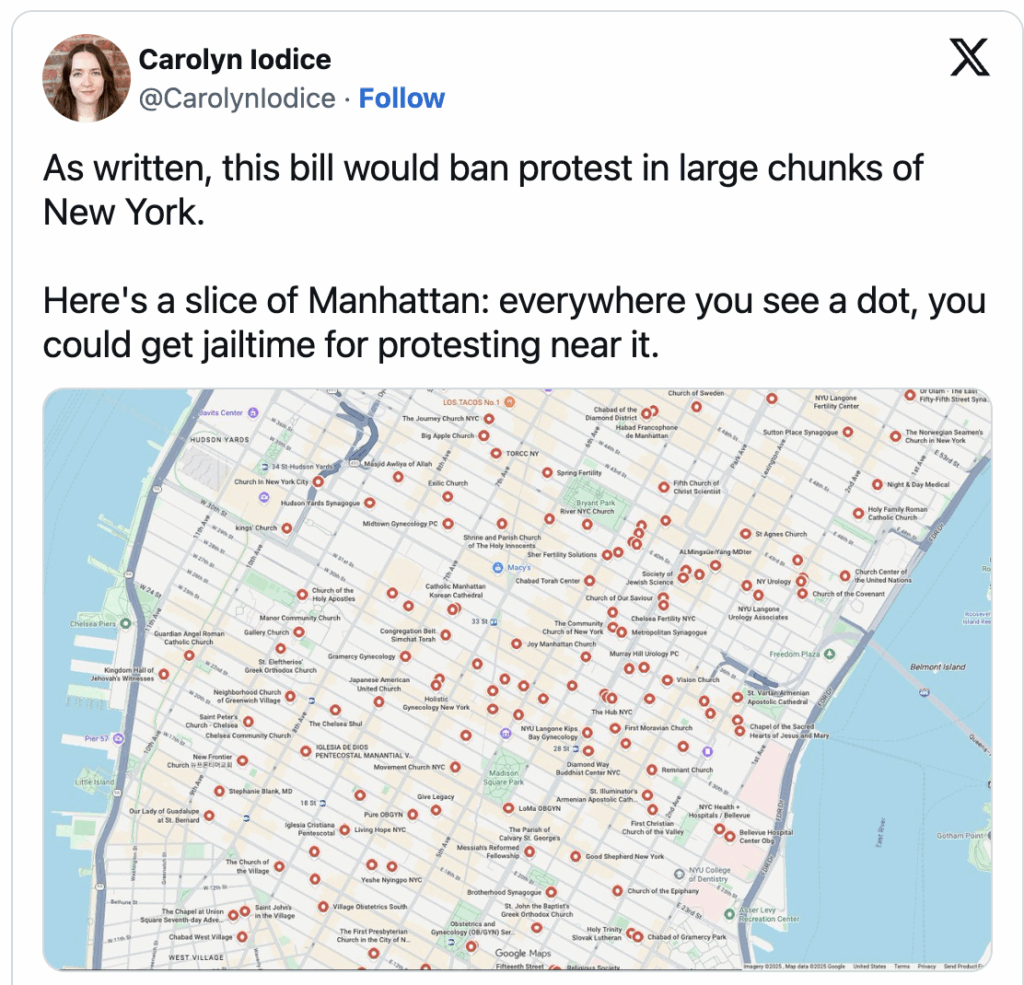
The distance requirement could also be an issue. The bill requires demonstrators to stay 25 feet away from not only the building, but also its parking lot, driveway, and sidewalk, which could make the actual restriction larger, Iodice said.
In a densely packed area like Manhattan, that could eliminate a lot of protest space.
“Banning protests across wide swaths of Manhattan, as a realistic matter, that’s not going to fly constitutionally because of how much speech it restricts,” Iodice said.
There is some precedent for this kind of restriction: Laws creating protest-free buffer zones have been used in a variety of other contexts, including at funerals and abortion clinics in other states.
But it’s an open question whether those cases translate to houses of worship, Brownstein said, because health care clinics and cemeteries don’t participate in public discourse in the same way a synagogue or church does.
He considered a hypothetical law barring demonstrations within 25 feet of a political party’s headquarters, in what would be an obvious attempt to silence opposing views.
“Now, houses of worship aren’t political campaign headquarters,” Brownstein said. “But if anyone argued to me that religion is not a major voice in public discourse and debate in the United States, I don’t know where they’ve been.”
This is a moment of great uncertainty. Here’s what you can do about it.
We hope you appreciated this article. Before you go, we’d like to ask you to please support the Forward’s independent Jewish news. All donations are still being matched by the Forward Board - up to $100,000 until April 24.
This is a moment of great uncertainty for the news media, for the Jewish people, and for our sacred democracy. It is a time of confusion and declining trust in public institutions. An era in which we need humans to report facts, conduct investigations that hold power to account, tell stories that matter and share honest discourse on all that divides us.
With no paywall or subscriptions, the Forward is entirely supported by readers like you. Every dollar you give is invested in the future of the Forward — and telling the American Jewish story fully and fairly.
The Forward doesn’t rely on funding from institutions like governments or your local Jewish federation. There are thousands of readers like you who give us $18 or $36 or $100 each month or year.

Support our mission to tell the Jewish story fully and fairly.