The Holocaust Torah that survived a Mississippi synagogue fire was brought there by the state’s only survivor
Gilbert Metz, the state’s only Holocaust survivor, brought the Torah to Beth Israel decades ago
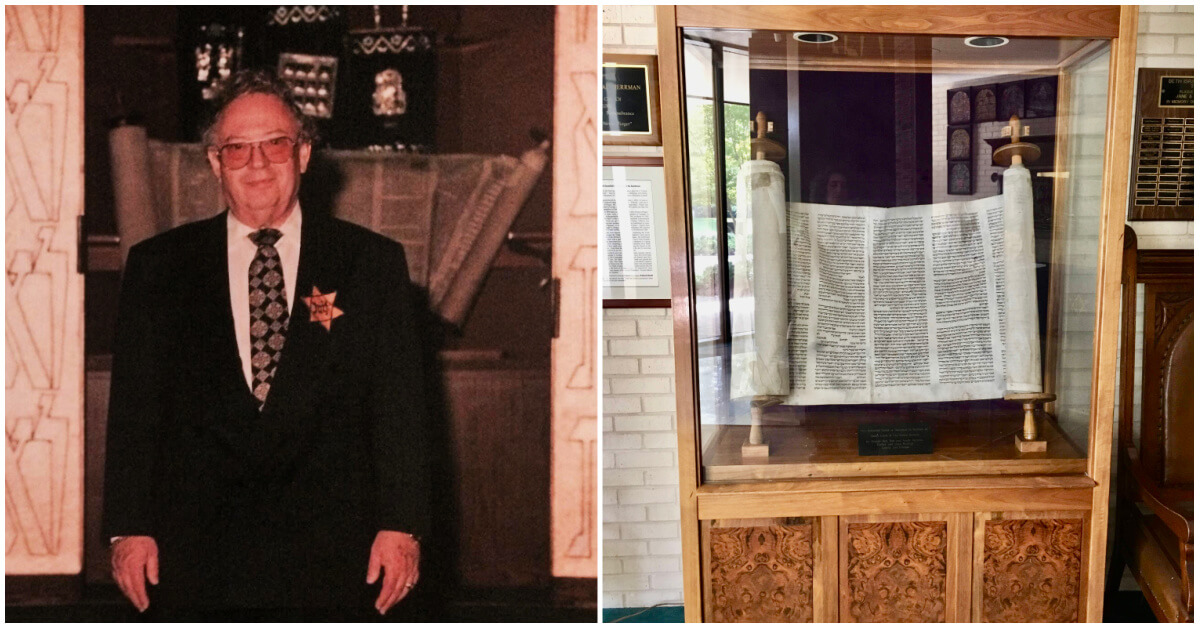
Auschwitz survivor Gilbert Metz stands in front of the ark at Beth Israel Congregation in Jackson, Mississippi. Behind him is a Torah he helped rescue from the Holocaust. It has been on permanent display at the front of the building since 1992. Courtesy of Joseph Metz (left); Alanna Cooper (right)

By Benyamin Cohen January 14, 2026
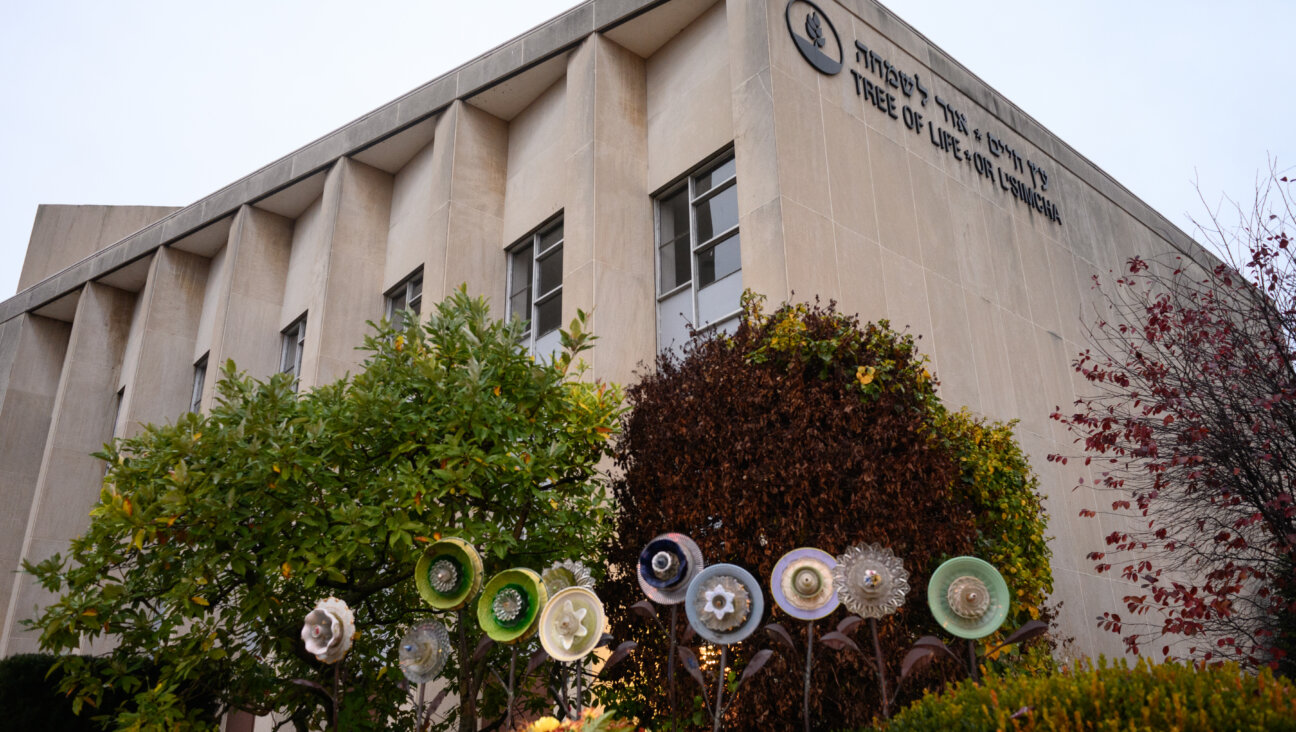
When firefighters cleared Beth Israel Synagogue after an arson attack this month, the library floor was slick with water and ash. Prayer books lay swollen and blackened. Smoke clung to the sanctuary walls.
Two Torah scrolls burned. A third Torah did not.
That Torah, displayed for decades in a glass case near the front of the synagogue, survived unscathed. Its presence at Beth Israel was not incidental. It was brought to Mississippi by Gilbert Metz, the state’s only concentration camp survivor — a man who retrieved it from Europe and brought it to the American South. It, too, had survived the Nazis.
“The million dollar question is: How in the hell did he get to Mississippi?” his grandson, Joseph Metz, recalled in an interview on Tuesday.
From Auschwitz to Jackson
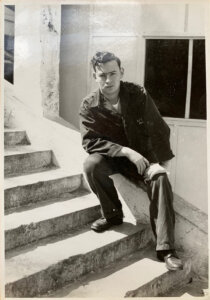
Gilbert Metz was born in 1929 in Alsace-Lorraine, France. At 13, the family was forced into hiding. When people fled Nazi Germany, they often gathered silver or jewelry. Gilbert’s mom packed her prayer books and Rashi commentary instead. She had taught her son Hebrew and Talmud, and she refused to leave those books behind.
They snuck back and forth to their summer home in northeastern France, but were eventually captured by the Nazis and sent to an internment camp. From there, a 14-year-old Metz and his family were sent to Auschwitz. His mother and 10-year-old sister were murdered in the gas chambers shortly after their arrival. His father later met the same fate.
Metz survived multiple concentration camps, including Auschwitz and Dachau, and was liberated by American troops in April 1945. He was eventually bar mitzvahed after the Holocaust at 16, a delayed rite marking a childhood interrupted and then resumed.
Relatives who had settled in Mississippi sponsored Metz to come to the United States. He finished high school in Natchez, attended Tulane University, and served in the U.S. Army during the Korean War — at one point having to reapply for citizenship after being deployed overseas.
He eventually moved to Jackson, where he raised a family and became a traveling salesperson before co-founding Metz Industries, a wholesale lingerie business that sold brassieres, hosiery and feather boas to stores across the region — the work of an ordinary American life rebuilt mile by mile. He and his wife, Louise, were married for more than 50 years.
Bringing the Torah to Mississippi
In 1992, Robert Berman, a longtime congregant and former Beth Israel president, heard about an international effort to restore and redistribute scrolls damaged, desecrated or orphaned during the Holocaust. He and his sisters, Joan and Brenda, along with their families, donated the funds to arrange to get one. Shul leaders decided there was only one person who should retrieve it.
Metz and his son, Lawson, traveled to London to bring the Torah back to Jackson. They went to a restoration warehouse run by the Memorial Scrolls Trust, which finds synagogues to permanently loan these scrolls — some burned, some torn, some riddled with bullet holes — many painstakingly pieced together from fragments.
The Metzs picked up Scroll. No. 599, which is believed to come from the Pinkas Synagogue in Prague. The Trust has 140 scrolls from this shul since, following the German invasion, many synagogues in and around Prague sent their scrolls and other Judaica to the Pinkas for safekeeping.
On the international flight back to Mississippi, Gilbert and Lawson took took turns carrying it on their laps.
Other Torahs rescued from the Holocaust made similar southern journeys, to congregations in Alabama, Louisiana and Tennessee. Joseph Metz said his grandfather felt honored to be the one chosen from Beth Israel to collect the Torah, and that bringing it to Mississippi was closure for him — a full-circle moment.
A welcoming committee from the shul — including Berman, the rabbi and others — greeted the Metzs and the Torah at Jackson’s airport. “They sang prayers,” recalled Berman, now 94.
Beth Israel held a dedication ceremony at the synagogue and the Torah was installed in a glass case near the front doors, where it remained for decades. The words “Memory sustains humanity” is etched across the top of the case. Next to it hangs a photograph of Metz as an adult wearing the yellow star he was forced to wear under Nazi rule.
The scroll is displayed unfurled to a chapter in Exodus that comes after the Red Sea has closed behind the fleeing Israelites and before the Ten Commandments are given — a narrow span of time when survival has been achieved but meaning has not yet arrived. The scroll has remained that way for years, suspended between catastrophe and covenant.
“The congregation understood exactly whose story that Torah represented,” said Stuart Rockoff, a historian and longtime member of the 165-year-old Beth Israel. “This was a synagogue with one Holocaust survivor.”
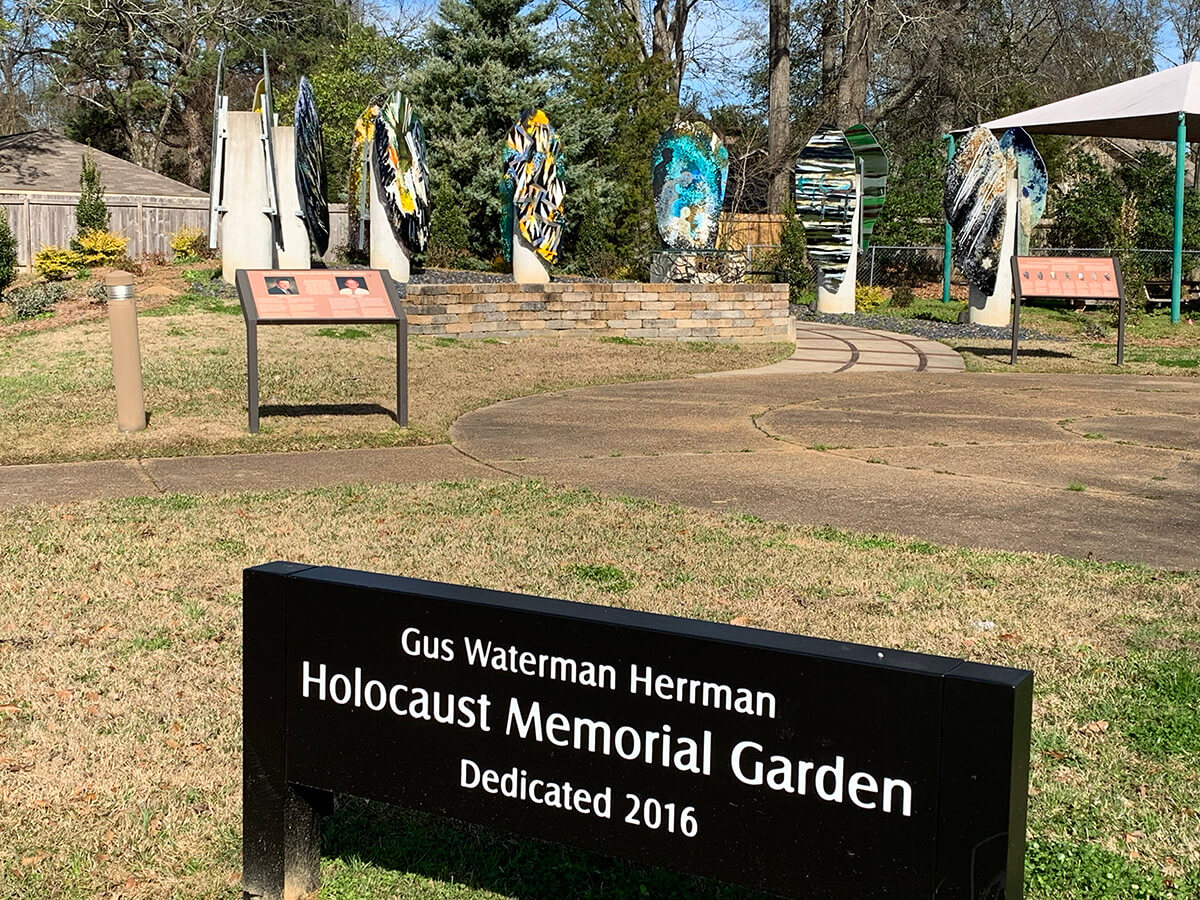
Behind its building, Beth Israel also maintains a Holocaust memorial garden, dedicated to Metz and to Gus Waterman Herrman, a U.S. Army officer from Mississippi who fought in Europe during World War II and later became a philanthropist. The garden, which features stained-glass sculptures and is used for Yom HaShoah commemorations, was not damaged in the fire.
Berman’s daughter, Deborah Silver, had her bat mitzvah and wedding at the synagogue. She’s now a jazz singer, nominated for a Grammy this year, and plans to perform charity concerts in New York City and Jackson to benefit the shul. “We will be back,” she said, “and we will recover.”
Surviving another act of antisemitism
Saturday’s fire at Beth Israel is being investigated by federal authorities as a possible hate crime. A local teen, Stephen Spencer Pittman, confessed to igniting the blaze.
The bulk of the damage was concentrated in the library and administrative offices, which are also home to the Institute of Southern Jewish Life. It’s the same part of the building targeted in a 1967 Ku Klux Klan bombing.
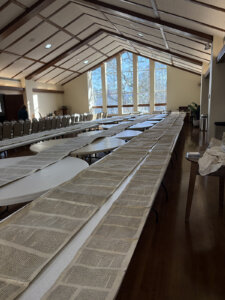
After the fire, the congregation moved the Torahs to the nearby Northminster Baptist Church, which offered its space. There, five Torah scrolls from the sanctuary were carefully unfurled and laid out across long tables, allowing soot and smoke to dissipate.
On the advice of a sofer, a ritual scribe, the Holocaust Torah was not unrolled.
“It’s extremely delicate,” said Sarah Thomas, Beth Israel’s vice president. She said it appeared to have no visible damage and is now wrapped and stored for safekeeping until the congregation is able to move back into the building.
The Torah’s survival can be explained without invoking a miracle: it was protected by its glass case and by where it stood. Still, for those who know its history, the moment carried weight.
What survives
Gilbert Metz spent decades speaking publicly about his Holocaust experience. His oral testimony is preserved in Holocaust archives, and his story has been taught in schools across Mississippi.
That inheritance was also ritual: For decades at Beth Israel, the shofar on the High Holidays was blown by Metz’s son, Lawson, and later by his grandson, Joseph.
Joseph Metz — now the president of the Jewish federation in Mobile, Alabama — has written a book about his grandfather’s survival, Behind the Silent Doors — a phrase Gilbert used to describe the gas chambers. Joseph regularly appears at Holocaust remembrance events and in classrooms. When he does, he pins his grandfather’s yellow star to his jacket before he speaks — the same object that once marked Gilbert for death now marking the story as one that refuses to disappear.
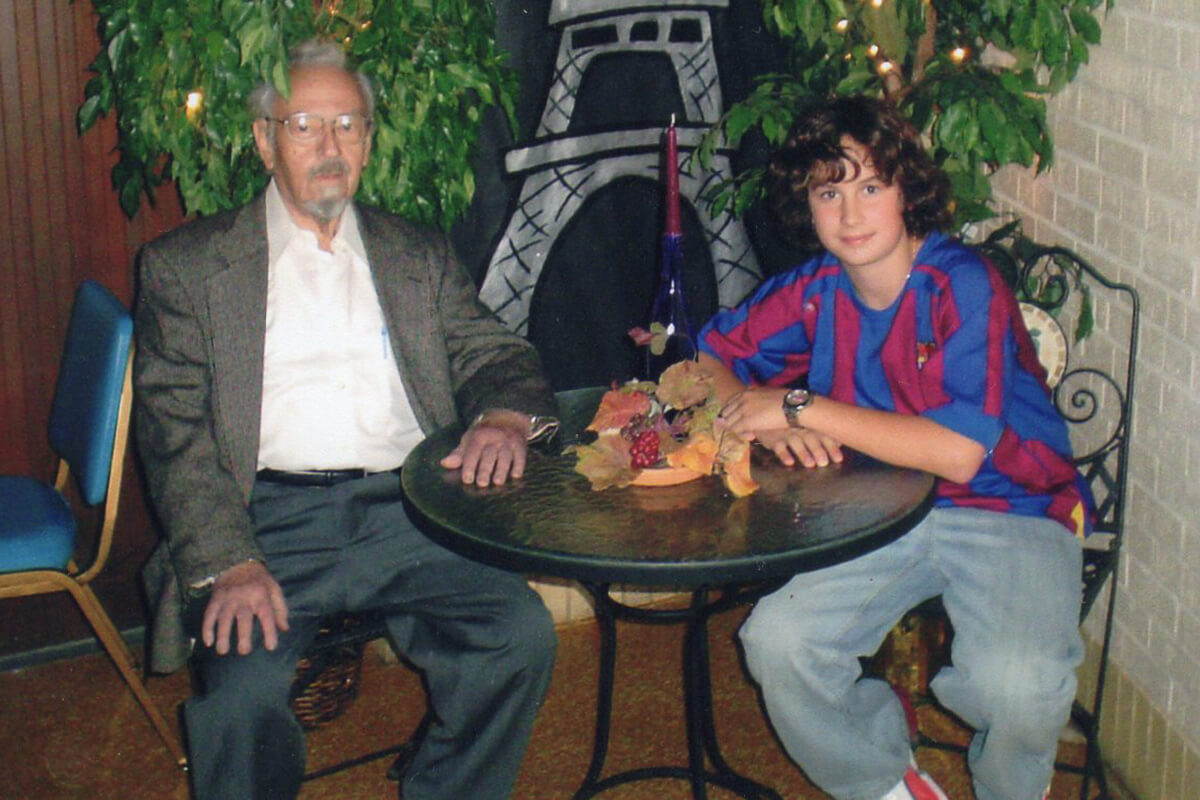
Metz, who died at 78 in 2007, bore the tattooed number the Nazis assigned him at Auschwitz for the rest of his life: 184203. Joseph and his sister, Caroline, each later chose to replicate the number on a tattoo of their own, as an inheritance. He said his grandfather survived so the story would not end with him, but be carried forward.
The Torah Metz carried across an ocean — and across a lifetime — remains.
Editor’s note: This story was updated to add additional information about the rescued Torah.
This is a moment of great uncertainty. Here’s what you can do about it.
We hope you appreciated this article. Before you go, we’d like to ask you to please support the Forward’s independent Jewish news this Passover. All donations are being matched by the Forward Board - up to $100,000.
This is a moment of great uncertainty for the news media, for the Jewish people, and for our sacred democracy. It is a time of confusion and declining trust in public institutions. An era in which we need humans to report facts, conduct investigations that hold power to account, tell stories that matter and share honest discourse on all that divides us.
With no paywall or subscriptions, the Forward is entirely supported by readers like you. Every dollar you give this Passover is invested in the future of the Forward — and telling the American Jewish story fully and fairly.
The Forward doesn’t rely on funding from institutions like governments or your local Jewish federation. There are thousands of readers like you who give us $18 or $36 or $100 each month or year.
Support our mission to tell the Jewish story fully and fairly.