This national park would honor a Jewish philanthropist — if Republicans get back on board
Entrepreneur Julius Rosenwald funded thousands of schools for Black children in the South. But budget cuts and DEI backlash loom over a bill to establish a park in his honor.
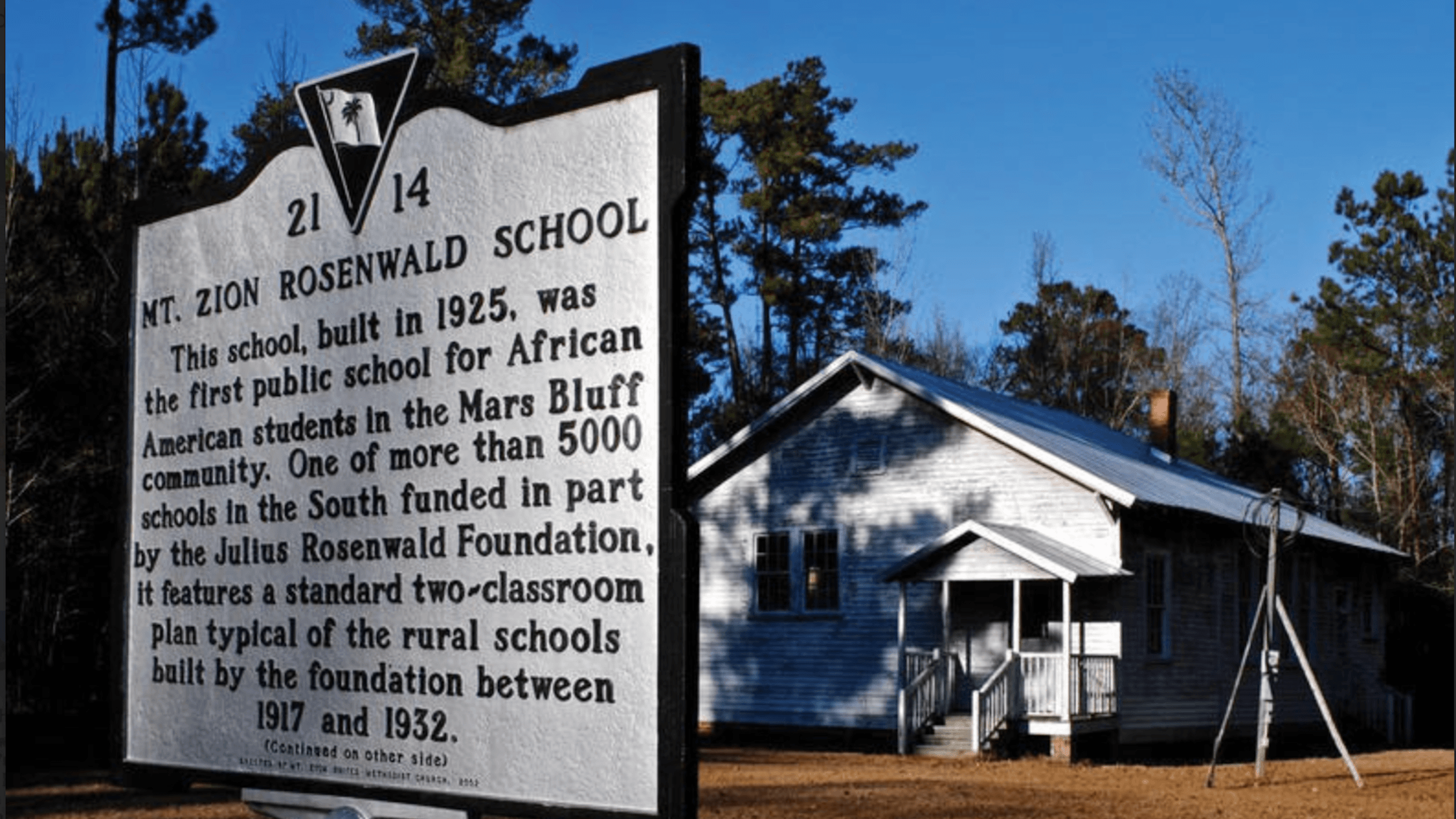
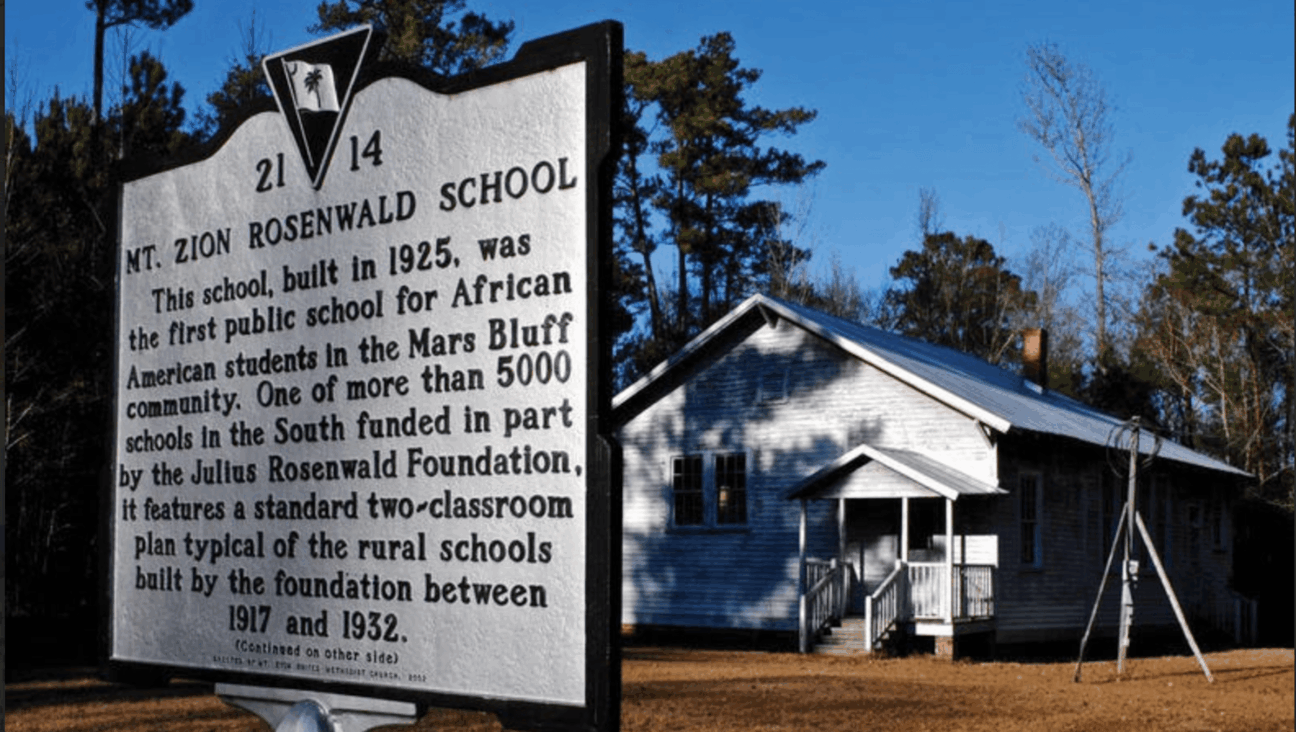
A sign outside the Mt. Zion Rosenwald School in Florence, South Carolina. Courtesy of Julius Rosenwald & Rosenwald Schools National Historical Park Campaign

By Hannah Feuer April 13, 2026
The political climate is hardly favorable for a new national park centered on racial justice.
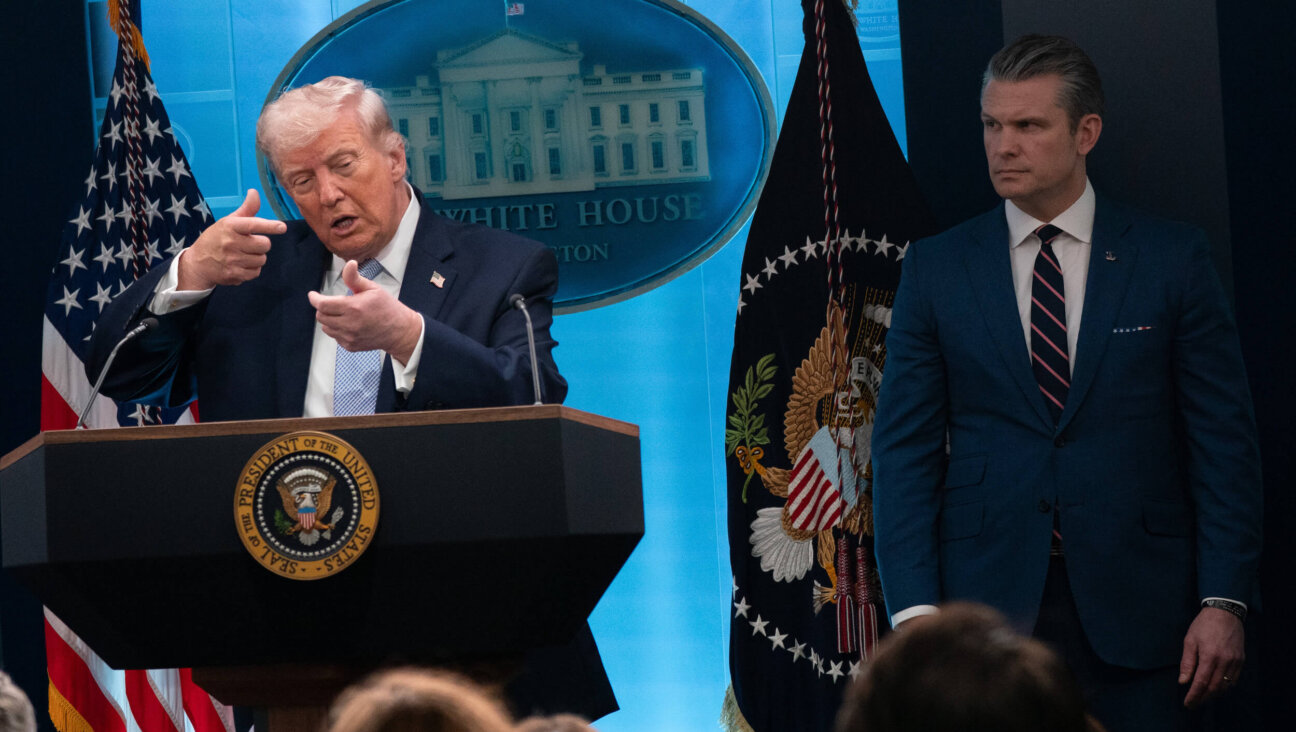
President Donald Trump this week called for sweeping budget cuts to the National Park Service and, in January, for the removal of slavery-related exhibits he said portray American history in a “woke manner.”
Yet a campaign to establish a national historic park honoring Julius Rosenwald — the Jewish philanthropist who funded schools for rural Black communities during the Jim Crow era — is pressing ahead.
Dorothy Canter, who launched the campaign in 2018, sees an opening for the park to finally become a reality. In February, Sen. Dick Durbin (D-Ill.) introduced legislation to create the Rosenwald National Historic Park, backed by seven Democratic co-sponsors.
But advancing the bill out of committee — much less to President Trump’s desk — will require Republican support. At a time when even the mildest celebration of diversity can be deemed an excess of the “woke” left, Canter is betting that Rosenwald’s story will be the exception.
“The environment is not the best, obviously, but this is a story that should appeal to anyone,” Canter told the Forward. “This is a positive story. Nobody can say it’s DEI.”
Rosenwald’s Legacy
Rosenwald was born in Springfield, Illinois, the son of German-Jewish immigrants. At 16, he dropped out of high school to pursue the family clothing business.
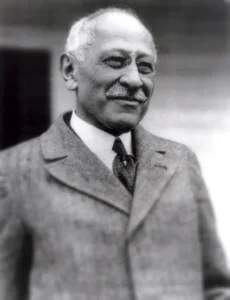
In 1895, he invested $37,500 in Sears, Roebuck & Company — a decision that would ultimately make him one of the wealthiest men in the United States in the early 20th century.
But guided by the Jewish value of tzedakah, he gave much of that fortune away. In 1911, he met Booker T. Washington, the formerly enslaved founder of the Tuskegee Institute, a training center for African American teachers. Washington urged Rosenwald to invest in Black education in the South.
Rosenwald would go on to help fund nearly 5,000 schools for Black students across 15 states. By 1928, one in three Black students in the rural South attended a Rosenwald school. Alumni of Rosenwald schools would include congressman John Lewis, poet Maya Angelou and civil rights activist Medgar Evers.
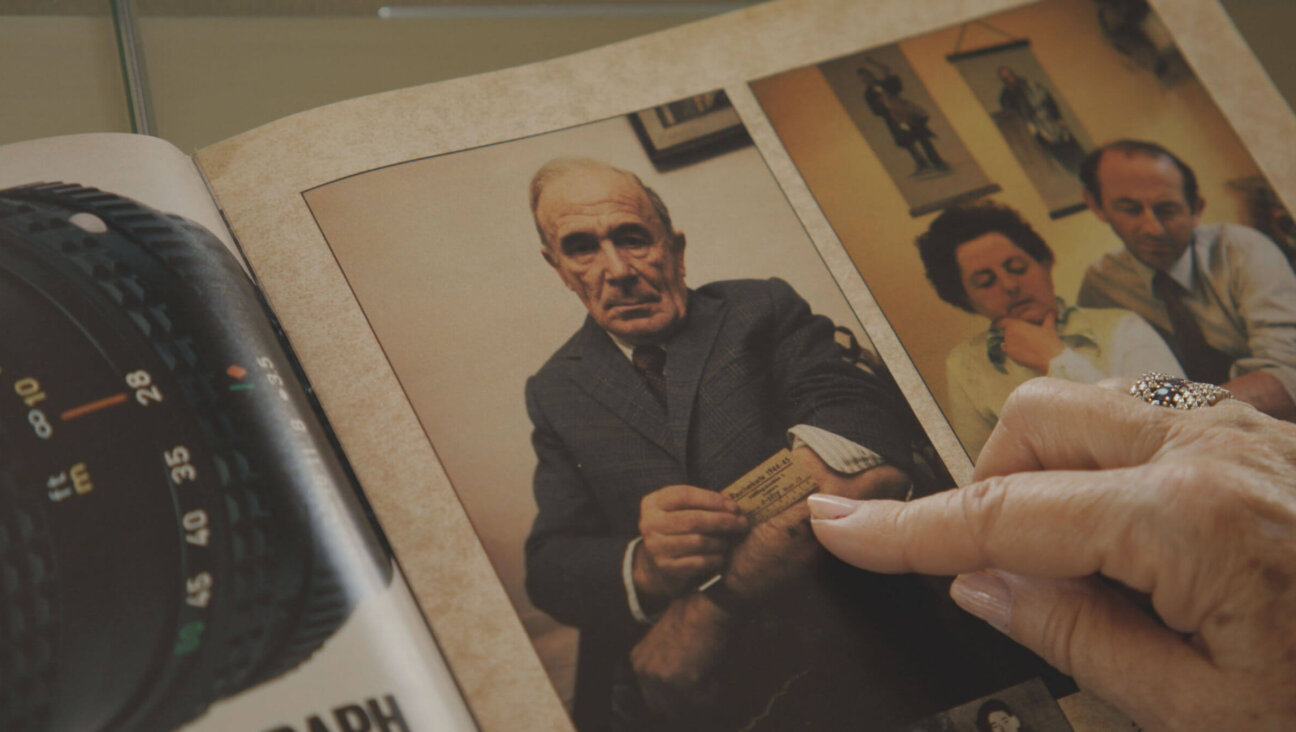
Canter, a retired biophysicist and national parks enthusiast, first learned about Rosenwald as an adult through a documentary — and was struck that this story of Black-Jewish cooperation was not more widely known.
“I knew that there was not one national park unit among the more than 400 that commemorated the life and legacy of a Jewish American, or told the story of Rosenwald schools,” Canter said. “And I can tell you that today, almost 11 years later, that is still the case.”
There are national historic sites and monuments honoring Jewish Americans, including the Rosenwald family home and the David Berger National Memorial. But a national historic park — a designation that often spans multiple sites and has greater cultural cache — has yet to honor a Jewish American.
Part of Rosenwald’s relative obscurity, Canter said, stems from his own philosophy. Rosenwald embraced a “give while you live” approach and did not believe in permanent endowments, requiring that the Rosenwald Fund spend all of its money within 25 years of his death.
That approach has yielded severe financial challenges decades later. Today, only about 10% of the more than 5,000 Rosenwald school structures remain, according to Brent Leggs, executive director of the African American Cultural Heritage Action Fund at the National Trust for Historic Preservation.
The Trust placed Rosenwald schools on its 2002 list of America’s 11 most endangered historic places, warning of an “urgent crisis of erasure, abandonment and deterioration.”
Many of the schools were built in rural areas that have since been abandoned, Leggs said, adding that the buildings were made of wood that has slowly decayed. The loss is personal for him: Upon researching the history for his job, Leggs discovered that both of his parents attended Rosenwald schools in Kentucky.
“It was a transcendent moment for me,” he said, “because I remember being at a school building that was literally vanishing history.”
The surviving schools have mixed ownership, Leggs said. Some act as local community centers, while others operate as commercial or office spaces, such as the Caldwell Rosenwald School in Huntersville, North Carolina — today, home to Burgess Supply, a carpet store.
A bipartisan issue?
In the final days of his first presidency, Trump gave a significant boost to the campaign for a Rosenwald national park.
He signed the Julius Rosenwald and the Rosenwald Schools Act into law, directing the Department of Interior to conduct a study assessing the feasibility of establishing the park. Eight Republicans had cosponsored the bill, and it passed with broad bipartisan support.
The study “resulted in positive findings,” concluding that the San Domingo School in Sharptown, Maryland, met all the criteria for a national park and recommending that Congress create a grant program to support the preservation of additional Rosenwald schools.
But Republican backing for a national park honoring Rosenwald’s legacy now appears to have waned.
The Forward called and emailed the three Republicans who cosponsored the 2020 bill and are still in office. None responded to the Forward’s question about their position on Durbin’s bill to establish the Rosenwald park.
A White House spokesperson directed the Forward to the national historic site at the Rosenwald family home but declined to say whether Trump was supportive of the national park commemorating Rosenwald schools.
Rep. Andy Harris, a Maryland Republican, went so far as to send a letter to President Joe Biden in 2024 expressing his support for “the expedited designation of a Julius Rosenwald And Rosenwald Schools National Park.”
His office did not respond to the Forward’s request for comment.
Nor did the office of Tim Scott, the Republican senator from South Carolina who previously advertised his support for the restoration of Rosenwald schools in his state. “Booker T. Washington helped build thousands of schools for Black children, advancing impactful educational opportunities throughout the South,” he tweeted in February 2024. “With the restoration of Rosenwald School, his legacy lives on in South Carolina. #BlackHistoryMonth”
‘A story for our time’
Durbin’s bill arrives just as the agency that would create a park faces drastic proposed cuts: Trump this week proposed funding for the already understaffed National Park Service be reduced by $736 million, or 25% of its budget.
Meanwhile, the president has sought to recast historical narratives at existing parks. In January, Trump ordered the National Park Service dismantle an exhibit about nine people enslaved by George Washington. Earlier this month, the Trump administration directed the removal of a pride flag from the Stonewall National Monument in New York City.
Yet Rosenwald’s story doesn’t fit neatly into the culture-war themes that Trump has singled out. Rosenwald himself was a political conservative, a laissez-faire businessman and steadfast Republican who believed in fostering economic self-sufficiency through education.
Dennis Ross, a former Republican congressman from Florida who retired from office in 2019 and has supported the Rosenwald park campaign, told the Forward he sees Rosenwald’s story as one conservatives should embrace.
“I’ve heard the argument that this is a way of trying to backdoor DEI. I totally disagree and take issue with that. This is showing what American history is all about,” Ross said. “If you were to dwell on the oppression of slavery, then maybe that argument might work. But I think the important thing is to look at the transition, the evolution from slavery to success.”
Canter is also optimistic, and said she plans to meet with a Republican senator — she declined to provide a name — whose staff has expressed interest in the park. As to whether Trump would sign the bill: She hopes the campaign will have the opportunity to put it on his desk.
“People with different backgrounds and cultures were able to come together, work together, find common ground and move this country forward,” Canter said. “So if that isn’t a story for our time, I don’t know what is.”
This is a moment of great uncertainty. Here’s what you can do about it.
We hope you appreciated this article. Before you go, we’d like to ask you to please support the Forward’s independent Jewish news. All donations are still being matched by the Forward Board - up to $100,000 until April 24.
This is a moment of great uncertainty for the news media, for the Jewish people, and for our sacred democracy. It is a time of confusion and declining trust in public institutions. An era in which we need humans to report facts, conduct investigations that hold power to account, tell stories that matter and share honest discourse on all that divides us.
With no paywall or subscriptions, the Forward is entirely supported by readers like you. Every dollar you give is invested in the future of the Forward — and telling the American Jewish story fully and fairly.
The Forward doesn’t rely on funding from institutions like governments or your local Jewish federation. There are thousands of readers like you who give us $18 or $36 or $100 each month or year.

Support our mission to tell the Jewish story fully and fairly.