How an ‘all-American boy’ became a Mississippi synagogue arson suspect
There was little warning that Stephen Spencer Pittman, who police arrested for arson, was poised to strike Jackson’s lone synagogue

Friends and acquaintances of Stephen Spencer Pittman, who was arrested for starting a fire at Beth Israel Congregation, described a relatively rapid transition from a baseball-loving honors student to one who became consumed by a “spiritual psychosis,” social media usage and alleged steroid use. Graphic by Forward with images from Stephen Spencer Pittman’s Instagram and Snapchat accounts
By Arno Rosenfeld January 21, 2026
JACKSON, Mississippi — Parishioners pass under large banners reading “Embrace Diversity” and “Serve Others” as they file into Sunday mass at St. Francis of Assisi Catholic Church just north of town.
The church is where Stephen Spencer Pittman, the 19-year-old arrested for starting a fire at Beth Israel Congregation, was confirmed and where his parents and younger brother still belong.
“Nobody had any idea what was going on or what would happen,” Monsignor Elvin Suds said during his sermon a week after the attack on Beth Israel. “He and his family were altar servers and very normal in all respects.”
That sentiment — that the arson against Jackson’s only synagogue came out of nowhere — has been prevalent among the city’s Jews, who say they’ve experienced little antisemitism and that the crime did not seem to fit neatly into the white supremacist violence that has historically afflicted Jews in Mississippi.
Sarah Thomas, a vice president at Beth Israel, said she was shaken by Pittman’s everyman appearance. “When I first saw his picture, I did start to cry because I was like, ‘This could be anyone,’” Thomas recalled as she stood outside the synagogue library where Pittman allegedly broke through a window with a hatchet. “People can be radicalized in so many ways — but knowing it could be anyone is really scary.”
Even as a team of investigators have pieced together Pittman’s drive from his home in a gated community in nearby Madison to a run-down gas station where he purchased the fuel and removed the license plate, the question of why someone would try to burn down the city’s lone synagogue has remained murkier.
That was the main question Rachel Myers’s Hebrew school students at Beth Israel had the day following the attack; she encouraged them to wait for more information.
The details that trickled out in the days that followed suggested Pittman was driven by antisemitism, telling police that Beth Israel was “the synagogue of Satan.”
But that didn’t explain how a white honor roll student from the local Catholic high school, who had just finished his first baseball season at one of the state’s historically Black colleges, had landed on the antisemitic slogan, decided to strike and found himself in federal court Tuesday clutching a Bible in his heavily bandaged hands after allegedly spilling gasoline on himself while starting the fire.
“Anybody who’s in this area will tell you that if he belonged to a Klan branch and did all that, then you got it, right?” Rep. Bennie Thompson, who has represented Jackson in Congress for the past 30 years, mused during a tour of the damaged synagogue. “But if he played baseball? Went to St. Joe’s? I mean for all intents and purposes that’s an all-American boy.”
A ‘spiritual psychosis’
Most perpetrators of major violence against Jews in recent years have been guided by at least a loose ideology. The shooter at Pittsburgh’s Tree of Life synagogue in 2018 had long kept a shotgun by his front door that he trained to aim at the government jackboots he feared would bust down his door, before eventually embracing white supremacist views that blamed Jews for mass immigration. And the man who shot four people at a Chabad in southern California the next year had been radicalized more quickly, but his extremism began with visiting fringe online forums and setting a local mosque on fire after being inspired by the white nationalist who massacred Muslims in New Zealand.
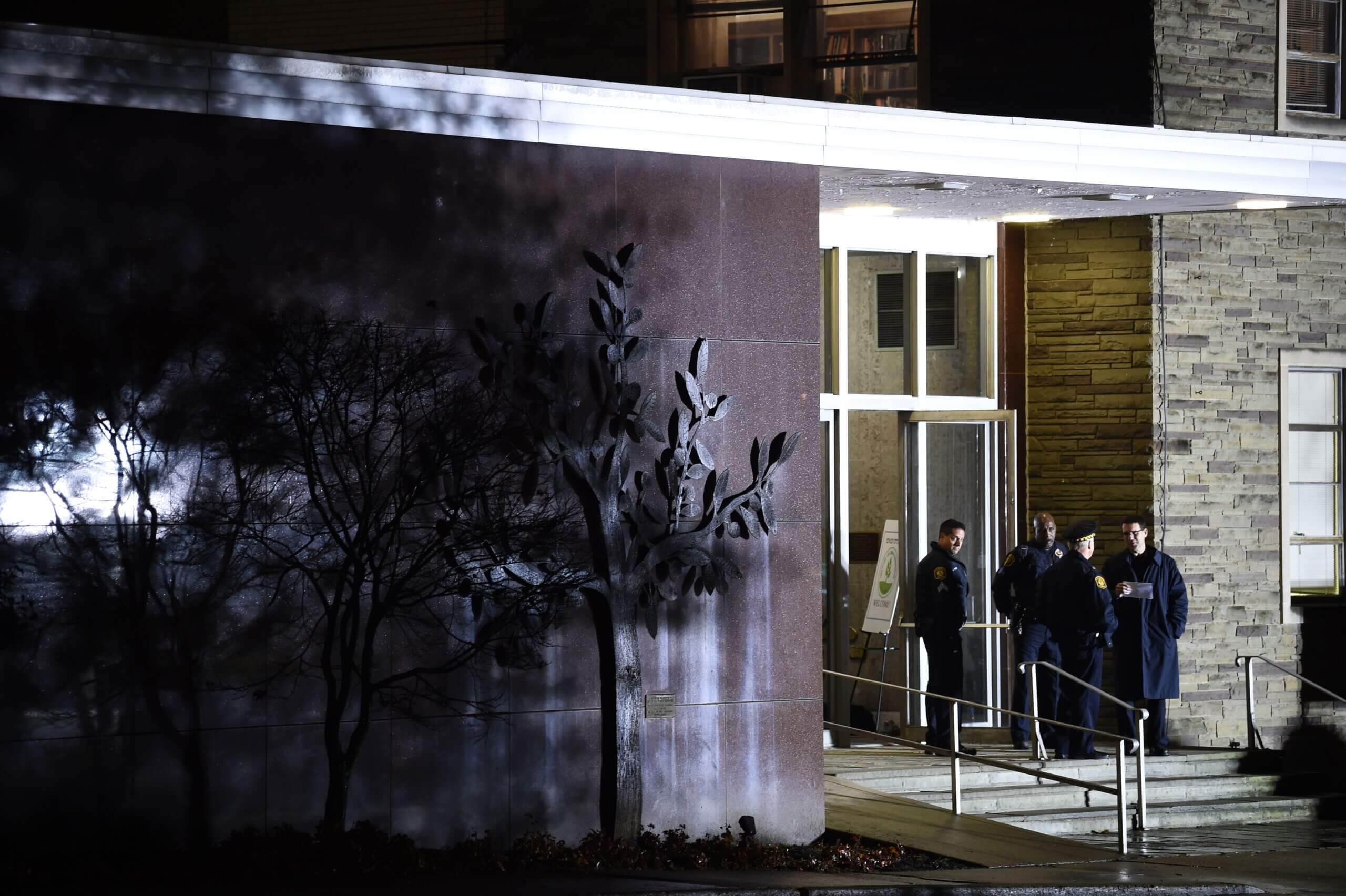
Less is known about the perpetrators of last year’s deadly attacks in Colorado and Washington, D.C., but both suspects allegedly shouted anti-Zionist slogans during the incidents and the suspect charged in the Capital Jewish Museum shooting posted a manifesto justifying violence against supporters of the Israeli government.
Investigators have released little information about Pittman, and law enforcement did not respond to interview requests. But a review of Pittman’s social media presence and conversations with those who know him suggest an extremely rapid turn toward extremism sparked by a mental health crisis that had led him down an erratic online path that included attempts to sell a Bible-inspired fitness plan.
“It just seemed like he had started to go into spiritual psychosis,” said a friend who met Pittman during high school at St. Joseph’s Catholic Academy. “He was a really normal person until a few months ago.”
It’s a profile that defies the simplest political explanations offered by figures like Deborah Lipstadt, the Holocaust scholar, who initially said the attack was “another step in the globalization of the intifada,” or Derrick Johnson, the NAACP president who said during a prayer vigil in Jackson after the attack that the White House had enabled Pittman’s violence by “other-izing our communities.”
Pittman, though, expressed little interest in politics, according to both his high school friend and his social media activity, which until recently was almost exclusively focused on baseball and hanging out with friends.
“He was actually a really great guy, very genuine, honest,” the high school friend said. “Guy you could talk to about anything and he would listen.”
But another friend told Mississippi Today that Pittman had started to change over the course of several years, beginning to post 10-15 times per day on social media, including images of him speeding down the highway in a Porsche and injecting steroids.
Pittman’s parents first noticed a change at the start of winter break in early December when he arrived home from community college and began behaving in “erratic” ways, according to interviews they gave to the FBI.
Tricia, Pittman’s mother, told police that her son had been scaring the family pets and that she and her husband, Steve, were considering starting to lock their bedroom door at night because they were afraid of their son.
But it wasn’t until around a week before the arson that Pittman began making antisemitic comments, according to FBI Special Agent Ariel Williams, who testified at a court hearing Tuesday during which Pittman pleaded not guilty to the arson.
One friend who worked out with Pittman at a local gym called police after seeing news of the fire at Beth Israel to say that Pittman had said he “wanted to burn down a synagogue” the day before the attack.
A new kind of violence
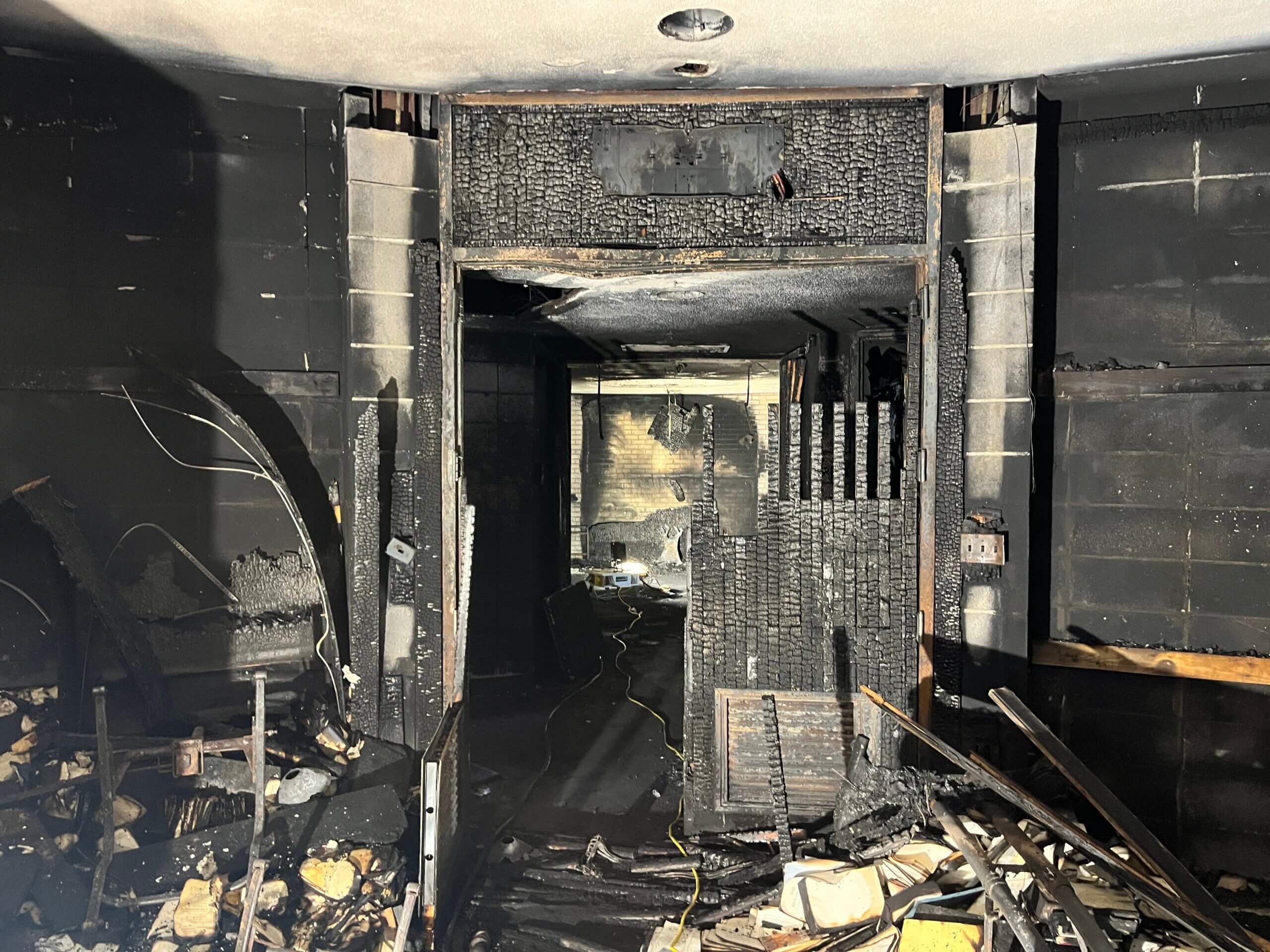
Shortly after Beth Israel opened a new synagogue building in 1967, with two long wings and an elevated roof at the center meant to evoke the Israelites’ tents, it was bombed by the Ku Klux Klan as part of a violent campaign against school integration.
As antisemitic violence in Mississippi mounted the following year, the Jewish community raised funds at the behest of the FBI to pay Klan informants, which ultimately helped successfully break up the ring of nighttime bombers.
The 1967 bombing, and a subsequent attack on the rabbi’s house, have become an integral part of Beth Israel’s history and are memorialized on a plaque outside the synagogue that describes Jewish support for the Civil Rights Movement.
But today Jews in Jackson say they experience little to no antisemitism and, at least locally, there’s no organized political movement aligned against them like there was in the 1960s, making the arson especially bewildering.
The members of Beth Israel are committed to rendering the arsonist’s attack irrelevant. The fire, fueled by five gallons of gasoline, destroyed the library and caused structural damage to one wing of the building. And yet W. Abram Orlansky, a former synagogue president, said that no services had been scheduled the Saturday when the fire took place and a local church quickly offered space to hold all of Beth Israel’s scheduled programming while repairs took place. “This guy succeeded at canceling literally zero planned events,” said Orlansky, who grew up in Jackson. “I’m pretty proud of that.”
Some have pondered what Pittman’s motives may have been, though, and they generally figure that whatever drove Pittman to violence must have come from elsewhere — and people had a good hunch as to where.
“It’s that damn phone,” said Vivienne Diaz, a teacher who belongs to Beth Israel.
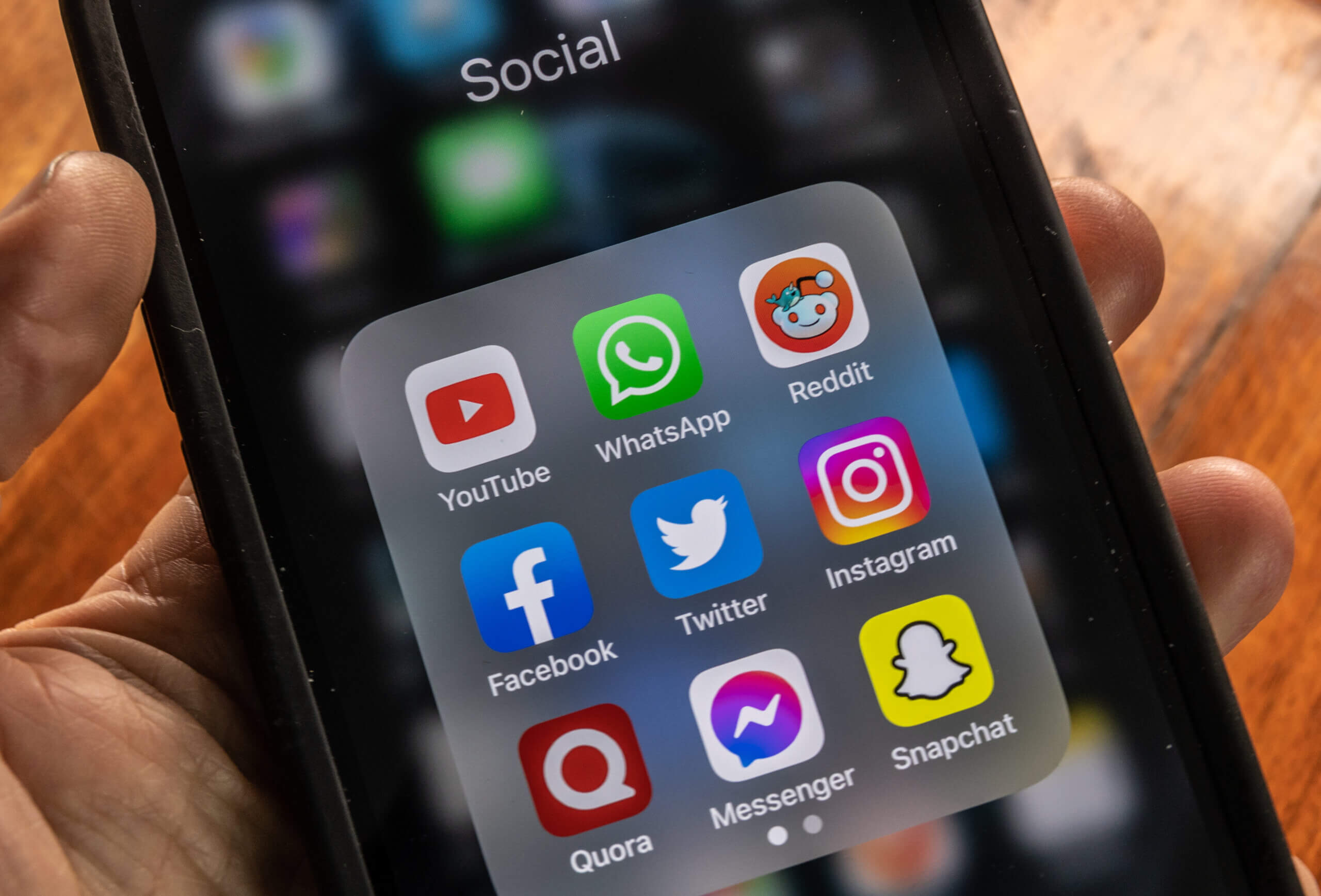
Pittman certainly spent a lot of time on his phone. He was a prolific social media user with accounts on X, Instagram, TikTok, Facebook, Snapchat and YouTube. According to a Forward review of his public posts, he did not share any antisemitic content until hours before police say he started the fire at Beth Israel, when he reposted a meme of a cartoon character shoving a Jew into a swimming pool.
His high school friend said that Pittman had never discussed Jews or Judaism until the week leading up to his arrest.
But Pittman followed several Instagram accounts that promoted a forceful brand of Christianity, including The Christianity Pill, which declares “CHRIST IS KING” in its bio — Pittman told the judge “Jesus Christ is Lord” during his initial court hearing — and claims that “Christianity is the most persecuted religion in the world.”
He followed another account called The Final Stand that boasts it is “spreading what is labeled ‘misinformation’” and warns against a plot by an unnamed group seeking to wipe out Christians. “But we are HEALING,” the account posted in July. “We are waking up from this deep coma we’ve been in since WW2.”
(Pittman’s father told police that he “finally got them” after being confronted about the burns on his hands and ankles the morning after the fire.)
In court Tuesday, Pittman carried a jailhouse Bible and crossed himself several times during the proceeding and bit his nails.
In addition to the Christian content, Pittman engaged with accounts promoting conspiracy theories, like Conspiracy Theories, Inc. and Whispers of Truth, which shares claims that NASA faked the moon landing alongside a defense of Mel Gibson and critique of the World Trade Center’s Jewish owner.
It’s not clear exactly when Pittman began following these accounts or engaging with more overt antisemitic content, like the meme he shared shortly before the attack, but friends and acquaintances say the change appeared to happen sometime over the summer after his first year at college.
During that time, he created a new social media account focused on fitness that he populated with shirtless videos and pleas to help his followers “get shredded” and earn $7,000 per week. He abandoned the account a couple weeks later, around the time he started his second year at Coahoma Community College, a school in the Mississippi Delta where 92% of the students are Black.
On the last day of classes at Coahoma, he registered One Purpose, a website advertising “scripture-backed fitness” that mixed Hebrew terms with advice to limit your diet to “God-made fats.”
Pittman told police that around the same time he began earning money through day trading stocks, though his lawyer dispelled that this was generating any income for his client in court Tuesday: “There is no income.”
An unnamed family friend told a local radio station that Pittman had started struggling with mental health during his third semester at Coahoma this fall and was not planning to return after winter break, a break that his parents — who both work at the University of Mississippi Medical Center in Jackson — hoped to use to get him psychiatric help.
“They condemn the terrible sin of this incident,” Suds, the priest, said in his sermon. “They’ve lost the son that they knew and loved.”
Pittman’s parents were not at Tuesday’s hearing and did not respond to a request for comment sent to the lawyers representing their son, who goes by Spencer, or to a call at the entrance to their gated community in Madison.
Pittman’s trial is set for Feb. 23. Until then, he was remanded to federal custody.
A difficult crime to prevent
Lone offenders, as investigators have described Pittman, are especially difficult to thwart. But other antisemitic perpetrators have left longer trails that offered the possibility of an earlier intervention. John T. Earnest’s 18-month timeline from his initial radicalization to the shooting at Poway Chabad appears to be common.
The Anti-Defamation League recently traced the radicalization of two school shooters and found that both had followed almost identical online paths leading up to the shooting. One took 18 months, the other 19 months.
Pittman appeared to move faster, although his attack on Beth Israel was limited to property damage.
“We thought it took 19 months,” Lindsay Baach Friedman, the ADL’s regional director covering Mississippi, said in an interview. “But it’s not a far cry to go from 19 months to three months.”
The contraction in time from when a perpetrator of violent extremism starts becoming radicalized to when they act has been shrinking for decades, which can make it harder for the network of organizations that seek to monitor antisemitic threats and prevent them.
“We need to move faster, and we need to be smarter about how we move,” said Michael Masters, CEO of Secure Community Network. He said one of the most reliable ways to prevent attacks like the Beth Israel arson was for people to report friends or family making suspicious comments or threats, but that can be harder to do when a suspect attacks less than 24 hours after telling someone their plan — in Pittman’s case, telling a workout buddy that he wanted to burn a synagogue.
Masters added that there are growing attempts by online actors to encourage vulnerable people, especially those suffering from mental health issues, to commit violence. “The material we see online increasingly is designed to reach those individuals and motivate them to act,” he said.
Organized antisemitism in Mississippi is much lower than it was the last time Beth Israel was burned in the 1960s, when elements of the state’s powerful white supremacist movement of the era often blamed Jews for desegregation; the ADL tallied just a few dozen incidents in the state over the past few years, mostly stickers placed by a white nationalist organization.
The more diffuse path Pittman took toward allegedly striking the synagogue does not seem to have centered on the kinds of specific arguments about Jews that often animate antisemitic perpetrators — instead it drew more loosely on what Masters described as a “salad bar” of misinformation and conspiracy theories that often includes antisemitism but is much harder to pin down than the ideologies that motivate organized hate groups.
Orlansky, Beth Israel’s former president, said the synagogue had close ties with law enforcement and had been alerted in the past when the FBI noticed warning signs that might have signaled a threat to the congregation.
But Pittman, whose antisemitism only broke into the open in the days before the attack, never seemed to be on their radar.
“I think we did everything that a congregation can reasonably do,” said Orlansky, the former Beth Israel president. “Hate can come from anywhere — that’s my main takeaway.”
This is a moment of great uncertainty. Here’s what you can do about it.
We hope you appreciated this article. Before you go, we’d like to ask you to please support the Forward’s independent Jewish news this Passover. All donations are being matched by the Forward Board - up to $100,000.
This is a moment of great uncertainty for the news media, for the Jewish people, and for our sacred democracy. It is a time of confusion and declining trust in public institutions. An era in which we need humans to report facts, conduct investigations that hold power to account, tell stories that matter and share honest discourse on all that divides us.
With no paywall or subscriptions, the Forward is entirely supported by readers like you. Every dollar you give this Passover is invested in the future of the Forward — and telling the American Jewish story fully and fairly.
The Forward doesn’t rely on funding from institutions like governments or your local Jewish federation. There are thousands of readers like you who give us $18 or $36 or $100 each month or year.
Support our mission to tell the Jewish story fully and fairly.