Taking Different Lessons From Same Threat

Image by getty images

J.J. Goldberg June 15, 2014
Yeshiva students pray for safe return of three kidnapped youths
With the terrorist kidnapping of three teenagers dominating the news cycle and nearly every private conversation for the past two days, Israelis have had little attention to spare for America’s national agony in Iraq.
It’s hard to think of a time when the two nations’ fates were so closely linked, yet their concerns were so utterly disconnected. It seems like neither public has time for the other’s troubles.
The similarities of their situations go beyond their struggles with Islamist terrorists. In both countries, it seems, the initial horror of the events themselves — the fall of Mosul, the disappearance of the three yeshiva students — quickly gave way to anger at the perpetrators and their enablers.
And at that moment, when thoughts turned to the enablers, each country’s political sides began to turn on each other.
In America, of course, it’s those who blame Barack Obama for pulling out of Iraq before the mess there was fixed versus those who blame George W. Bush for creating the mess by going into Iraq in the first place.
In Israel, it’s those who blame Palestinian Authority Mahmoud Abbas for opening the door to Hamas — and by none-too-subtle implication, the supporters of the Oslo peace process that created an openly armed Palestinian presence on Israeli-controlled soil — versus those who accuse the right, and especially Benjamin Netanyahu, of freezing forward motion and threatening the tentative stability that’s been won in the past few years.
There’s much more to be said, of course. Obama is accused of encouraging extremists throughout the region by his failure to stand with Mubarak in Egypt and failing to go after Assad in Syria. Netanyahu is accused of inflaming the current situation and weakening Abbas as he maneuvers for the upper hand against Hamas.
And while the squabbling escalates, three Israeli families suffer in agony while they wait for new of their teenage sons. And thousands of American families watch bitterly as the sacrifice of their sons and daughters goes for naught. And the world gets darker.
Chemi Shalev has an important analysis in Haaretz of the two nations’ current troubles and the way in which their current needs intersect and conflict. Here’s the nub:
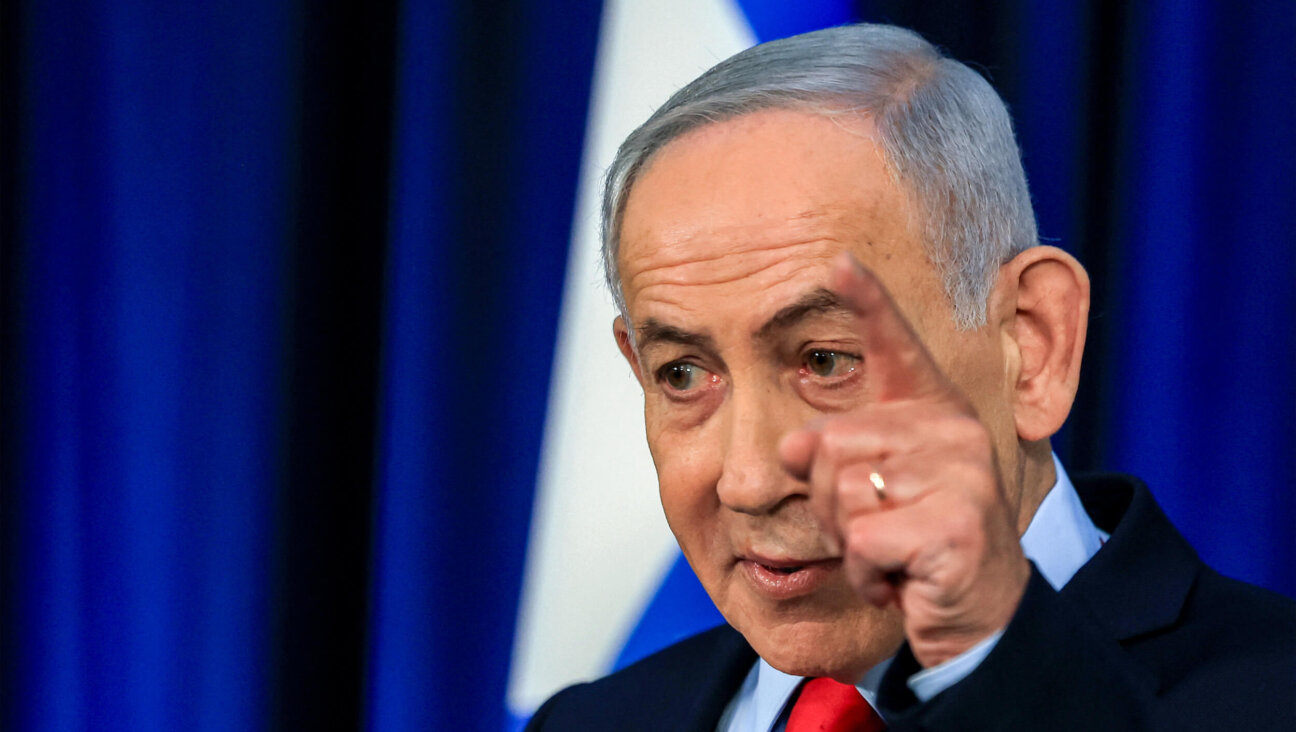
While Prime Minister Benjamin Netanyahu laid the blame for Thursday’s kidnapping of three yeshiva students on the Palestinian unity government in his press conference last night, U.S. Secretary of State John Kerry and his officials highlighted their contacts with President Mahmoud Abbas and the continued security collaboration between Israel and the Palestinian Authority. Their message was clear: With Washington overwhelmed by a potential geostrategic catastrophe in Iraq, the last thing it wants or needs is an Israeli attempt to undermine the stability of the Ramallah regime, with or without Hamas.
Everything depends on identity of the perpetrators. If Israel can link Hamas to the kidnapping, Washington will be hard-pressed to deflect the Israeli demand to withdraw recognition from Abbas’ new government. On the other hand, if the hitherto unknown Islamic State in Iraq, Syria and Palestine – West Bank group is responsible, it will be seen as part of the narrative currently dominating America: an offshoot of the jihadist forces threatening to take Baghdad and hand President Barack Obama a decisive diplomatic and political defeat.
And this:
Although Obama made another ill-advised television appearance on Friday in which he said that he was “reviewing” the situation, it is clear to him and his advisers that an ISIS victory parade in the streets of Baghdad is intolerable, both for him and the United States’ global stature. Thus, despite the fact that it may appear to contradict the anti-interventionist creed that got him elected six years ago and that has guided his policy ever since, the assumption is that Obama will have no choice but to send U.S warplanes, at the very least, to try and stop the jihadists and reverse the disintegration of Iraqi Prime Minister Nouri al-Maliki’s government and army.
Such a move could have significant ramifications for Israel. The shared objective of containing the spread of Sunni jihadism could deepen collaboration between Washington and Tehran, and thus influence progress in their nuclear talks as well. Washington might demand that Israel maintain calm in the territories to prevent another flash point that could stir regional anti-American sentiments. And if Netanyahu fails to produce a smoking gun proving that Hamas was involved in the kidnapping, Washington will point out that the reason for Maliki’s downfall was his exclusion of Iraqi Sunnis from government and their consequent rush into the arms of the murderous lunacy that is now engulfing his country. And the same could happen in the West Bank.
This is a moment of great uncertainty. Here’s what you can do about it.
We hope you appreciated this article. Before you go, we’d like to ask you to please support the Forward’s independent Jewish news this Passover. All donations are being matched by the Forward Board - up to $100,000.
This is a moment of great uncertainty for the news media, for the Jewish people, and for our sacred democracy. It is a time of confusion and declining trust in public institutions. An era in which we need humans to report facts, conduct investigations that hold power to account, tell stories that matter and share honest discourse on all that divides us.
With no paywall or subscriptions, the Forward is entirely supported by readers like you. Every dollar you give this Passover is invested in the future of the Forward — and telling the American Jewish story fully and fairly.
The Forward doesn’t rely on funding from institutions like governments or your local Jewish federation. There are thousands of readers like you who give us $18 or $36 or $100 each month or year.
Support our mission to tell the Jewish story fully and fairly.