I’m a 25-year-old semi-Zionist. Here’s what that means this Hanukkah.
My Jewish identity has evolved since Oct. 7
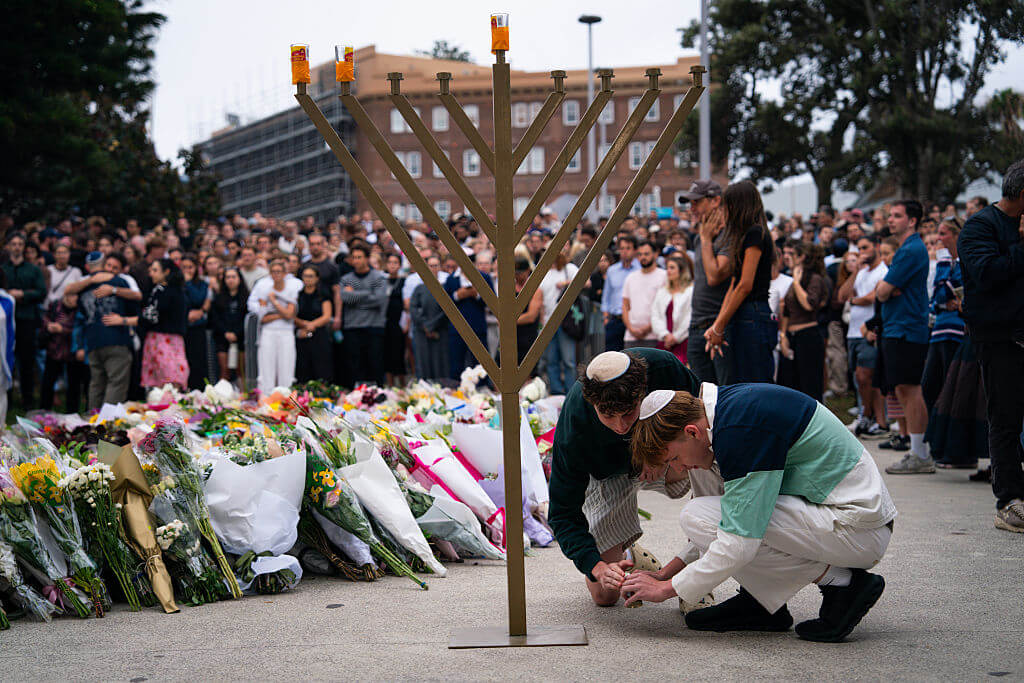
Community members gather outside of Bondi Pavilion at Bondi Beach on Dec. 15 in Sydney. Photo by Audrey Richardson/Getty Images
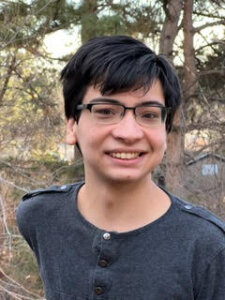
Adam Eisenberg December 18, 2025
I do not look Jewish. I do not wear a kippah. I wasn’t even truly connected to this identity until after Oct. 7. This isn’t to say I never felt Jewish; when I was a kid, I used to light LED Hanukkah “candles” with my father while giving my grandfather a “Chag Sameach” phone call. I used to hope for chocolate coins and Hot Wheels cars for my ever-growing collection. As an adult I have a much different hope. I hope for peace, for all Jews, everywhere.
When I was a child, I treated the existence of our homeland as a constant, something unshakeable. “There’s a Jewish homeland just like there’s a homeland for everyone else, just like there are Jews everywhere,” I thought. But since Oct. 7, I’ve realized just how fragile our existence is. I understand the concerns with Israel; I firmly believe that Benjamin Netanyahu and Itamar Ben-Gvir committed a genocide in our name and used our trauma to justify it. But I don’t think dismantling the country is a way to solve the problem.
This is why I describe myself as a “semi-Zionist.”
I believe that Jews have a claim to the land of Israel, that it is our ancestral homeland, and that yes, Jews were always in the region and had been in the region prior to 1917. I believe that we still have a right to Israel now, and that we always will.
Here’s why I’m “semi.” As a child I was taught that the ideal Jewish values are resilience, peace and rationality. There is nothing resilient about denying food to starving people. There was nothing peaceful about laying waste to most of Gaza, nor the acts of settler violence in the West Bank. And there is nothing rational about using the memory of a truly horrific atrocity to justify a campaign of hatred and fear. The very ideals of Zionism have been twisted by despicable people to turn from resilience to conquest.
It would be easy to blame antisemitism, including the terrorist attack at a Hanukkah celebration in Australia, on the actions of the Israeli government and their atrocities. What’s harder is thinking deeply and honestly about our own prejudices, who we blame, and what we do with our hate.
My hope for this Hanukkah is peace for everyone, everywhere — all Jews, and all people regardless of their faith. I hope for a time when the candles lit on Hanukkah are for celebration and not for mourning a senseless tragedy. I hope for a time when we can share our homeland with Palestinians instead of murdering them, because it is their homeland, too. I hope for a time when Jews across the world can live freely without being persecuted for our beliefs or murdered just for existing.
But most of all, I hope for more Jews to have quiet Hanukkah nights like the ones I had, with fathers laughing about jokes their sons don’t understand, children pretending to like the taste of kugel, and lights that guide us toward a safe future.
This is a moment of great uncertainty. Here’s what you can do about it.
We hope you appreciated this article. Before you go, we’d like to ask you to please support the Forward’s independent Jewish news this Passover. All donations are being matched by the Forward Board - up to $100,000.
This is a moment of great uncertainty for the news media, for the Jewish people, and for our sacred democracy. It is a time of confusion and declining trust in public institutions. An era in which we need humans to report facts, conduct investigations that hold power to account, tell stories that matter and share honest discourse on all that divides us.
With no paywall or subscriptions, the Forward is entirely supported by readers like you. Every dollar you give this Passover is invested in the future of the Forward — and telling the American Jewish story fully and fairly.
The Forward doesn’t rely on funding from institutions like governments or your local Jewish federation. There are thousands of readers like you who give us $18 or $36 or $100 each month or year.
Support our mission to tell the Jewish story fully and fairly.