Is Mamdani bad or good for Jews? Here’s how to tell
You should be suspicious of quick, easy answers
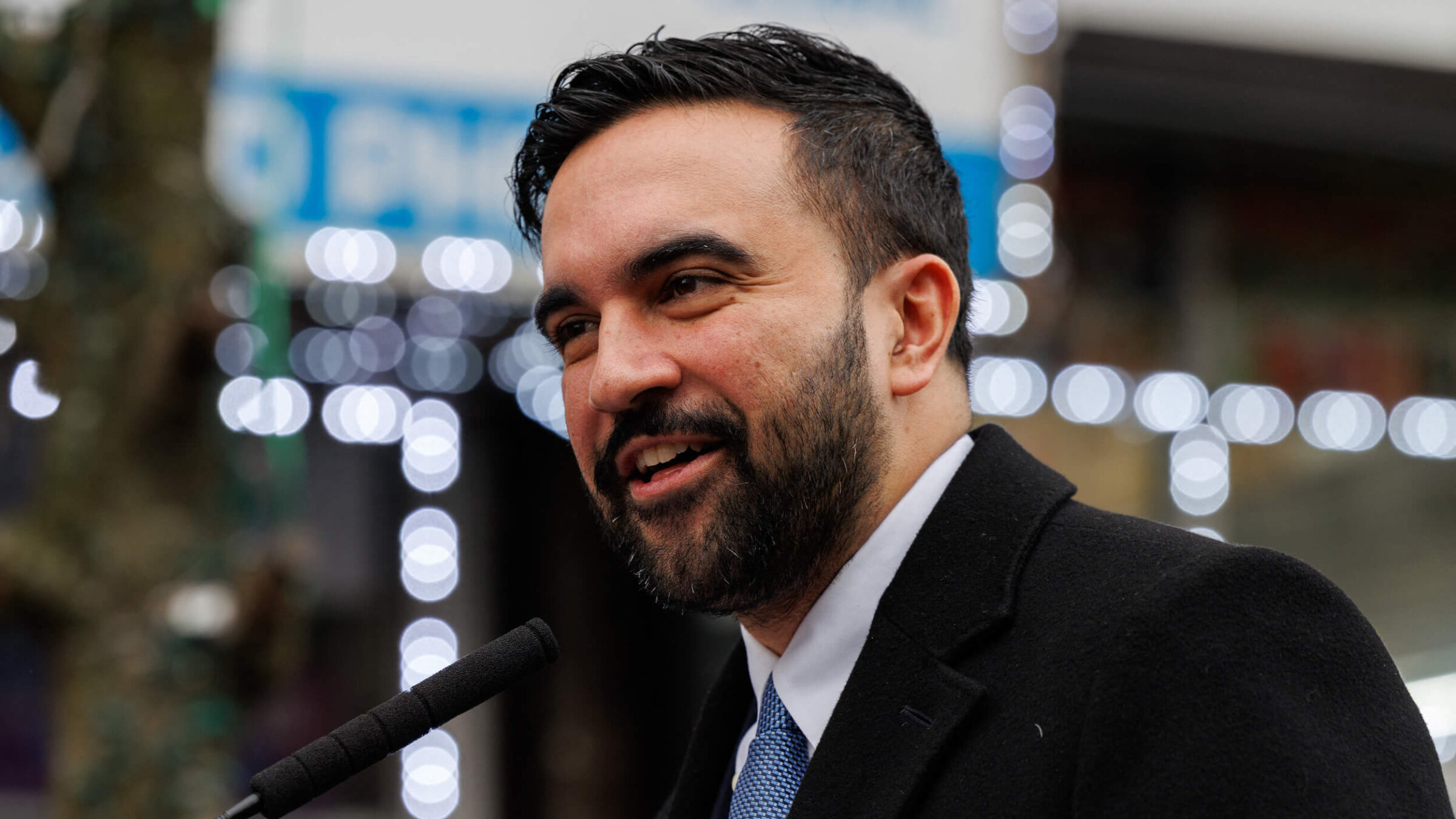
Mayor Zohran Mamdani on Jan. 7. Photo by Jason Alpert-Wisnia/Hans Lucas via AFP

Contributing Columnist Emily Tamkin January 7, 2026
What will Zohran Mamdani’s mayoralty mean for New York City’s Jews?
Much ink was spilled on that question during Mamdani’s campaign. But now that he is actually in office, there are two approaches we can use in assessing his performance in tackling antisemitism.
The first involves focusing on signals. We saw this method used extensively in expressions of concern during Mamdani’s campaign. His refusal to condemn the phrase “globalize the intifada” on a podcast, for example, was taken as a signal that he would not be serious about fighting antisemitism.
The second involves looking at how the new mayor actually shows up for Jews — a tactic that means taking a longer view of his ability to navigate the complicated and painful issues facing Jewish communities.
The first approach has already been used widely in Mamdani’s first days in office.
On Jan. 1, Mamdani overturned a host of executive orders that his predecessor, former Mayor Eric Adams, had put into place, some of which were relevant to antisemitism and Israel. This included revoking the city’s use of the International Holocaust Remembrance Alliance definition of antisemitism.
Critics of that definition say that it threatens to chill legitimate criticism of Israel. (The IHRA definition includes, among possible examples of antisemitism, actions like “denying the Jewish people their right to self-determination, e.g., by claiming that the existence of a State of Israel is a racist endeavor.”) And some Jews argue that it insists on a limited understanding of Jewish identity for political purposes.
But to some, Mamdani’s revocation of the Adams order enshrining that definition was an important signal — one that cemented a sense that he does not take Jewish safety or wellbeing seriously.
“Removing protections is a dangerous move, especially on day one. Jewish New Yorkers deserve security, not a delete button,” ADL chief Jonathan Greenblatt posted. “Despite the eloquent rhetoric, actions like this speak far, far louder than words.”
Israel’s foreign ministry wrote, “This isn’t leadership. It’s antisemitic gasoline on an open fire.” And William Daroff, head of the Conference of Presidents of Major American Jewish organizations, said Mamdani’s move was “a troubling indicator of the direction in which he is leading the city, just one day at the helm.”
But there is little evidence that adopting the IHRA definition of antisemitism has done anything to actually quell antisemitism, despite a broad push to have it embraced by universities, states and the federal government.
Which raises the question: When we broadly interpret individual acts as symbols of a deeper intention, what do we miss?
At the same time Mamdani overturned every executive order signed by Adams since late September 2024, when Adams was indicted on corruption charges, he announced that he will keep the Office to Combat Antisemitism — which Adams founded — open. That office liaises between the city and its Jews on safety and security, and will make recommendations to Mamdani on public education efforts around antisemitism.
What if we asked practical, rather than symbolic, questions in response to those day one actions?
Not “how outraged should we be by the revocation of the IHRA definition?” but “will that revocation actually change how safe Jews are?” Or: What will the functions of the Office to Combat Antisemitism actually look like under Mamdani? How will the office track antisemitism? What will it do differently under Mamdani than under Adams? What will public education on antisemitism in Mamdani’s New York look like?
Mamdani revoked an Adams order that gave the police commissioner — currently Jessica Tisch — the responsibility to evaluate proposals for regulating protests outside houses of worship. (Mamdani was criticized for his response to a November protest outside Park East Synagogue.) But he put in place a new order that authorized the Police Department and Law Department to conduct similar reviews.
Concerned Jews could ask how those departments will handle this role differently, and what the new mayor will do with their proposals.
And beyond that: Which Jewish communities will Mamdani engage with, and what will he offer them in terms of practical action? How will he demonstrate a commitment to Jewish New Yorkers, in all their pluralism and diversity? If other officials in New York engage in antisemitic conspiracy theories, how will he react to them?
What will it look like when he celebrates holidays with Jewish New Yorkers? When he inevitably disagrees with various Jewish New Yorkers, how will his administration try to communicate across differences?
Taking this second approach could come with downsides. Polling shows that New York Jews continue to be deeply anxious about their future under Mamdani, and are eager for quick answers on what they can expect for the next four years. Evaluating the real impact of his performance does not offer concise opportunities for a headline or a statement offering those responses. It’s a slower and more boring kind of proof to collect.
But it has upsides, too. The answers would be slower to come, but they would reflect not just strong feelings around what could happen, but what is actually happening. They would be nuanced. And maybe they would lead to a stronger sense of safety and security, too.
This is a moment of great uncertainty. Here’s what you can do about it.
We hope you appreciated this article. Before you go, we’d like to ask you to please support the Forward’s independent Jewish news this Passover. All donations are being matched by the Forward Board - up to $100,000.
This is a moment of great uncertainty for the news media, for the Jewish people, and for our sacred democracy. It is a time of confusion and declining trust in public institutions. An era in which we need humans to report facts, conduct investigations that hold power to account, tell stories that matter and share honest discourse on all that divides us.
With no paywall or subscriptions, the Forward is entirely supported by readers like you. Every dollar you give this Passover is invested in the future of the Forward — and telling the American Jewish story fully and fairly.
The Forward doesn’t rely on funding from institutions like governments or your local Jewish federation. There are thousands of readers like you who give us $18 or $36 or $100 each month or year.
Support our mission to tell the Jewish story fully and fairly.