The synagogue means something special to Southern Jews — which makes the Mississippi arson that much darker
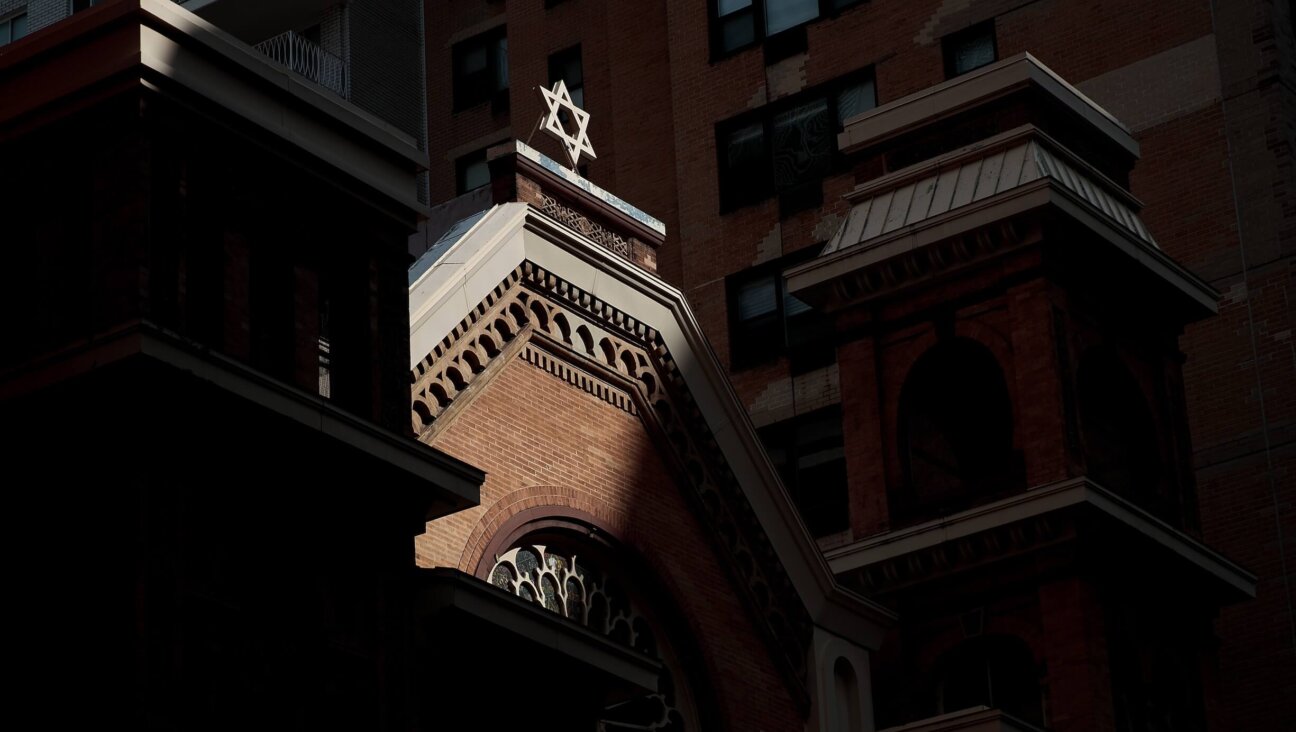
To strike at a small community synagogue is to strike at Jewish life as a whole
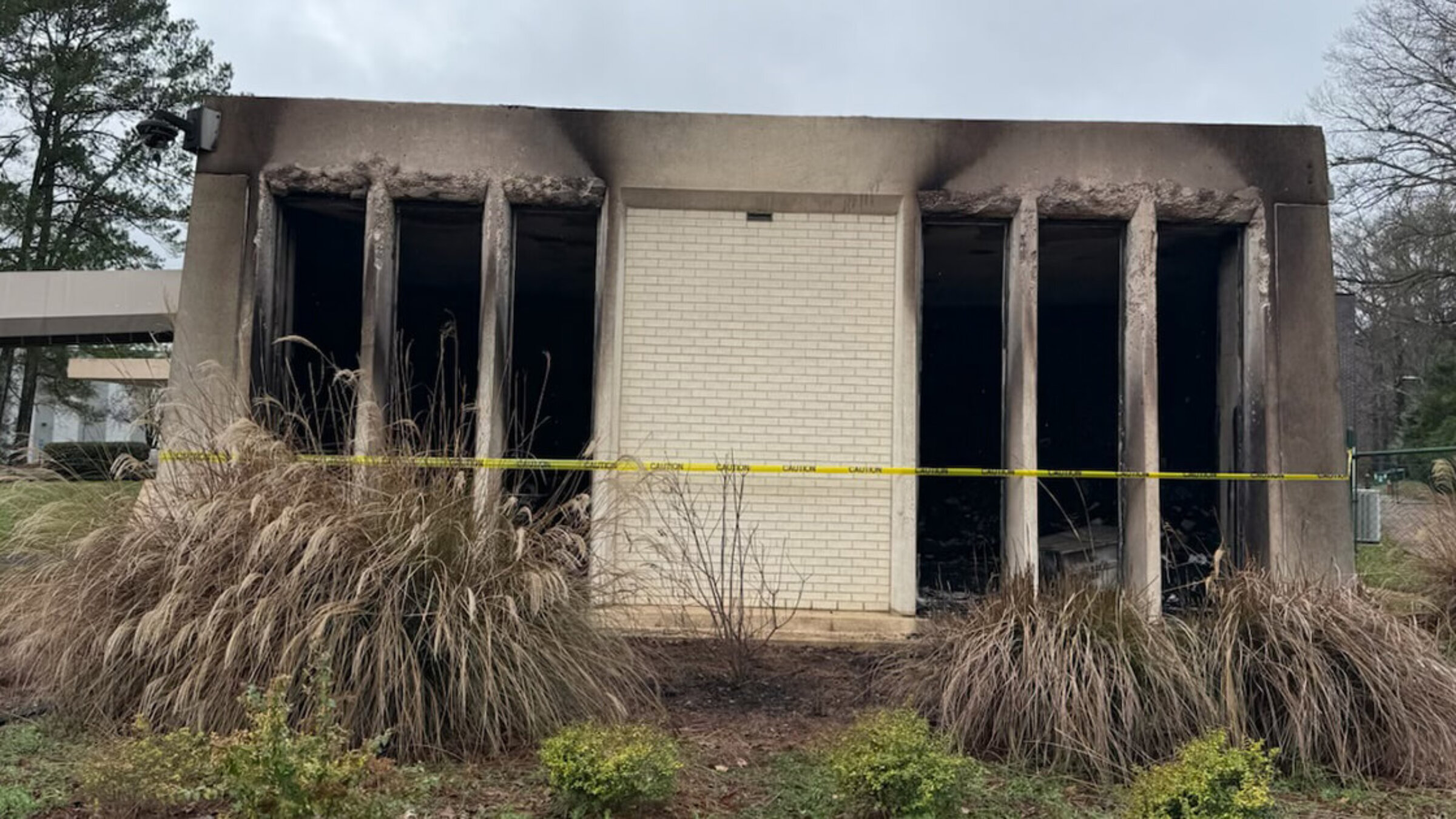
The burned building of Beth Israel Congregation in Jackson, Mississippi. Courtesy of Jackson Fire Department

Rachel Fink January 13, 2026
The arsonist who confessed to burning a synagogue in Jackson, Mississippi, told police he targeted the building because of its “Jewish ties.”
What an odd phrase, I thought. As if there was nothing more than a flimsy connection between the building he aimed to destroy and the living tradition contained within it.
For those of us raised in one of the small Jewish communities scattered across the South, nothing could be further from reality. I grew up in Louisiana, attending a Reform temple that was very similar to the one the arsonist called a “synagogue of Satan.” Baton Rouge, like Jackson, isn’t a small town, but both cities’ Jewish communities aren’t big enough for a day school or a kosher butcher. There’s no mikveh, and no chevra kadisha. Like so many other tiny communities scattered throughout the region, we did not have a Jewish Community Center, a Jewish bookstore or a Jewish museum.
And so our synagogues had to be everything to everyone, all at once.
We listened to the blast of the shofar in the same auditorium where we giggled late into the night at youth group lock-ins. We learned our first Hebrew words in the same classroom where we organized against KKK Grand Wizard David Duke’s political campaigns. We played fierce basketball games against each other in the same space where we came together to mourn the murder of Yitzhak Rabin.
The synagogue gave us our only access to kosher corned beef sandwiches and parent-approved teenage crushes; our only chance to sit in a sukkah or watch our fingernails glow in the flames of a Havdalah candle; our only opportunity to hear firsthand testimony from Holocaust survivors.
As Jewish minorities in the Bible Belt, some of us encountered open antisemitism; others simply learned what it meant to feel subtly, but perpetually, like an outsider. We were navigating a world where “Merry Christmas” was the default greeting and our sports teams recited the Lord’s Prayer before every game. Where we had to explain, again, why we missed school for Yom Kippur. The synagogue was where we went to feel completely at ease in our Jewish skin.
This is another part of what makes Southern Judaism so unique: just like their members, the synagogues themselves form an incredibly tight-knit network, so we have all spent time in one another’s sanctuaries and social halls. Reading coverage of the fire, I was bemused but not surprised to learn that the temple president is an old camp friend.
Decades ago, I celebrated friends’ bar and bat mitzvahs at Beth Israel and spent weekends there for North American Federation of Temple Youth conclaves. Now, my daughter is invited to those friends’ children’s rites of passage, sitting in the same pews where we once whispered loudly to each other behind tattered prayerbooks. For so many of us, Sunday’s fire was not just another horrific act of antisemitism. It was an attack on our very identity, an attempt to destroy the place where it has been formed, practiced and passed down for generations.
But Southern synagogues have survived violence and trauma before. And in the wake of this outrage, I take comfort in the fact that so often, when tragedy has stricken, we have been comforted and cared for not only by fellow Jews across the region but also by allies of other faiths.
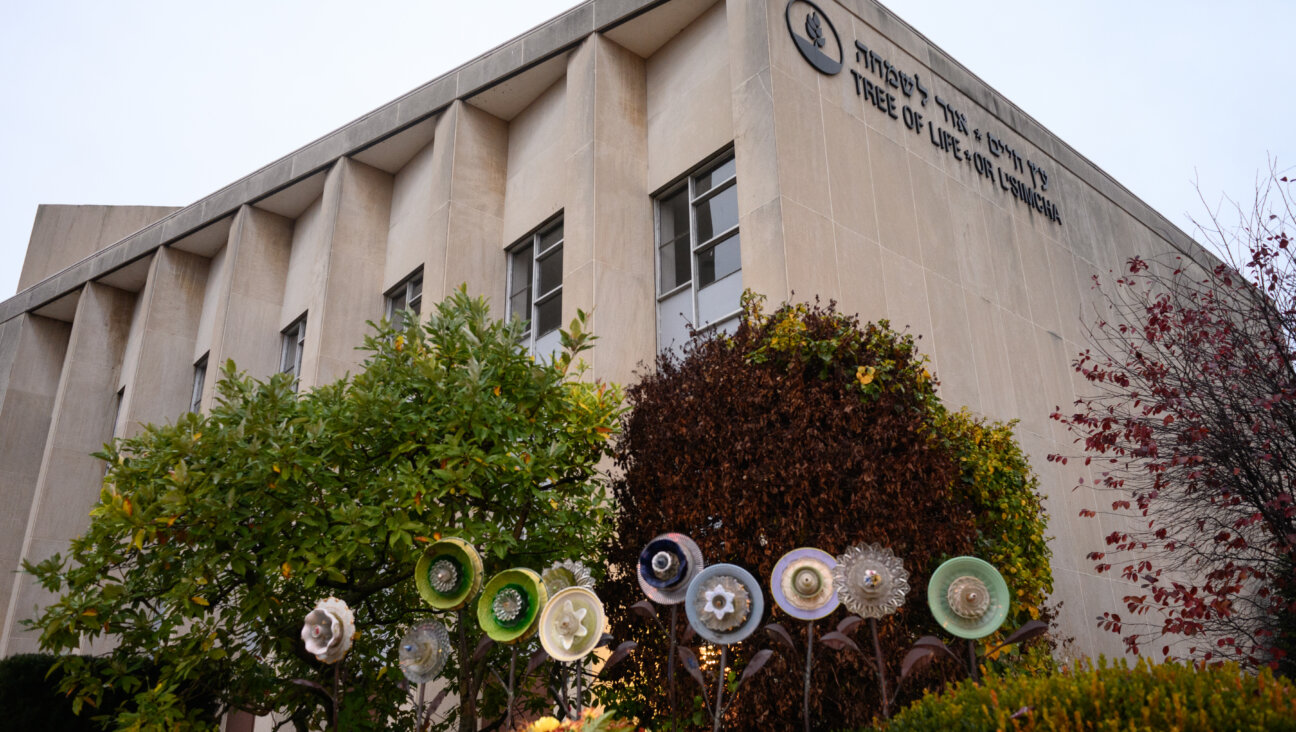
When a hurricane rendered my childhood synagogue unusable, the Baptist church next door offered us their space for High Holiday services. Without being asked, they draped large cloths over the crosses in the sanctuary so that we would feel more comfortable. After the 2018 Tree of Life Synagogue shooting in Pittsburgh, the imam of the local mosque reached out to our rabbi to invite the congregation to an interfaith service of prayer and peace.
And so it has been in the aftermath of the Jackson fire. Within hours, faith leaders from across the city had reached out, offering the dislocated Jewish community their spaces for services. Outside the charred entrance, bouquets of flowers lay on the ground. Someone left a simple note: “I’m so very sorry.”
The arsonist may have aimed to sever the “Jewish ties” Jackson Jews have to their community’s physical home, to the holy books and sacred artifacts kept inside it. But he grossly underestimated so much: our long legacy of resilience; the unbreakable commitment we have to our faith and our values; and most importantly, the Jewish — and Southern — tradition of caring for one’s neighbor, of standing arm in arm to overcome injustice and hatred.
This is a moment of great uncertainty. Here’s what you can do about it.
We hope you appreciated this article. Before you go, we’d like to ask you to please support the Forward’s independent Jewish news this Passover. All donations are being matched by the Forward Board - up to $100,000.
This is a moment of great uncertainty for the news media, for the Jewish people, and for our sacred democracy. It is a time of confusion and declining trust in public institutions. An era in which we need humans to report facts, conduct investigations that hold power to account, tell stories that matter and share honest discourse on all that divides us.
With no paywall or subscriptions, the Forward is entirely supported by readers like you. Every dollar you give this Passover is invested in the future of the Forward — and telling the American Jewish story fully and fairly.
The Forward doesn’t rely on funding from institutions like governments or your local Jewish federation. There are thousands of readers like you who give us $18 or $36 or $100 each month or year.
Support our mission to tell the Jewish story fully and fairly.