The ‘Hymietown’ affair degraded Black-Jewish relations. Jesse Jackson wasn’t the real culprit
Louis Farrakhan’s entry into the fray marked the real point of deterioration
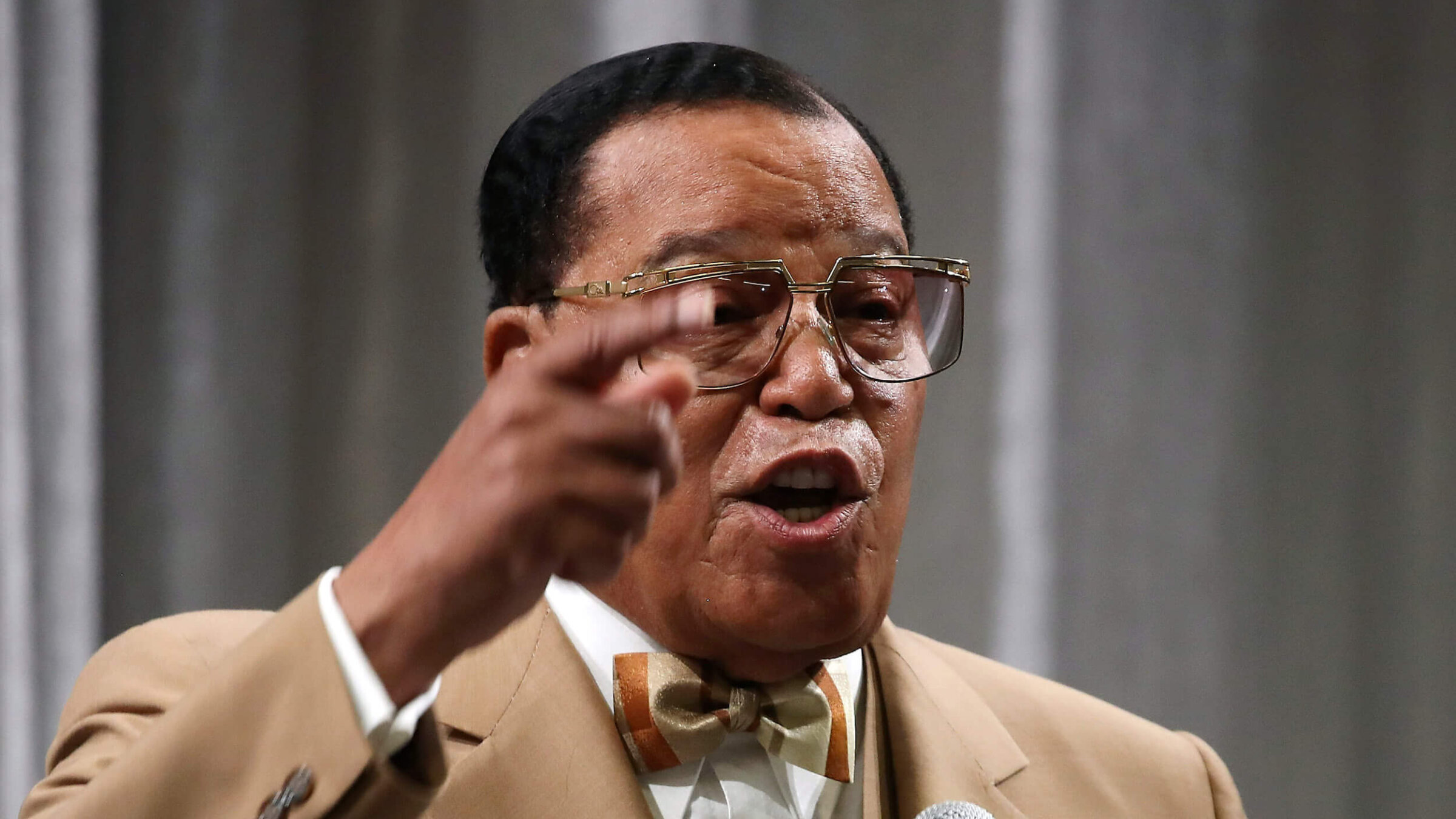
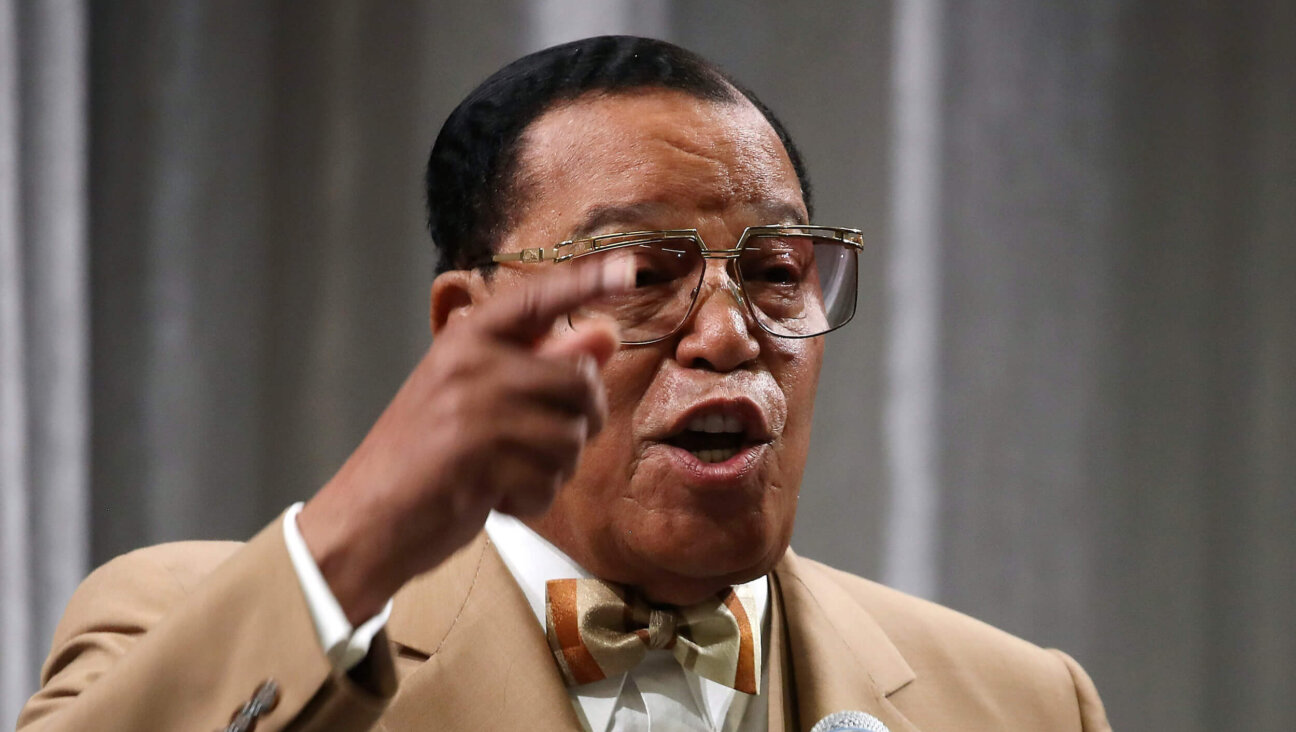
Nation of Islam Minister Louis Farrakhan on Nov. 16, 2017. Photo by Mark Wilson/Getty Images
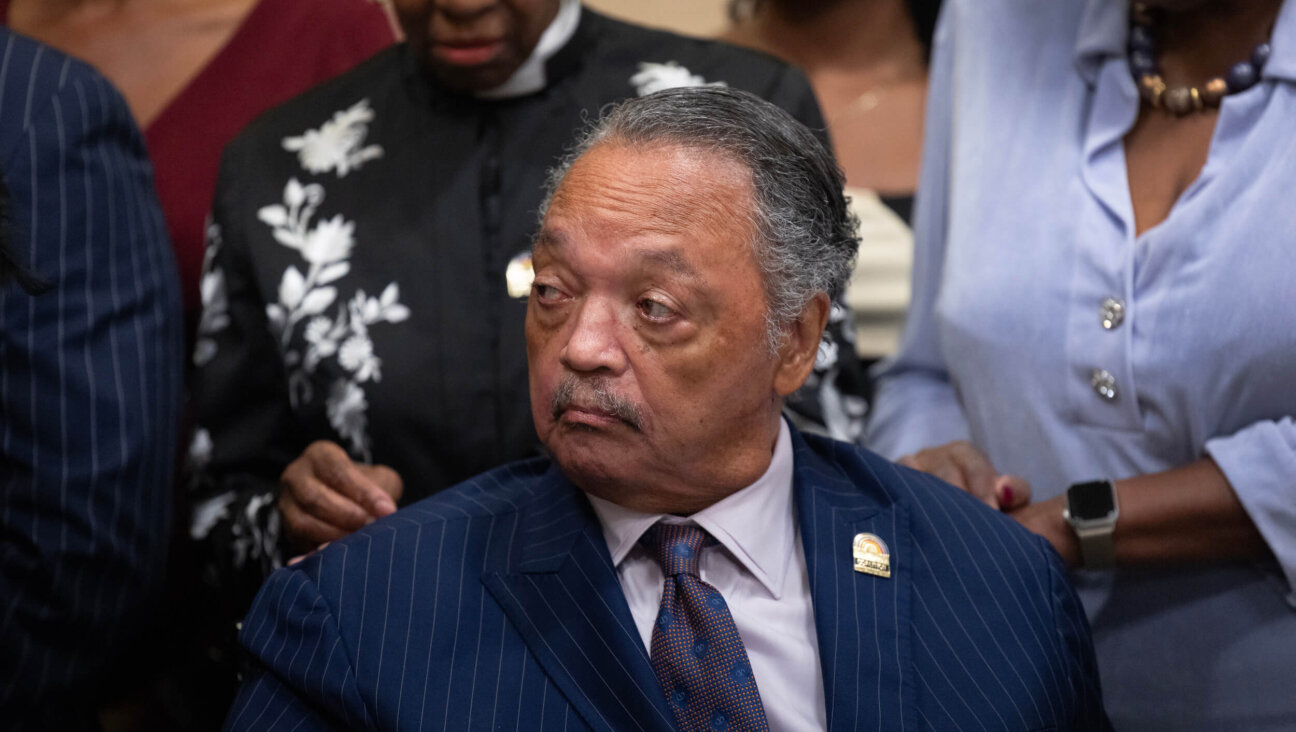
Conventional wisdom suggests Rev. Jesse Jackson’s infamous, unfortunate, off-the-record, 1984 “Hymietown” comment radically reshaped and further degraded Black-Jewish relations. It’s true. But not for the reasons that one might imagine.
Jackson, then a presidential candidate, initially denied the report, first published in The Washington Post, that he had used the aforementioned slur in a Washington, D.C. airport bar. Two weeks later he reversed course. In an address at synagogue Adath Yeshurun in New Hampshire, he asked to be forgiven.
How much damage to Black-Jewish relations did Jackson’s remark actually do? Some, for sure. But given how wobbly the two communities’ once-vaunted “grand alliance” had become by 1984, the degree of the slur’s impact has, I think, been overstated. Both groups had already built a vast reservoir of mutual mistrust. Among the causes: Jackson’s meetings with Yasser Arafat of the PLO rendered him suspect to Jews, and Jewish opposition to affirmative action struck Blacks as a betrayal. Ditto for the Andrew Young affair of 1979, a takedown of one of the community’s most distinguished public servants.
What actually changed Black-Jewish relations for the worse was not the “Hymietown” indiscretion, but Nation of Islam Minister Louis Farrakhan’s entry into the fray.
On Feb. 25, 1984, 12 days after the slur was first reported and one day before his synagogue apology, Jackson attended a meeting of the Nation of Islam in Chicago. There, Farrakhan told Jews: “If you harm this brother, I warn you in the name of Allah, this will be the last one you harm.”
Farrakhan was just getting started. On March 11, he referred to Hitler “as a very great man.” In June, he described Judaism as a “gutter religion.” By summertime, Jewish organizations were demanding that Jackson, still at that point running for president, fully denounce Farrakhan. Jackson initially resisted that call, instead downgrading the controversial cleric’s status from campaign “surrogate” to “supporter.” Eventually, with his campaign on fire, a besieged Jackson made a complete disavowal.
The long-term repercussions of this episode for the fragile Black-Jewish alliance were immense. The scandal launched Farrakhan — who until that point could have been described, per The New Republic, as “the boss of a fringe Muslim sect” — into national and even international visibility, so much so that Libyan ruler Muamar Gaddafi soon donated to his cause. Perched atop this new platform, Farrakhan set about injecting his group’s unremittingly antisemitic worldview into the cultural mainstream.
Conspiracy theories with lingering influence
The consequences of this ascent are still unfolding today.
For instance, the falsehood that Jews were major players in the African slave trade had little traction before the events of 1984. After them, it became a hot subject in popular and even academic circles. The far-right commentator Candace Owen’s antisemitic espousal of it to her audience of millions is only the most recent manifestation of that trend.
Under Farrakhan, the Nation of Islam argued that “so-called Jews” were imposters who had usurped and appropriated an African religious identity. That trope has recently reappeared in statements by public figures like Nick Cannon, Kyrie Irving, Deshawn Jackson, and Ice Cube — some of whom have since apologized.
It’s not just the Jewish community that has suffered in response. Farrakhan’s emergence also triggered what journalist Marjorie Valburn has called a “litmus test” for Black politicians: A requirement that Black political candidates must publicly denounce Farrakhan, often at the summons of a Jewish leader. The test has been administered countless times, including to former President Barack Obama during his 2008 campaign; numerous Democratic lawmakers in 2018; and Congressman Jamaal Bowman in 2024.
As Cynthia Ozick once observed, a Jew is a person who makes distinctions. Major Jewish organizations who subjected Blacks to the litmus test seemed incapable of doing precisely that. Jackson was clearly not Farrakhan. Truth be told, most Black people who shared Farrakhan’s concerns about economic empowerment were not and are not Farrakhan; they have little interest in his antisemitic obsessions.
In any case, I know of no case where applications of this test helped to improve Black-Jewish relations. Quite the contrary: It bred further resentment and distrust.
A mistaken mythology
As I learned while co-authoring a book about Black-Jewish relations with Terrence L. Johnson, the Black-Jewish alliance was never quite as “feel-good” as its champions have alleged. Even when the groups collaborated toward impressive Civil Rights accomplishments,their encounter was rife with every imaginable tension.
Johnson and I date the alliance from the NAACP’s founding in 1909 to the Six-Day War in 1967. One of our key observations was that inter-group tensions between Blacks and Jews were exacerbated and even driven by intra-group tensions. In other words, pitched battles between Jewish liberals and conservatives, and between Church-based liberals and Black radicals did much to shape — and endanger — the alliance, even when it was racking up victories for civil rights.
The same held true after 1984. Because of the intra-group complexities with which Jackson was dealing — trying to temper the effusions of radicals like Farrakhan while absorbing them into his coalition — his relations with Jews got worse. And tension within the Jewish community about how to respond equally spurred reasonable mistrust on the other side. Many forgave, but others, like then- executive director of the ADL, Nathan Perlmutter, did not: Perlmutter once said that Jackson “could light candles every Friday night and grow side curls, and it still wouldn’t matter. He’s a whore.”
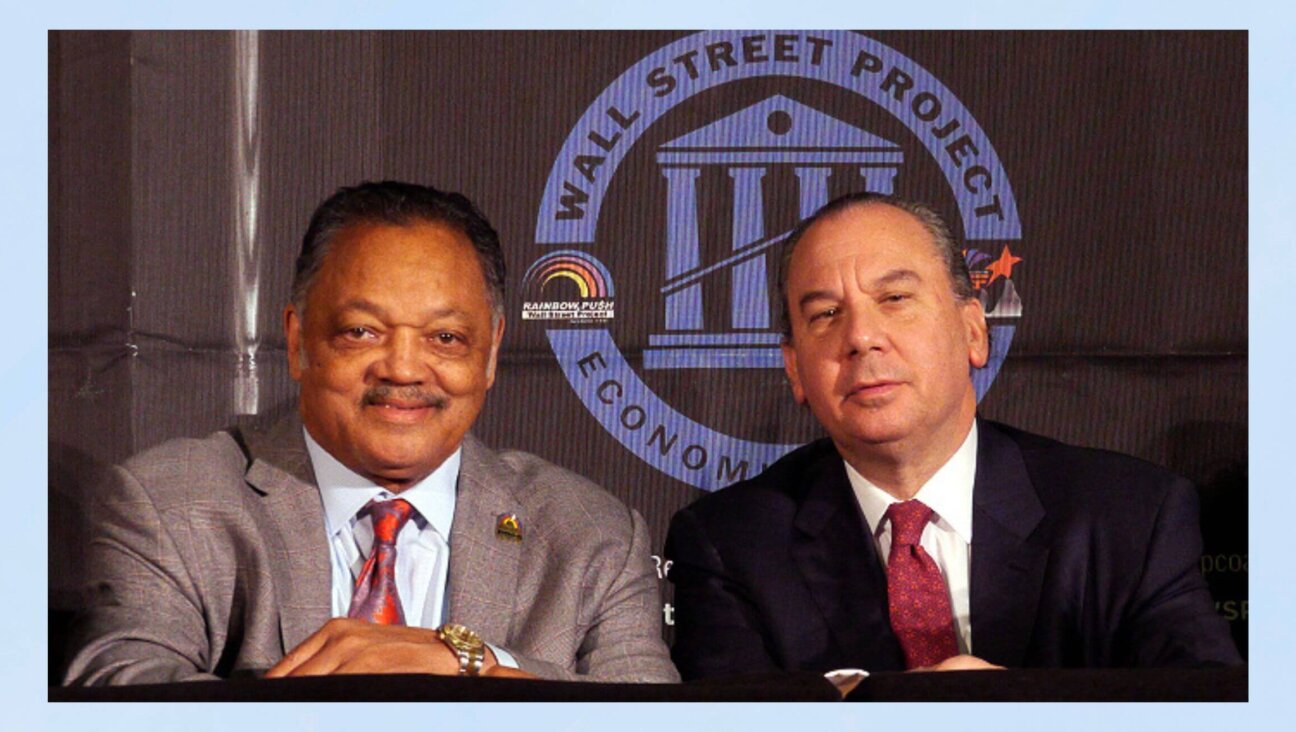
The irony and tragedy is that Jackson was, in fact, one of the leaders in either community who put in the most effort to repair the shattered alliance. He understood its importance, and the risks of its dissolution. He sought to solve collective problems by forging common ground among disparate actors in a mutli-racial, multi-ethnic Rainbow Coalition.
His plan did not come to fruition. But as we mourn his passing, we should ponder his legacy, and revisit his compelling vision.