Israel’s best-case scenario in Iran may also be its worst
What happens to a country that sees strength as the only way to get things done?
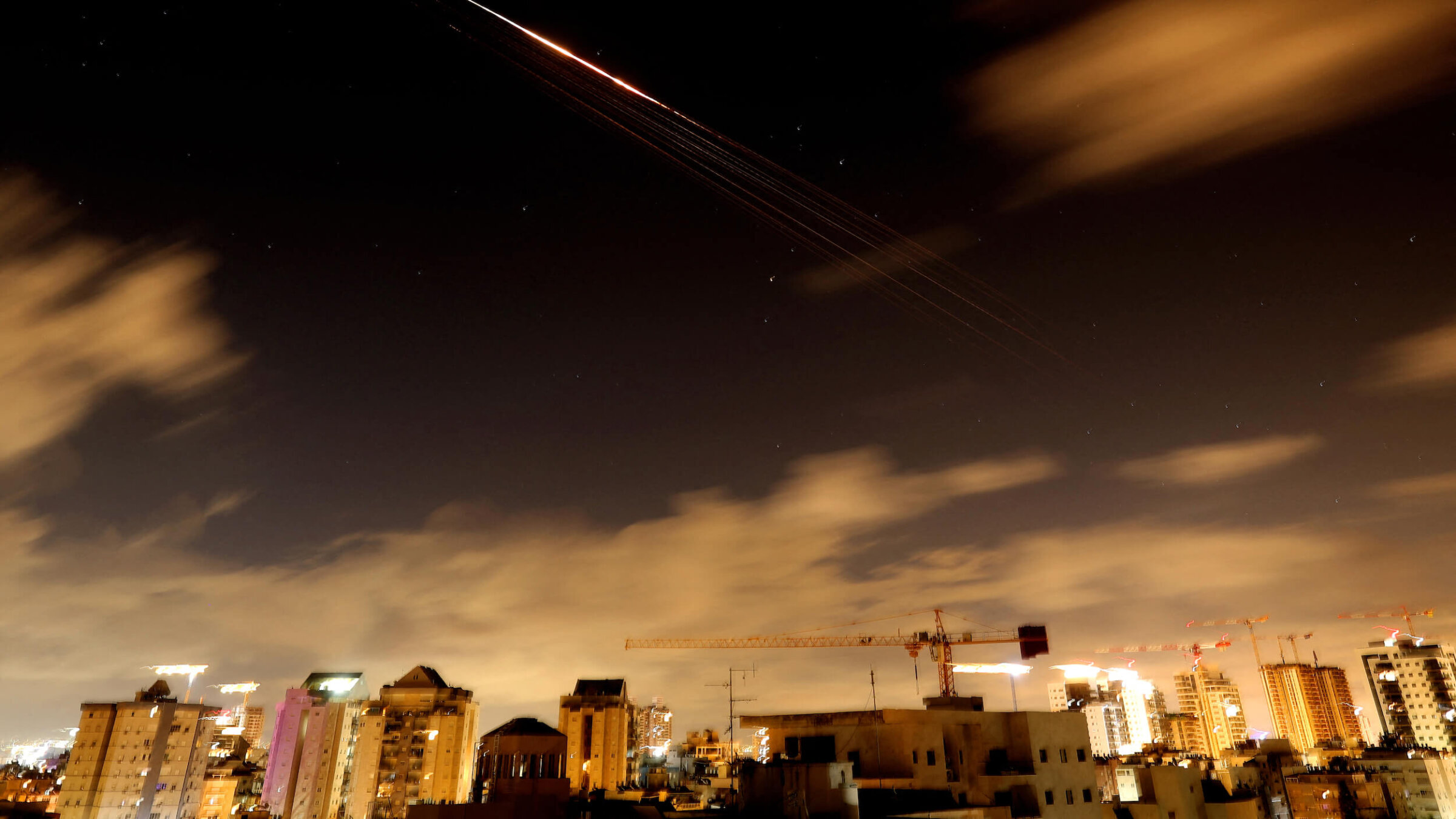
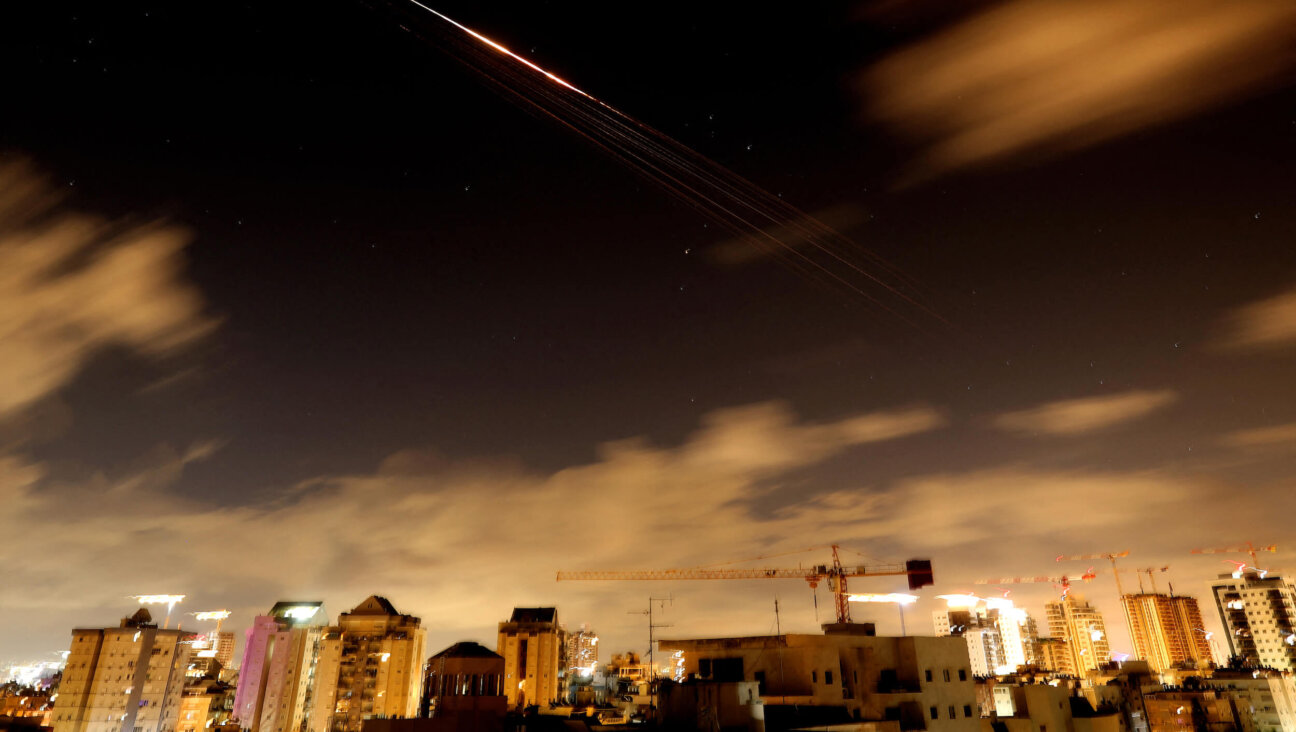
Rocket trails are seen in the sky amid a fresh barrage of Iranian missile attacks above the Israeli coastal city of Netanya on March 27. Photo by Jack Guez / AFP via Getty Images
If the war in Iran ends with every objective achieved — and it won’t — Israel may still come to regret its victory. The warnings of an ancient Athenian writer, an early right-wing Zionist and an Orthodox Jewish professor of biochemistry illustrate why.
Since the Hamas attack of Oct. 7, 2023, Israel has dismantled nearly every adversary that once threatened it. Hamas can no longer effectively launch rockets. Hezbollah is degraded. The fall of Bashar al-Assad’s regime gave Israel an opportunity to destroy Syria’s weapons stockpiles. And now Iran: Ayatollah Ali Khamenei is dead, other key leaders have been assassinated, and the country’s ballistic missile and nuclear capabilities appear to be in tatters.
None of this is likely permanent. Hamas is regrouping, Hezbollah is launching rockets, Syria may yet radicalize, and Iranian regime change is a fantasy. But even if Israel really does defeat its foes, history teaches a painful lesson: it is victory, rather than defeat, that can set the stage for a country’s collapse.
An ancient analog for modern Israel
When the historian Thucydides documented the rise and decline of Athens some 2,500 years ago, he told a story that feels eerily applicable to Israel in 2026: that of a vibrant state poisoned by its own power.
Athens’ emergence as a military hegemon also marked the onset of its corruption and decline. Initial victories over strong enemies set the stage for later follies, arrogance, and cruelty. Flush with confidence, the Athenians embarked on the Sicilian Expedition and overextended catastrophically. Before that, even, they articulated a credo that almost perfectly encapsulates Israel’s current approach to the Palestinians: “the strong do what they can and the weak suffer what they must.”
This isn’t to say that any country should forego military power. But even right-wing architects of Zionism recognized that such power must eventually become a conduit to sustainable peace.
‘The iron wall’
In 1923, Ze’ev Jabotinsky, the ideological founder of the Zionist right, wrote a famous essay arguing that Palestinians would never voluntarily agree to convert what was then mandatory Palestine “from an Arab country into a country with a Jewish majority.”
Therefore, he wrote, a Jewish state “can proceed and develop only under the protection of a power that is independent of the native population — behind an iron wall.”
But while that part of Jabotinsky’s philosophy clearly aligns with that employed by today’s Israeli right, there are two crucial differences between the two.
The first is that Jabotinsky affirmed that it is “utterly impossible to eject the Arabs from Palestine” and that “there will always be two nations in Palestine” — a far cry from Israeli messianists’ current dreams of wholesale ethnic cleansing.
The second is that Jabotinsky saw the “iron wall” he envisioned as the first step to eventual agreement in which both sides “agree to mutual concessions.” Power was a precondition for safety, but eventually diplomacy would reap the fruits of long-term peace.
Yet in recent years, Israel has largely eschewed the second part of Jabotinsky’s vision in favor of a “strong do what they can” attitude towards the Palestinians — and the rest of the world.
A ‘secret-police state’
Which brings us to Yeshayahu Leibowitz, a brilliant and influential Orthodox Jewish philosopher and biochemist who foresaw the danger that a “might makes right” ideology would incur for Israel.
Leibowitz dared to challenge the euphoria of victory following the 1967 Six-Day War, in which Israel defeated a coalition of Arab armies and drastically increased its territory. Writing the following year, he warned that “a state ruling a hostile population of 1.5 to 2 million foreigners” — the Palestinians in Gaza and the West Bank — “would necessarily become a secret-police state, with all that this implies for education, free speech, and democratic institutions.”
Leibowitz was not naive: he firmly recognized the need to “continue to fortify ourselves in our Jewish state and defend it.” But he understood that the military victory of permanent occupation would erode Israeli democracy from within. Nearly 60 years later, Leibowitz is, sadly, vindicated: Settlers are on the rampage, public media and the judiciary are under attack, and some experts have suggested Israel can no longer be considered a true liberal democracy.
A deal in the works
Leibowitz warned that, under the wrong conditions, victory can corrode democracy. The question: Can the gains earned through military success ever justify that risk?
Some might argue that a potential Iran deal in the works would validate Israel’s strategy, because it shows that successful negotiation sometimes depends on military action. That is partially true. Israel has effectively negotiated with countries like Egypt after conflict. Long-term peace with Arab states has emerged precisely from the diplomacy that occurred after victory.
But we should be extraordinarily skeptical that Prime Minister Benjamin Netanyahu is the man to manage that process. Prime Minister Menachem Begin, who returned the Sinai to Egypt to secure peace, had to muster extreme political courage to go against settler elements within his Likud party. Netanyahu, on the other hand, has folded over and over again to the radical demands of his ultra-right wing coalition.
The man who at this very moment is allowing Hamas to regroup in Gaza because he is avoiding a postwar plan should not be trusted to manage any kind of victory with Iran.
The paradox of victory
What’s even more worrying is that the more successful the campaign in Iran is, the more the Israeli right will likely weaponize victory as proof that force is the only strategy that works for Israel, and that all external critics can be safely ignored.
They will be wrong. And we know that, because that’s exactly the same argument that the right offered during and after the Second Intifada: unilateral security, achieved through Israeli might.
The Oct. 7 attack showed the folly of that promise.
Israeli military strength has perhaps never been greater, and its regional foes have never been less powerful. And yet the country’s international standing is at historic lows, and its people are being harassed, injured and killed by Iranian ballistic missile launches that persist despite the country’s best defensive efforts.
No, Israel should not lay down its arms. No, peace with the ayatollahs was never possible. And yes, sometimes force is the only option.
But long-term security, like the kind we’ve seen Israel successfully build with some Arab states like Egypt, comes from resisting the temptations of radicalization that military success brings.
Israel’s current government lacks the wisdom to take advantage of those successes. It will, in fact, warp a win into a reason to double down on isolationist thinking that will push the country further away from liberal democracy.
In other words: victory in Iran — a best-case scenario for Israeli security in the short run — may turn out to be the worst-case scenario for Israeli democracy long-term.
This is a moment of great uncertainty. Here’s what you can do about it.
We hope you appreciated this article. Before you go, we’d like to ask you to please support the Forward’s independent Jewish news this Passover.
This is a moment of great uncertainty for the news media, for the Jewish people, and for our sacred democracy. It is a time of confusion and declining trust in public institutions. An era in which we need humans to report facts, conduct investigations that hold power to account, tell stories that matter and share honest discourse on all that divides us.
With no paywall or subscriptions, the Forward is entirely supported by readers like you. Every dollar you give this Passover is invested in the future of the Forward — and telling the American Jewish story fully and fairly.
The Forward doesn’t rely on funding from institutions like governments or your local Jewish federation. There are thousands of readers like you who give us $18 or $36 or $100 each month or year.
Support our mission to tell the Jewish story fully and fairly.