Not only is cremation controversial in Judaism, it pollutes the earth
Cremation may have a lower consumer cost, but it extracts a steep ecological price
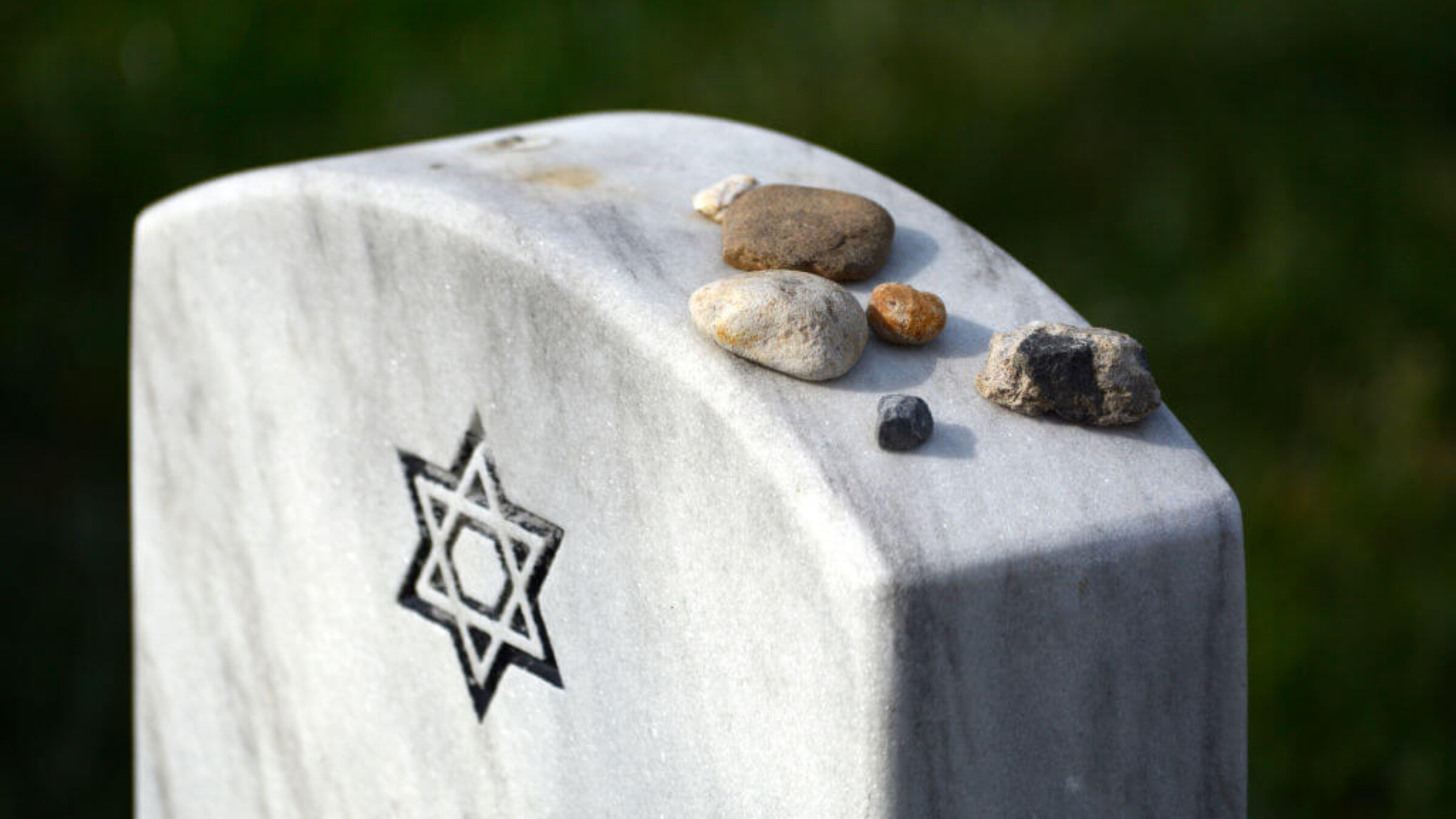
Stones placed by visitors on top of the tombstone of a Jewish U.S. military and World War II veteran at Arlington National Cemetery, April 22, 2018. Photo by Robert Alexander/Getty Images
Re: “More and more Jews are choosing cremation. These rabbis aren’t happy about it” by Stewart Ain
To the editor:
As a rabbi, I have been facilitating Jewish dialogues on cremation for nearly two decades. Perhaps the saddest part of the recent Forward report involves key issues that are never mentioned — especially the Jewish stake in protecting the earth.
Millennia of natural burials did not bring us to our current brink of environmental devastation. When we focus on ceremonies and scattering, urns and plaques, we ignore the ecological damage of the actual cremation process. Nonrenewable fossil fuels are burned for millions of hours at four-digit temperatures, with emissions and air pollution weakly regulated between state and local authorities. Since fossil fuels are heavily subsidized, our lower consumer costs hide the steep environmental costs. The rise in industrial cremation escalates the energy consumption that drives climate change.
It’s also important to understand that the majority of funeral homes do not actually conduct cremations, but rather transfer bodies to offsite crematoria. Like other incinerators, these crematoria are generally located in lower-income neighborhoods. Awareness of longstanding community struggles against crematory air pollution — especially mercury emissions — should inform our end-of-life decisions.
Our local actions have further global repercussions. Although the U.S. represents less than 5% of the world’s population, our overall resource consumption is responsible for more than 20% of global emissions. It’s becoming disturbingly clear that those least responsible for greenhouse gases (in Africa and elsewhere) are bearing the brunt of our energy excesses. Jews who care about climate change and environmental justice need to connect all of these dots and more.
For too long, difficult conversations about death have been deflected by quick-cheap-and-clean funeral mythologies. We can’t fix this with an occasional sermon from the pulpit. Jewish clergy and lay leaders can be of greater service throughout the year by organizing supportive dialogues, proactive educational programs, and natural burial fellowships in response to the deaths in our communities.
End-of-life taboos are complicated, and we have all done the best we can with the information previously available to us. Now, for the sake of our planet and future generations, let’s start facing the more uncomfortable truths and stop colluding with climate disaster.
— Rabbi Regina Sandler-Phillips
Executive Director, WAYS OF PEACE Community Resources, Brooklyn
I’m personally matching all gifts to the Forward, up to $36,000. Can I match your gift now?

Hello, fellow Forward reader! I’m Joel Brown, a Forward reader and supporter for more than 15 years, and currently the chair of the board of directors.
I’m an avid Forward reader because it ticks so many of my essential boxes: excellent journalism, Jewish focus and diverse viewpoints. In today’s political climate, what I most appreciate is the Forward’s independence — made possible by the generosity of its membership.
The Forward is committed to bringing you unbiased, nuanced Jewish news. From my position as board chair, I see an exciting future as we expand our position as the definitive independent voice of contemporary American Judaism.
— Joel Brown, Forward board chair
Support our mission to tell the Jewish story fully and fairly.