Online festival, Yiddish New York, open for registration
Graphic by Angelie Zaslavsky

By Forverts Staff November 23, 2021
The U.S.’s largest annual Yiddish culture festival, Yiddish New York, is once again going to be conducted online, enabling people all over the globe to participate in its wide variety of workshops and lectures.
The festival will take place from December 25 to December 30, 2021.
Among the many sessions participants can choose to attend are:
• A lecture by folklorist Barbara Kirschenblatt Gimblett on the use of Yiddish at the Polin Museum in Warsaw, the only museum in the world to offer an audio tour of the exhibits in Yiddish.
• Music scholar Jeremiah Lockwood will talk about the launch of an online cantorial archive to preserve the personal music collections of elder cantors, including a rare collection of rare handwritten scores from the early 20th century.
• A matzah ball cooking demo in Yiddish at which Jewish culinary expert Eve Jochnowitz will show viewers how to prepare three kinds of kneydlakh: traditional, vegan and gluten-free.
• Yiddish musician Binyumen Schaechter will speak about the history of Ashkenazi family names.
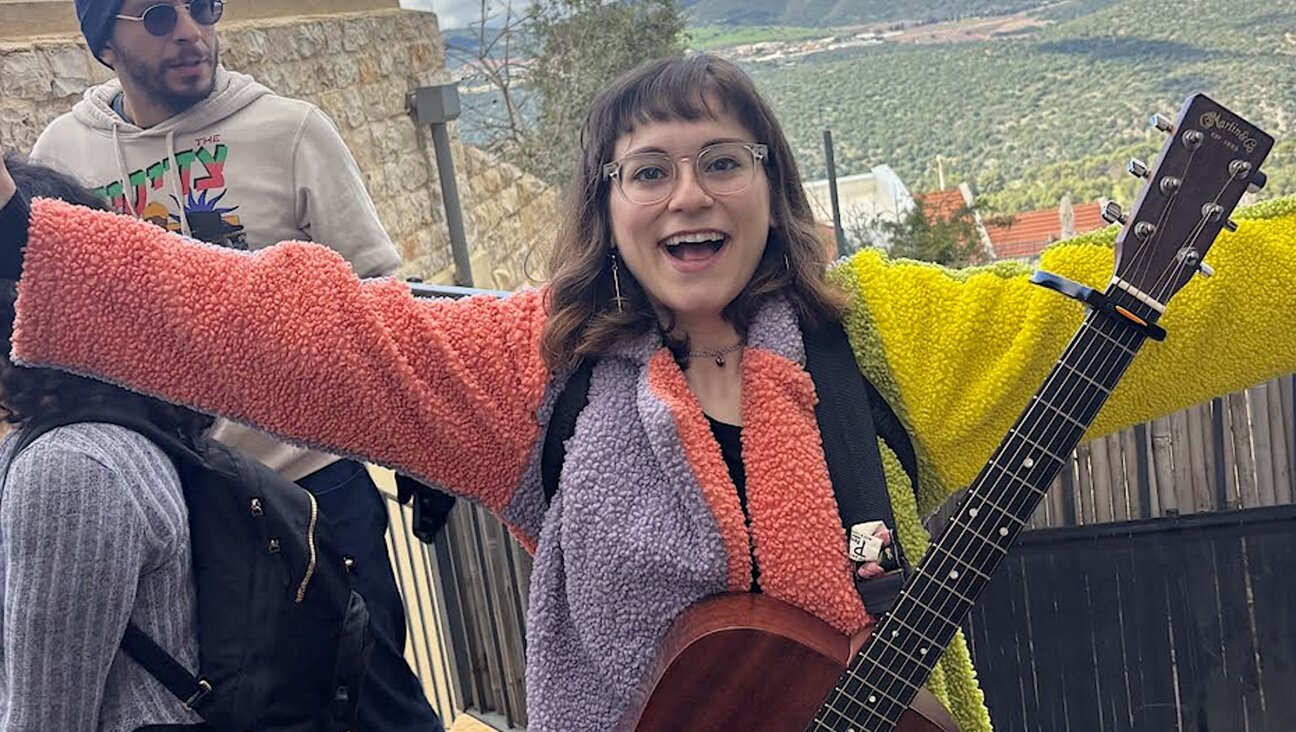
• Yiddish TikTok creators Cameron Bernstein and Abigail Weaver will explain how to produce content in or about Yiddish on the largest social media platform in the world.
• Culture historian Vivi Lachs will speak about Yiddish fiction writers in London during the 1930s and 40s.
Tickets can be purchased either for individual events or for the entire festival. To register, click here.
This is a moment of great uncertainty. Here’s what you can do about it.
We hope you appreciated this article. Before you go, we’d like to ask you to please support the Forward’s independent Jewish news this Passover.
This is a moment of great uncertainty for the news media, for the Jewish people, and for our sacred democracy. It is a time of confusion and declining trust in public institutions. An era in which we need humans to report facts, conduct investigations that hold power to account, tell stories that matter and share honest discourse on all that divides us.
With no paywall or subscriptions, the Forward is entirely supported by readers like you. Every dollar you give this Passover is invested in the future of the Forward — and telling the American Jewish story fully and fairly.
The Forward doesn’t rely on funding from institutions like governments or your local Jewish federation. There are thousands of readers like you who give us $18 or $36 or $100 each month or year.
Support our mission to tell the Jewish story fully and fairly.