Eliot’s Zionism Before Zionism

Books

By Lawrence Grossman

Published June 17, 2009, issue of June 26, 2009.
  • Print
  • Share Share

The Jewish Odyssey of George Eliot
By Gertrude Himmelfarb
Encounter Books, 180 pages, $25.95.

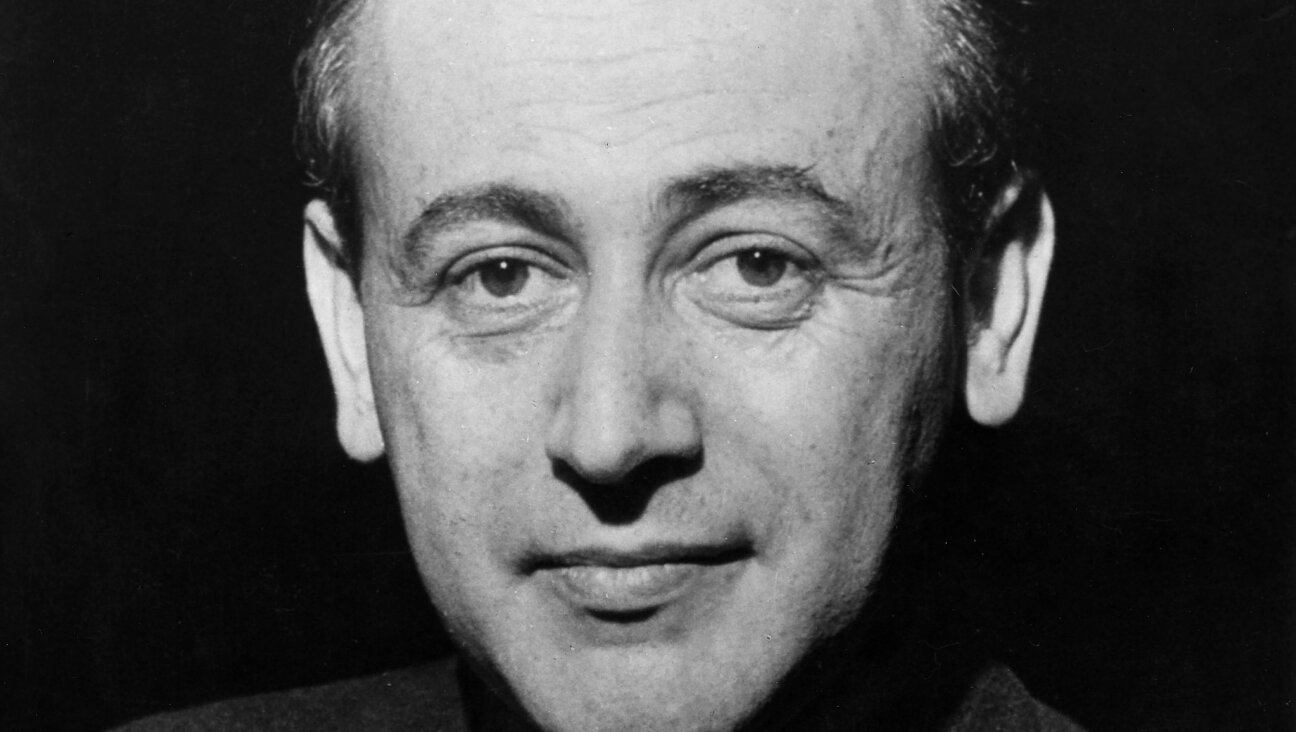
George Eliot
George Eliot

In the recent speech he delivered in Cairo to the Muslim world, President Obama declared that “the aspiration for a Jewish homeland is rooted in a tragic history that cannot be denied.” Is the legitimacy of Zionism based primarily on past Jewish suffering? Historian Gertrude Himmelfarb thinks not, and her new book brilliantly elucidates the intellectual origins of a far more positive justification: that Judaism can reach its full potential only in a sovereign Jewish state.

Despite belonging to a family of prominent, identified Jewish intellectuals, Himmelfarb has established her reputation as a pre-eminent authority on the intellectual history of Victorian England without addressing Jewish themes. Only now, as a retired octogenarian, has she done so by studying what another, earlier female writer of prodigious intellect thought about Jews — the non-Jewish Mary Anne Evans, far better known as George Eliot, who was arguably the greatest British novelist of the late 19th century.

Eliot, like Himmelfarb, turned her literary attention to Jews late in life, publishing what turned out to be her last work of fiction, “Daniel Deronda,” in 1876. Several years prior to the first Zionist settlements in Palestine, and two decades before Theodor Herzl launched political Zionism, the book’s title character discovers his Jewish identity and ultimately abandons the life of a British gentleman in order to travel to “the East” and work toward the establishment of a Jewish state. Eliot returned to proto-Zionism once more in a nonfiction piece that appeared as the final essay in her last book, which appeared in 1879, the year before her death.

Why did the lionized author of “Adam Bede,” “The Mill on the Floss,” “Silas Marner” and “Middlemarch,” all of which probe universal questions of morality and individual responsibility, follow them up with a treatment of the parochial “Jewish question”? That the choice of topic had deep meaning for Eliot is clear from her diaries and notebooks, which show that she studied Hebrew and read extensively about Jewish religion, customs and history in preparation for writing “Deronda.”

The critics, however, were not impressed by all the research, Himmelfarb notes, and largely disliked the novel’s Jewish content. Their assessments often rest on literary grounds — the great 20th-century critic F.R. Leavis actually prepared a version of the book, never published, with the Jewish plot excised — but sometimes also on objections to the subject matter. The late Edward Said and his disciples saw the book as a blatant case of what Said called Orientalism, Western imperialism’s assumption of the right to colonize the East and rule over its people, in this case the Palestinians.

In her investigation of the author’s purpose in writing “Deronda,” Himmelfarb astutely points out that in the mid-1870s, when Eliot was working on the novel, hatred of European Jews was at its low point, and so the ill-treatment of Jews could furnish no plausible justification for creation of a Jewish state. Despite residual social prejudice, emancipation had been achieved in England with the admittance of Jews to Parliament, and Benjamin Disraeli, a born Jew proud of his ancestry, was prime minister. On the continent, Jews were enfranchised virtually everywhere in Western and Central Europe, and optimistically assumed that lingering gentile hostility would soon disappear. What lay just around the corner — the new, virulent, racially tinged antisemitism (a term invented in 1879), the Russian pogroms, the Dreyfus Affair and, of course, the Holocaust — was unimaginable.

Nor did Eliot agree with the evangelical Christian view that Jews should return to the Holy Land as a necessary prelude to the Second Coming of Jesus. Long past her youthful evangelical leanings, Eliot was by this time an agnostic, and upon her death would be denied burial in Westminster Abbey for violating Christianity by living with a married man.

Devoid of evangelical enthusiasm and writing when Jews seemed poised to take their places as citizens of the world, Eliot derived her Zionism from elsewhere. The post-Christian Eliot, Himmelfarb writes, in “something of a return to an Old Testament,” developed a fascination with Judaism, derived both through her reading and through friendship with a particular Jew, the scholarly Emanuel Deutsch, a librarian at the British Museum who taught her Hebrew.

Awed by the religious history of the Jewish people, Eliot ascribed the deficiencies of contemporary Jewish life — the distorted occupational structure, the sometimes questionable financial practices and occasional uncouthness — to the condition of living for centuries as a repressed minority within Christian society. Return to a restored Jewish homeland — the groundwork prepared by future Daniel Derondas — would bring a new flowering of Judaism and the Jewish people, a nation forged by combining ancient spiritual truths with the best of modern culture.

Eliot’s version of Zionism has few adherents today. If Obama understands Israel as a response to “a tragic history,” many Western intellectuals, Jews among them, go even further and, following Sartre, view antisemitism, not positive Jewish identity, as the basis for Jewish distinctiveness. Postmodernists, meanwhile, cast doubt on the historic validity of “nations,” especially the resurrected Jewish one. Meanwhile, for ordinary Israelis — despite enjoying a vibrant cultural life — mundane security, political and economic concerns crowd out Eliot’s noble vision of a renewed Jewish religious civilization on ancestral soil.

Himmelfarb nevertheless believes that the message of “Daniel Deronda” deserves a rehearing, “that Israel is not merely a refuge for desperate people, that the history of Judaism is more than the bitter annals of persecution and catastrophe…. It was not the anti-Semite who ‘creates the Jew.’ It was Judaism, the religion and the people, that created the Jew.”

Lawrence Grossman is editor of the American Jewish Year Book.


  • Print
  • Share Share

The Forward welcomes reader comments in order to promote thoughtful discussion on issues of importance to the Jewish community. In the interest of maintaining a civil forum, the Forward requires that all commenters be appropriately respectful toward our writers, other commenters and the subjects of the articles. Vigorous debate and reasoned critique are welcome; name-calling and personal invective are not. While we generally do not seek to edit or actively moderate comments, the Forward reserves the right to remove comments for any reason.


Comments
Yehuda Wed. Jun 17, 2009

The assertion of Lawrence Grossman - that for ordinary Israelis mundane issues have crowded out the noble vision of Jewish renewal in this ancient land - is simply not true. The very term "Zionism" is understood by Israelis as an idealism. Everyone here is aware that the whole idea of modern Israel - the revival of Hebrew, the return to the soil, the intense love of Jerusalem, the founding of Tel-Aviv, the kibbutzim, the whole cultural creativity based on the language of the Bible - is a result of dreamers who had a vision of Jewish cultural renewal. Everyone raised an eyebrow of astonishment to hear Obama's claim that Israel is the result of persecutions. It is not how we perceive ourselves. It is only a (wrong) perception of outsiders - sadly, also of Diaspora Jews who don't have the educational background to understand the drama of modern Jewish history.

Ruth Book Mon. Jun 22, 2009

It's astounding how far some people stretch to find fault with Obama that they have to harp on a statement that the state of Israel emerged from "a tragic history." Last year these same people complained that no one appreciated the seriousness of anti-semitism, its long history or the plight of Jews, who, yes, for centuries, have been persecuted---and who, for that reason, worked for the Zionist cause in a state who's mission is: Never Again!

JMK Tue. Jun 23, 2009

In addition, She translated into english from the german David Friedrich Strauss's The Life of Jesus, Critically Examined that proved in its 1400 pages that the New Testament was myth and fiction and wholly irrational and unsupportable by any thinking man or woman.

Yehuda Wed. Jun 24, 2009

Ruth Book - Even though you are enchanted by the new American president - still, it is legitimate to criticize his world view. He stated in Cairo the need of the Jews for "a homeland" because of their plight. That is not our view of ourselves, and he has therefore done us a disservice. The Land of Israel is THE homeland, not a chance location of desparate refugees. The revival of the Hebrew language in the Land of Israel and the founding of Tel-Aviv as "the first Hebrew city" one hundred years ago should demonstrate that a drama in Jewish history was taking place in its own right. Perhaps, the problem is that all this Hebrew cultural revival is simply foreign to the American Jewish experience; hence, it's not even part of your narrative. Anti-Semitism, not Jewish revolutionary idealism, is seen as the driving force in modern Jewish history. However, it's simply not so, and the very charismatic American president doesn't understand the background of modern Israel. Zionism was a movement of idealists who wished to revolutionize Jewish life in the modern world. People like Ben-Yehuda or Ben-Gurion were not motivated by persecution. I would suggest that you read our Declaration of Independence. It mentions the Holocaust only as a factor that proves the urgency of establishing the Jewish state, not its necessity. The real motivation, however, is described in great detail: In this Land the Jews created their civilization, and the dream of return has enchanted all generations. Near the end of the declaration, Ben-Gurion uses terminology from the very heart of the Jewish narrative. I suppose, again, that it's all foreign to English-speaking assimilated Jews who no longer define themselves as a nation in exile. Listen to a Jew speaking in his own language: "We call upon the Jewish people in the lands of their dispersion to rally around the Yishuv through immigration and building and to realize the age-old aspiration of generations - the REDEMPTION of Israel". Redemption is not a "haven" in some homeland, nor is it a declaration of "never again". It is an ancient messianic term which speaks of returning to the homeland, restoring the glory of Israel.

Arthur Fell Wed. Jun 24, 2009

No question about it, we Jews are hair splitters par excellence. Lawrence Grossman says Eliot’s version of Zionism has few adherents today yet, you could not find a tissue paper's thickness between that view as she described it and the view Yehuda (in comments) describes as being the Israeli view coming from Ben-Gurion and others. If Jews had not suffered persecution, the Dreyfus affair, and the Shoah but on the contrary had been warmly integrated on a completely equal footing without any reservations in countries around the world and particularly in Europe, who would maintain that there would have ever been a strong impetus behind Zionism? It is highly doubtful that the State of Israel would exist today if everything had been coming up roses for Jews around the world. So, what is this debate about anyway?

Yehuda Wed. Jun 24, 2009

Arthur Fell - "So, what is this debate about anyway?" Well, since you have expressed a clear position in this debate, it's obvious that you do understand what it is about. You, too, feel that the driving force of modern Jewish history is the persecution of the Jews. That is the position of Ruth Book as well. The article above presents an idealistic view of the Jews in the Land of Israel as envisioned by George Eliot - but apparently not idealistic in today's reality of Israel: "mundane security, political and economic concerns crowd out Eliot’s noble vision of a renewed Jewish religious civilization on ancestral soil". I don't agree. I don't agree with your view that the driving force of Jewish history is persecutions, and I don't agree with Lawrence Grossman that modern Israel is not motivated by idealism.

The Diaspora and Israeli society have really gone on different paths. I fear that soon we may not even understand each other. A Diaspora Jew might not understand that someone would wish to rise up and build a Jewish homeland in the Land of Israel. Life is good, and Jews have adopted the national identity of the larger society - so one might assume that only violent forces could bring someone to leave "home" and go elsewhere. But that's not what happened. There are still Jews in the world whose primary identity is Jewish. Their motivation in coming to Israel was the vision of the renewal of Jewish NATIONAL life on ancestral soil (our author used the term "renewed Jewish RELIGIOUS civilization on ancestral soil", showing that he doesn't really understand the essence of what has happened in Israel in the last 100 years). Those who revived the Hebrew language and those who attempted to build a utopian world through the kibbutz ideology were motivated by a vision of a new Jewish collective existence. An army that risks its soldiers' lives by sending them to lead Ethiopian Jews through the deserts of Sudan to awaiting boats - in order to bring them to the Promised Land that they have never seen - is an army motivated by an idealism. There is nothing practical about it at all, and no other army would do it.

Many years ago, on the eve of my aliyah, everyone in the Jewish community would ask me: "But why? Why are you going to live in Israel?" I thought it was a strange question. It should be obvious what my motivation is. But, alas, it wasn't obvious. They needed an explanation. Sadly, the Jewish world with all its dreamy ideals has disappeared in the American Diaspora. An American Jew can see Jewish history only as an outsider sees it - as President Obama sees it: The Jews are merely victims of antisemitism. They are not a nation with its own agenda and aspirations. Well, I just don't agree.

bozh Fri. Jul 17, 2009

if yahweh had promised to hebrews to possess canaan, he wld have-instead of promising- just self smote all canaanites and not at all commanded the hebrwes to do the dirty work for him or his glory.

the dirty work that torah speaks of may have not occured at all or if there were clashes with cananites they may have been minor.

actually, it was the mad priests [the ones that say, Kill arabs] who have commanded hebrews to slay all canaanites. later inserts in the torah, have 'proven' that the priests had been obeyed.

if god wanted to love hebrews, he wld have brought them to the pristine lands of n. americas with their forests, swift clear rivers, fertile plains and prairies, etc.

instead, he gave them a tiny , wretchedly poor land. Natch, priests called it land of milk and honey. but even lot of 'jews' sees israel as a poor land. That's why many are leaving it to shemitic and ethiopean 'jews' to keep dying for. tnx

bozh Fri. Jul 17, 2009

if yahweh had promised to hebrews to possess canaan, he wld have-instead of promising- just self smote all canaanites and not at all commanded the hebrwes to do the dirty work for him or his glory.

the dirty work that torah speaks of may have not occured at all or if there were clashes with cananites they may have been minor.

actually, it was the mad priests [the ones that say, Kill arabs] who have commanded hebrews to slay all canaanites. later inserts in the torah, have 'proven' that the priests had been obeyed.

if god wanted to love hebrews, he wld have brought them to the pristine lands of n. americas with their forests, swift clear rivers, fertile plains and prairies, etc.

instead, he gave them a tiny , wretchedly poor land. Natch, priests called it land of milk and honey. but even lot of 'jews' sees israel as a poor land. That's why many are leaving it to shemitic and ethiopean 'jews' to keep dying for. tnx


    Would you like to receive updates about new stories?


    We will not share your e-mail address or other personal information.

    Already subscribed? Manage your subscription.