Judeo-English
Irving Treitel writes:
“Your May 11 column about Ladino and other Jewish languages was interesting. However, when I turn to the Encyclopedia Judaica, I become depressed. Apart from Yiddish and Ladino, I find listed under the letter ‘J’ Judeo-Arabic, Judeo-French, Judeo-Italian, Judeo-Tat, Judeo-Persian, Judeo-Provençal, and Judeo-Greek. The one language that is missing is Judeo-English.
“As you correctly point out, for a Jewish language to be created there has to be a minimal literacy in Hebrew and its culture. A second condition that needs to exist is that Jews must have a visceral connection to this culture. Yet the cruel fact is that English-speaking Jews have long ago given up on such a connection. Halevay [If only] there were a Judeo-English with a lexicon that had a two or three percent Hebrew component as in Ladino. I fear that koydem vet moshiakh kumen [the messiah will come before that happens].”
Although one might reply to Treitel that his final two sentences, with their Yiddish words and phrases, might be taken as an example of precisely the Judeo-English he says does not exist, he could quite sensibly argue in return that — as he says elsewhere in his letter — his is an atypical case, since he was “raised in a house filled with Yiddish-speaking immigrants enjoying the Yiddish theater, Yiddish music, the Yiddish press, etc.” Certainly, few non-religiously observant, native-born American Jews who have not grown up in Yiddish-speaking environments would understand such words and phrases, much less use them in their own speech. And yet I would venture to say that in America today, all ultra-Orthodox Jews (many of whom of course speak Yiddish), nearly all Orthodox Jews, many Conservative Jews and even some Reform Jews would feel perfectly at home with such expressions as halevay and koydem vet moshiakh kumen when used in an English sentence. Does this mean that Treitel is wrong and that, right under our noses, there is indeed a Judeo-English being spoken in America today?
To help us think about this, we might first consider what it means to preface “Judeo-” to the name of a language. In principle, this might signify one, or a combination, of, three things: 1) that Judeo-X has a large number of specifically Jewish words in it that ordinary speakers of Language X do not understand; 2) that Judeo-X also has a phonetic system that differs in some respects from that of Language X, and 3) That Judeo-X has a grammar that, too, diverges from that of Language X.
If we look at a language such as Yiddish, which has been called “Judeo-German,” or Ladino, which has been called “Judeo-Spanish,” we see that all three of these conditions are met fully. Yiddish and Ladino’s vocabulary is replete with non-German (generally Hebrew and Slavic) and non-Spanish (generally Hebrew and Turkish) words that ordinary Germans and Spaniards are unfamiliar with and cannot understand, and this vocabulary also has many originally German and Spanish words that are now archaic in those languages or that have taken on different meanings. Moreover, Yiddish and Ladino’s pronunciation of German- and Spanish-derived words is often different from that of German or Spanish. In German, for example, the word for a tree is Baum, pronounced “bowm” with the vowel as in “how”; in Yiddish it is boym or beym. In Spanish, the verb “to play” is jugar, with the initial “j” sounding like the “ch” of “Bach”; in Ladino, the same “j” is like the “j” of “jam.”
Finally, there are significant grammatical differences. Take the German past tense, for instance. German makes the same distinction that English does between a simple past like “Ich ass,” “I ate,” and a present perfect like “Ich habe gegessen,” “I have eaten”; in Yiddish this distinction has been lost, the simple past having disappeared completely, so that both “I ate” and “I have eaten” are “Ikh hob gegesn.” In Ladino, on the other hand, the Spanish present perfect tense has been retained but is conjugated differently, often using the auxiliary verb tener rather than haber, so that “I have eaten” is “Tengo komido,” not “He comido,” as in Spanish.
Because there are so many differences between Yiddish and German, or Ladino and Spanish, Yiddish and Ladino are totally distinct languages that no German or Spanish speaker can understand, even though (more in the case of Ladino than of Yiddish) it might be possible to comprehend individual phrases or sentences. In the case of other “Judeo-X” languages, the differences are often not as great. Although I have never seen a grammar of Judeo-Italian, of which there were many regional dialects, my understanding is that these did not, phonetically and grammatically, differ much or at all from the non-Jewish Italian of the same area, from which they were distinguished largely or entirely by their many Hebrew words and expressions. The explanation for this is that, unlike Yiddish and Ladino, which developed in geographical isolation from German and Spanish, Judeo-Italian was never spoken outside of Italian-speaking territories and therefore never diverged from non-Jewish Italian as much.
And now, let’s get back to “Judeo-English.” Is there such a thing?
Questions for Philologos can be sent to [email protected].
Why I became the Forward’s editor-in-chief
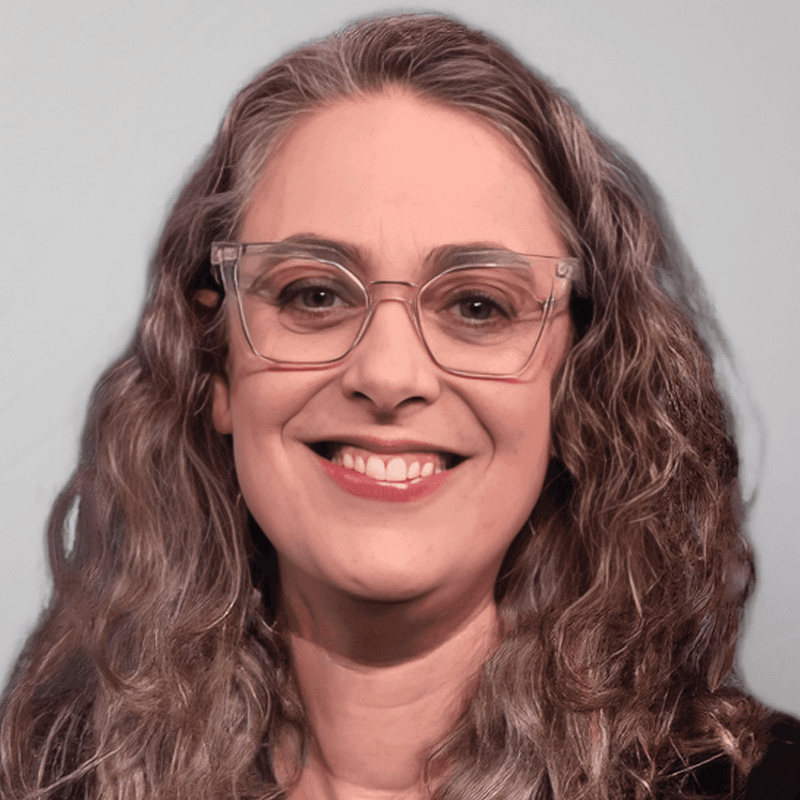
You are surely a friend of the Forward if you’re reading this. And so it’s with excitement and awe — of all that the Forward is, was, and will be — that I introduce myself to you as the Forward’s newest editor-in-chief.
And what a time to step into the leadership of this storied Jewish institution! For 129 years, the Forward has shaped and told the American Jewish story. I’m stepping in at an intense time for Jews the world over. We urgently need the Forward’s courageous, unflinching journalism — not only as a source of reliable information, but to provide inspiration, healing and hope.
 , editor-in-chief
Support our mission to tell the Jewish story fully and fairly.