In ‘Bombshell,’ JTS Eliminates Cantorial Dean

By Debra Nussbaum Cohen

Published February 10, 2010, issue of February 19, 2010.
  • Print
  • Share Share

The Jewish Theological Seminary is eliminating the position of dean of its cantorial school as part of a major reorganization and consolidation at Conservative Judaism’s flagship seminary. Chancellor Arnold Eisen said that the restructuring would take place in lieu of closing the cantorial school — the course of action recommended by an outside consultant.

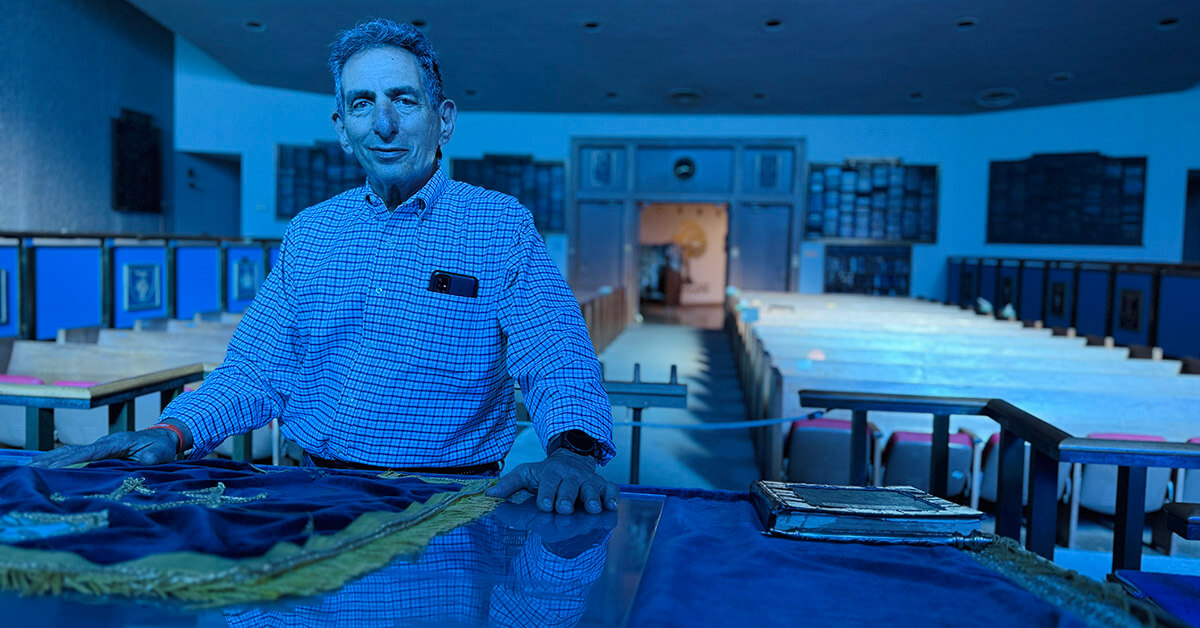
Beloved Mentor: Cantorial Dean Henry Rosenblum is negotiating a separation agreement with JTS.
COURTESY OF HENRY ROSENBLUM
Beloved Mentor: Cantorial Dean Henry Rosenblum is negotiating a separation agreement with JTS.

Eisen’s announced the reorganization in a February 5 e-mail. That e-mail — sent on a Friday, when the cash-strapped school has been closing its doors in an effort to save money — “was a bombshell,” said a faculty member, speaking on the condition of anonymity. And it has caused an uproar among seminary students, faculty and staff.

A fifth-year cantorial student, Mike Weis, said that Eisen’s e-mail “caught the entire community off guard.” And Yakov Hadash, a cantorial student also in his last year of study who is president of the Cantorial School Student Organization, called the impersonal e-mail “the kind of thing you’d expect from a giant, faceless corporation.”

Eisen said that he does not regret sending the e-mail when he did. “When you inform a person about a reorganization that affects his future, word will get out very, very quickly,” he said.

The seminary’s cantorial dean for the past 12 years is Henry Rosenblum, a much beloved mentor, who is in the process of working out a separation agreement with JTS. He said he is unable to speak with the press.

Rabbi Danny Nevins, dean of JTS’s rabbinical school, will now supervise JTS’s H.L. Miller Cantorial School, which has about 35 students in its five-year program. The cantorial school will undergo “a thorough strategic review in the coming months,” Eisen wrote in the e-mail.

As soon as the e-mail was sent, rumors that JTS was planning to shut down the cantorial school or merge with that of the Reform movement’s Hebrew Union College-Jewish Institute of Religion began to make the rounds. This year, JTS began holding some joint classes with HUC-JIR for students spending their first year of study in Jerusalem.

The CSSO convened two emergency meetings on February 7 and, in response to the upset, JTS’s provost, Alan Cooper, took the unusual step of sending a letter on that same day to the cantorial faculty, reassuring them of its commitment to the school. “Despite the rumors that have been circulating we are not doing away with our cantorial program,” he wrote. “Far from being fearful or pessimistic about the future of the cantorate, we are more excited than ever about its prospects.”

Cooper also wrote that Nevins “will not be running the cantorial program,” but rather supervising it as part of a newly created “religious leadership unit,” and that the cantorial program will have its own director. Responding to the merger rumors, he wrote: “There is no plan to merge the JTS and HUC cantorial schools. We do hope to continue and improve on our collaboration in some areas both in Israel and New York.”

In an interview with the Forward, Eisen said that while he expects some modest cost savings by replacing the cantorial school dean with a lower-level director, “that is not the objective here.”

“We want JTS to best serve the needs of the Jewish community in the 21st century, and for that we need to train rabbis and cantors differently, very differently than we have,” he said. “We can better accomplish it with a unified structure than with one we’ve had in the past.”

After about 18 months of study and planning, “this reorganization was the first visible change at JTS,” he said. In a month or two, another “whole series of changes” will be announced, though he said that he doesn’t expect any of them to involve layoffs. “This is not like last year, when we sacrificed 20% of our budget and many positions were lost,” he said.

Press accounts last spring reported a budget gap of $5.5 million, but Eisen said that the final shortfall was $3.8 million. Of that deficit, $800,000 was made up through budget cutting at JTS, and the rest was raised through “other sources,” but Eisen declined to elaborate.

On February 8, Eisen and Cooper met with about 100 students, faculty and alumni — a meeting at which “passions ran high,” according to Cooper.

In a prepared statement, a representative of the CSSO who did not want to be identified noted that in Eisen’s two years as chancellor, he has had little contact with the cantorial school.

But a JTS spokeswoman, Elise Dowell, said that Eisen “held an initial meeting with cantorial students when he became chancellor, and has met with individual cantorial students and in small groups on an ongoing basis since then.”

Until Rosenblum came on board as dean, JTS’s cantorial school was overshadowed by HUC’s, a seminary source said. “When Henry came in, the school started to attract a better, higher-rated type of student who would previously only have gone to HUC. So I hope it doesn’t decline now.”

JTS does not allow staff to speak with the press without first obtaining permission from the administration, and the Conservative-affiliated Cantors Assembly asked students and others at the cantorial school not to speak with the press.

The job of cantor has changed dramatically in the past 20 years, those in the field say, and therefore cantorial candidates’ training needs to change as a result. “Emphasis in the past was on cantor as pulpit artist and his vocal skills,” said Cantor Stephen Stein, executive vice president of the Cantors Assembly, which has 525 members.

“Now the cantor is an educator and community leader, doing many of the same things the rabbi does,” including teaching children and adults and visiting the sick, he said. “Every profession undergoes changes, and ours is no different. It doesn’t make any sense to train cantors as perhaps they’ve been trained for 25 or more years.”

Eisen told the Forward, “It shocked me when I became chancellor that cantorial and rabbinical students rarely studied together. Cantors need to get a lot more of the education rabbis are getting — pastoral, educational skills and Judaica training. Now there will be greater integration of the two programs. The students have been clamoring for this, actually.”

At the same time, everyone connected with the cantorial school who spoke with the Forward said that students there need to be supervised and led by someone in their own field.

“There’s just no way someone who’s not a cantor can have any idea of how to impart those skills and guide people in learning them,” one cantorial school student said.

“These are artists, and it takes one to know one,” another source said.

Contact Debra Nussbaum Cohen at dnussbaumc@forward.com


  • Print
  • Share Share

The Forward welcomes reader comments in order to promote thoughtful discussion on issues of importance to the Jewish community. In the interest of maintaining a civil forum, the Forward requires that all commenters be appropriately respectful toward our writers, other commenters and the subjects of the articles. Vigorous debate and reasoned critique are welcome; name-calling and personal invective are not. While we generally do not seek to edit or actively moderate comments, the Forward reserves the right to remove comments for any reason.


Comments
louis frankenthaler Sat. Feb 13, 2010

Maybe there should be some sort of merger among liberal/progressive Jewish academies, not just the movements, but the non movement seminaries too... This must emerge from a realization that the "Jewish world" is undergoing transformations. An ideological becoming if you will. There is a clear disengagement with Judaisms orthodoxies which may even lead one to understand that there is indeed enough religious differences among the strands or understandings of Judaism to lead one to conclude that there is no longer a basic theological synergy that connects. The connections are more social and cultural and even political. Note how often the great variety of Jewish understandings often unite when Israel is concerned... even when there is critique of Israeli policy by some and approval by others the core Orthodoxy of Israel, no matter what it does - even violating of rights of Palestinians, women and non-Orthodox Jews - remains a visceral constant. But the theologies are so very different that it may be time to recognize the lack of religious connection that exists and rectify the differences by recognizing the split. Thus the drawing together of Jewish learners and teachers from among the liberal/progressives could serve to develop a dialogue of difference and change and becoming... It would mean a single core Jewish liberalism but a way to learn in communities of practice that draw on each other in non competitive ways that are otherwise a part of the movement system(s)... Food for thought, Kosher or not and written on Shabbat.

yisro numan Sat. Feb 13, 2010

why must the poor palestinians rights be brought into a discussion of the difficult financial situation at the seminary-----the writing is clear for all to see ---------the radicals in the seminary will soon join their friends in reform to form a single core of jewish radical liberalism

BK Sat. Feb 13, 2010

Exactly, if one wants to proudly wax "race traitor" before sundown on Shabbos, at least do it the courtesy of leaving out the Palestinians. Only a wanker could look at the convergence of a financially strapped school and the disintegration of Conservative Judaism and come up with such a ridiculously tendentious connection.

I would posit that the cantorial program at JTS has been the only thing producing any useful from that school in recent years. The crop of young rabbis seem only to be marginally more schooled in more traditional aspects of Judaism than their HUC peers, as they trip all over themselves trying to be all things to all people except the folks that liked how once upon a time, Conservative Judaism occupied the place that Modern Orthodoxy is shifting towards. Now Yisro Numan is right, it's hard to discern the difference thanks to losers in the Conservative camp who must have had a soft fall off the Pittsburgh Platform.

RLS Sun. Feb 14, 2010

Unfortunately I have to agree with BK. Conservative Judaism appears to be disintegrating and the decision to downsize the School of Music can only accelerate the deterioration of the movement. We need the music of the service, and Cantors are the only ones who can truly merge the Jewish tradition with the needs of the time when it comes to musicality. Definitely Cantors and Rabbis should learn and study together but on equal footing and in preparation for shared pulpits. To do that, the academic units need parity and the Cantorial students need the leadership of a distinguished Cantor as Dean. Together in selected congregations Cantors and Rabbis have done and can do great things. Cantors even more than Rabbis can generate an atmosphere of Kavanah and spirituality the Conservative Judaism badly needs. Chancellor Eisen claims he “saved” the Cantorial program because his consultant recommended eliminating it all together. Wow — what kind of consultant is that — if that was his recommendation, then all of the things he says about the future of Conservative Judaism loose credibility in my opinion. The Conservative movement unfortunately is in a downward spiral and one of the few groups that could help it out — the Cantors of the movement, are clearly being marginalized.

Cantor Roger Eisenberg Sun. Feb 14, 2010

The role of the Cantor changes with the changing needs of congregations. In these difficult economic times, many congregations have downsized and done away with the Cantor altogether. As we are confronted by this fact, we must be compelled to relook at our “professional selves” and create a matching inventory of the skills and personality traits that we possess with the needs of our congregations. I believe that our success as cantors will ultimately be determined by the frequency and quality of those matches. Being a great artist is simply not enough. The paradox is that even a not-so-great artist becomes beloved when he dedicates himself to the care of his congregation off of the Bima. This underscores building not only Pastoral and Judaica skills, but social and business skills as well. There is an old adage: “People don’t care what you know until they know that you care.” Many seasoned cantors have already understood this message and have created wonderful programs - some musical, some not.

I humbly offer a personal example: More than a year ago, I started a Job Club to assist congregants and others who were either out of work or underemployed. The members support each other, while speakers from our local “Jewish Career Services”, along with several volunteers have educated the group on searching for jobs and careers more effectively. Several have found work, and several are still searching. We have been covered by both local radio and newspapers, and the publicity has helped, both with morale, and hopefully, with “headcount.”

The truth is that, objective success, of course, helps. But just as engaging is the effort. People become disenchanted because they feel disenfranchised, and it is not uncommon that when the last child becomes Bar/Bat Mitzvah, they consider leaving the synagogue. To perpetuate the cantorate, we cantors must connect our sacred task of preserving the musical aspects of T’filloh and cantillation to the needs of our congregants - certainly when they are in crisis, but even when they are not. When congregations see their needs aligned with the clergy, a shiddach happens. When we cantors are singing their song, they listen.

CgS Sun. Feb 14, 2010

Cantor Eisenbergs comments are extremely relevant, but certainly not just for Cantors. Impersonal clergy abound and in my experience present day JTS trained Cantors are making just the connections he notes, with congregational choirs spanning the generations, Bar and Bat Mitzvah students whom they work closely with, D'var Tefillot to explain the meaning of the prayers and how the nusach reinforces this. The prima donna Rabbi and the prima donna Cantor are hopefully things of the past. But I don't see how the JTS decisions are going to help make better Cantors. Perhaps Rabbis are worried about their jobs?

kishkeman Tue. Feb 16, 2010

Our local Conservative synagogue paid a freshly minted JTS Cantor about $90,000 a few years back. He could sing in the classic Cantor style just fine. First problem was, most people in our synagogue didn't want that. Only the money people did. And they are dying out/moved to Florida/rather not be bothered by shul politics etc. The only thing the cantor could teach was choir. He couldn't teach bar and bat mitzvah students. Couldn't teach Hebrew School.Forget about running the school. Couldn't teach in the preschool. Couldn't teach much adult ed. Couldn't layn Torah. He was pretty much useless for the vast majority of the congregation. He was gone in a year. And of course the synagogue had to buy him out leaving the shul more in the hole. If this is the best that JTS can produce in the cantorial school then they are right to cut their losses,and bury all the tuning forks with the school.

Hazzan Benjamin Matis Wed. Feb 17, 2010

I am a JTS cantorial school graduate. Cantor Rosenblum was in fact my dean and I personally like him a great deal. That being said, this article does Cantor Rosenblum a little too much credit in one way: there were a number of extremely fine graduates of the institution before he came there. The article casts some real aspersions. AS for JTS, the institution itself is failing to train its students to lead in the field- the rabbinical school as well as the cantorial program. There is a lot to learn- do we add business management skills to the curriculum? I don;t know who the congregation hired in kishkeman's case and it seems rather a simplistic description of one congregation's issues with its cantor. I don't know a single JTS graduate who cannot or does not teach a full load of b'nai mitzvah students or who can't teach in the hebrew school.

Kishkeman Wed. Feb 17, 2010

Sorry Hazzan Matis but I don't care to write the encylopedia edition of the lack of ability our JTS trained cantor of a few years ago had. The honest truth is that he couldn't teach a vast majority of what was needed. And he was gone in a year. But don't worry, it looks like our shul is in the market for a part time cantor. If this one is like the last one he/she will be a part time waste of time and resources we don't have.

Marvin Wolfe Wed. Feb 17, 2010

Connect the dots - the organization is irrelevant. If it was a business they would have closed it down years ago after examining what they produce and how unsuccessful their product is.

I dropped out after coming to the conclusion that I had heard enough Orthodox bashing and after the movement decided to go directly against our Holy Torah in order to be politically correct. I exchanged a fancy empty synagogue with an expensive Rabbi, and cantor, that evaded even mention of HaShem for the spiritual uplifting and non judgmental environment of a Chabad House, a Rav and Rebitzen full committed to all Jews and very diverse group of people from different backgrounds and different levels of religious observance.

Marvin Wolfe Wed. Feb 17, 2010

Connect the dots - the organization is irrelevant. If it was a business they would have closed it down years ago after examining what they produce and how unsuccessful their product is.

I dropped out after coming to the conclusion that I had heard enough Orthodox bashing and after the movement decided to go directly against our Holy Torah in order to be politically correct. I exchanged a fancy empty synagogue with an expensive Rabbi, and cantor, that evaded even mention of HaShem for the spiritual uplifting and non judgmental environment of a Chabad House, a Rav and Rebitzen full committed to all Jews and very diverse group of people from different backgrounds and different levels of religious observance.

robert rubin Fri. Feb 19, 2010

I just read your article about JTS's Cantornial school changing of the guard. I have been of the opinion for many years that this school has not been preparing it's students to inspire future congregants . I have hit my head against the wall in talking with Chancellor Eisen and Hazzan Rosenbloom. I have begged them to send their students to the renewal conference as well as Hava Nasheria ( which specializes in teaching it's attendees methods of resonating with people through spiritual wonderful music). Now the Miller School has blown up and is being lead by someone who although a scholar lacks the skills which could bring this fine school back to prominence. I have been speaking with Rabbi Bradley Artson who is the Dean of the Ziegler school of Rabbinic Studies at the American Jewish University.Rabbi Artson has a vision/goal of building a wonderful Cantorial School based on very unique and needed precepts.

I would love for you to contact Rabbi Artson to learn of his plans . He presented a paper at last years Cantor Assembly which was strongly accepted. At the American Jewish University there is a very colorful Professor who starts out her classes with a Neugun that opens up all of her students hearts. When I suggested this to Henry Rosenbloom Arnold Eisen and Daniel Nevins my ideas were met by no comment at all ( other than Henry Rosenbloom who told me to keep trying and not give up).Each week Rabbi Nevins writes a very scholarly piece that is emailed all over the world. If he spent as much time on teaching his students as well as Rabbis and now Cantors in the field how to inspire their congregants perhaps the current political upheaval at JTS wouldn't be occuring.

Rabbi Nachman has been quoted with the following words of wisdom which unfortunately the scholars at JTS have not been heeding: People do not join unless you touch their hearts; Everyone is seeking ; To go forward there must be a shared vision between everyone; If you don't like touchy feely go to a cemetery. At JTS the above is not one of their core principals of learning - at the American Jewish University it is one of their cornerstones.

Bob Rubin Concerned Jew Huntington Woods, MI


    Would you like to receive updates about new stories?


    We will not share your e-mail address or other personal information.

    Already subscribed? Manage your subscription.