Looking For Answer To Intermarriage? Try Imagination And Experimentation
Graphic by Angelie Zaslavsky

Steven M. Cohen June 9, 2017
Responding to the 72 percent intermarriage rate among Conservative, Reform and other non-Orthodox-raised Jews; how can rabbis – and more broadly, “The Jewish World” – convey two seemingly contradictory messages?
First, we (rabbis, parents, institutions, friends, etc.) want to say that whoever you marry, we want you to be deeply engaged in Jewish life. Not only that, as Rabbi Joy Levitt and I wrote some time ago in an op-ed published by the Jewish Telegraphic Agency, “If you marry us, you’re one of us.” Non-Jews in Jewish families should be treated and included as Jewishly as they wish. And if they want to become Jewish one day, we are eager to encourage, help and include them.
Second, we also want to say, “Jews should marry Jews.” Why? Not only because of the impact of intermarriage upon Jewish engagement and upon Jewish continuity. After all, so few grandchildren of intermarried couples are being raised as Jews-by-religion (about 8 percent). But also because being Jewish isn’t merely a culture — it’s a normative system (or should be seen that way).
Being Jewish gives us meaning because it makes demands upon us — to treat others kindly; to help improve the world; to engage in Jewish learning; to imbibe in Jewish culture; to mark the Jewish holidays and live the Jewish calendar; to be involved in the affairs of the Jewish people, State, community and, yes, family. Now, just because we all don’t do all those acts (otherwise known as, “mitzvot”), that doesn’t mean that we should drop those normative demands of one another.
Intermarriage today presents a particularly vexing problem for rabbis today. On the one hand, they’re (properly) committed to upholding Jewish norms. On the other, they (properly) seek to maintain good relations in the name of Judaism with Jews who may be acting contrary to those norms. In short, Judaic Mission is conflicting with the actions of the Jewish Market. What’s a rabbi to do?
The easiest choices are to opt for mission to the exclusion of market, or market to the exclusion of mission. That is, either officiate only at the marriages of Jews with Jews, or officiate at the marriages of (any) Jews with (any) non-Jews. To be clear, easy isn’t wrong. Both positions have their merit.
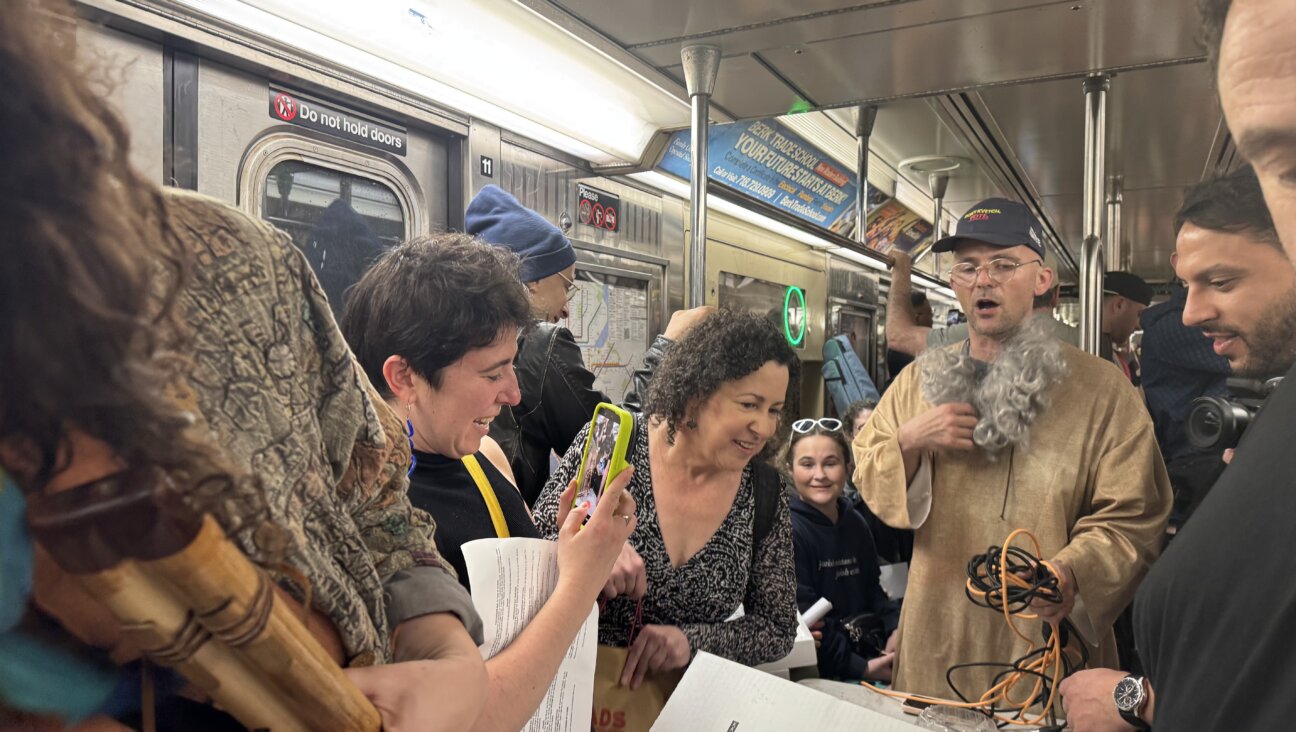
However, there’s a third option: to devise a position and practice that is mission-loyal and market-sensitive. Rabbi Amichai Lau-Lavie has attempted to do that. Whether he — and his innovation — succeeds can be measured by two criteria. First, do more intermarried choose to pursue higher levels of Jewish engagement and raise more of their children as Jews than they would otherwise? Second, do Jews — particularly those before marriage — continue to understand that Judaism believes that Jews should marry Jews?
Navigating the conflict between mission and market in this sphere, as in many others, requires imagination, experimentation, integrity and courage. Lau-Lavie is not alone in addressing what may be the most vexing challenge to American Jewish life. We need him, and other approaches to achieve the twin goals of more Jews married to Jews and more intermarried families engaged in Jewish life and raising Jewish children.
Steven M. Cohen is a research professor of Jewish social policy at Hebrew Union College.
This is a moment of great uncertainty. Here’s what you can do about it.
We hope you appreciated this article. Before you go, we’d like to ask you to please support the Forward’s independent Jewish news this Passover. All donations are being matched by the Forward Board - up to $100,000.
This is a moment of great uncertainty for the news media, for the Jewish people, and for our sacred democracy. It is a time of confusion and declining trust in public institutions. An era in which we need humans to report facts, conduct investigations that hold power to account, tell stories that matter and share honest discourse on all that divides us.
With no paywall or subscriptions, the Forward is entirely supported by readers like you. Every dollar you give this Passover is invested in the future of the Forward — and telling the American Jewish story fully and fairly.
The Forward doesn’t rely on funding from institutions like governments or your local Jewish federation. There are thousands of readers like you who give us $18 or $36 or $100 each month or year.
Support our mission to tell the Jewish story fully and fairly.