What foods are in a Rosh Hashanah Seder? Take our quiz to find out
Which fruits and vegetables symbolize what hopes and blessings for the Jewish new year?
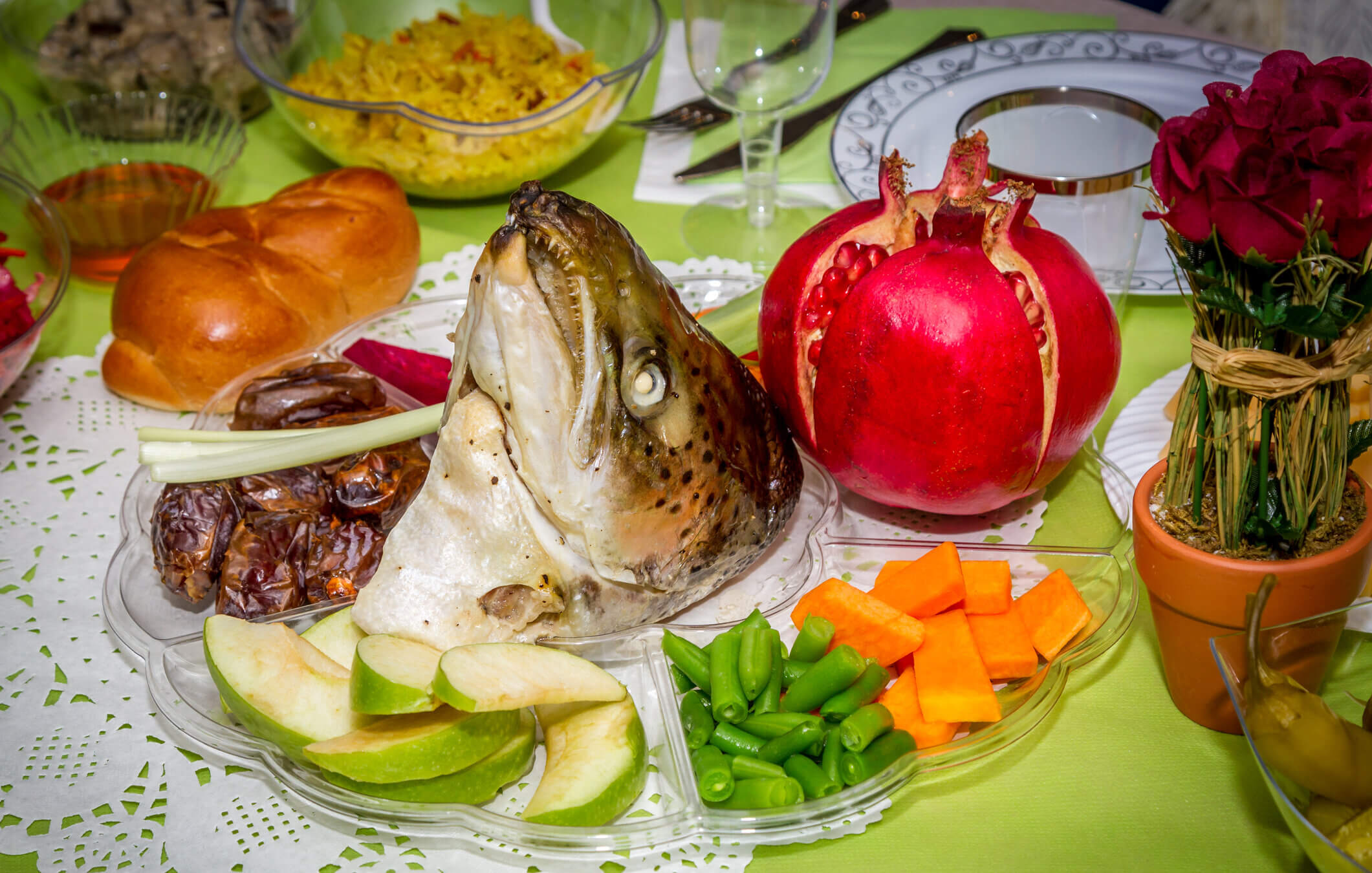
Doesn’t the Rosh Hashanah seder look fun, fresh and appetizing? Just ignore the fish head glaring at you from the middle. Courtesy of iStock

By Mira Fox September 22, 2022
Everyone knows about the Passover Seder. But did you know that Jews eat symbolic meals for lots of holidays — including Rosh Hashanah?
The custom is most common among Sephardic or Mizrahi communities, but it’s been embraced by Jews of all backgrounds in recent years. It features a full plate of fruits and vegetables, each of which represents wishes or blessings for the new year.
Some of the symbolism springs from the food’s shape or color — but a lot of the meaning behind this ancient Talmudic tradition springs from puns made between the fruit or vegetable’s Hebrew and Aramaic name and another word.
That means it can be pretty hard to remember what means what on the plate. But don’t let that stop you from guessing in the quiz below — even if you might need to be a Talmud scholar to get 100%. I’ll give you a hint: As with many traditions springing from ancient times, there’s an emphasis on smiting enemies. But if the quiz inspires you to create a Seder plate of your own, feel free to reinterpret the symbolism; it’s Jewish tradition, after all.
And if you realize, after taking these quizzes, that you need to brush up on your knowledge before you head to shul or a holiday meal — or you’re just curious to know more — take a look at some of our guides to the holidays below. Or try our other high holiday quizzes, on holiday greetings here and basic High Holiday trivia here.

Hello, fellow Forward reader! I’m Joel Brown, a Forward reader and supporter for more than 15 years, and currently the chair of the board of directors.
I’m an avid Forward reader because it ticks so many of my essential boxes: excellent journalism, Jewish focus and diverse viewpoints. In today’s political climate, what I most appreciate is the Forward’s independence — made possible by the generosity of its membership.
The Forward is committed to bringing you unbiased, nuanced Jewish news. From my position as board chair, I see an exciting future as we expand our position as the definitive independent voice of contemporary American Judaism.
That’s why I’m paying it Forward, by matching $36,000 of reader gifts. It’s an investment in the Forward’s newsroom, to continue telling the American Jewish story with truth and independence.
— Joel Brown, Forward board chair
Support our mission to tell the Jewish story fully and fairly.