An activist Jewish artist who used his work to fight fascism
Arthur Szyk painted the Founding Fathers and visualized American ideals to fight fascism
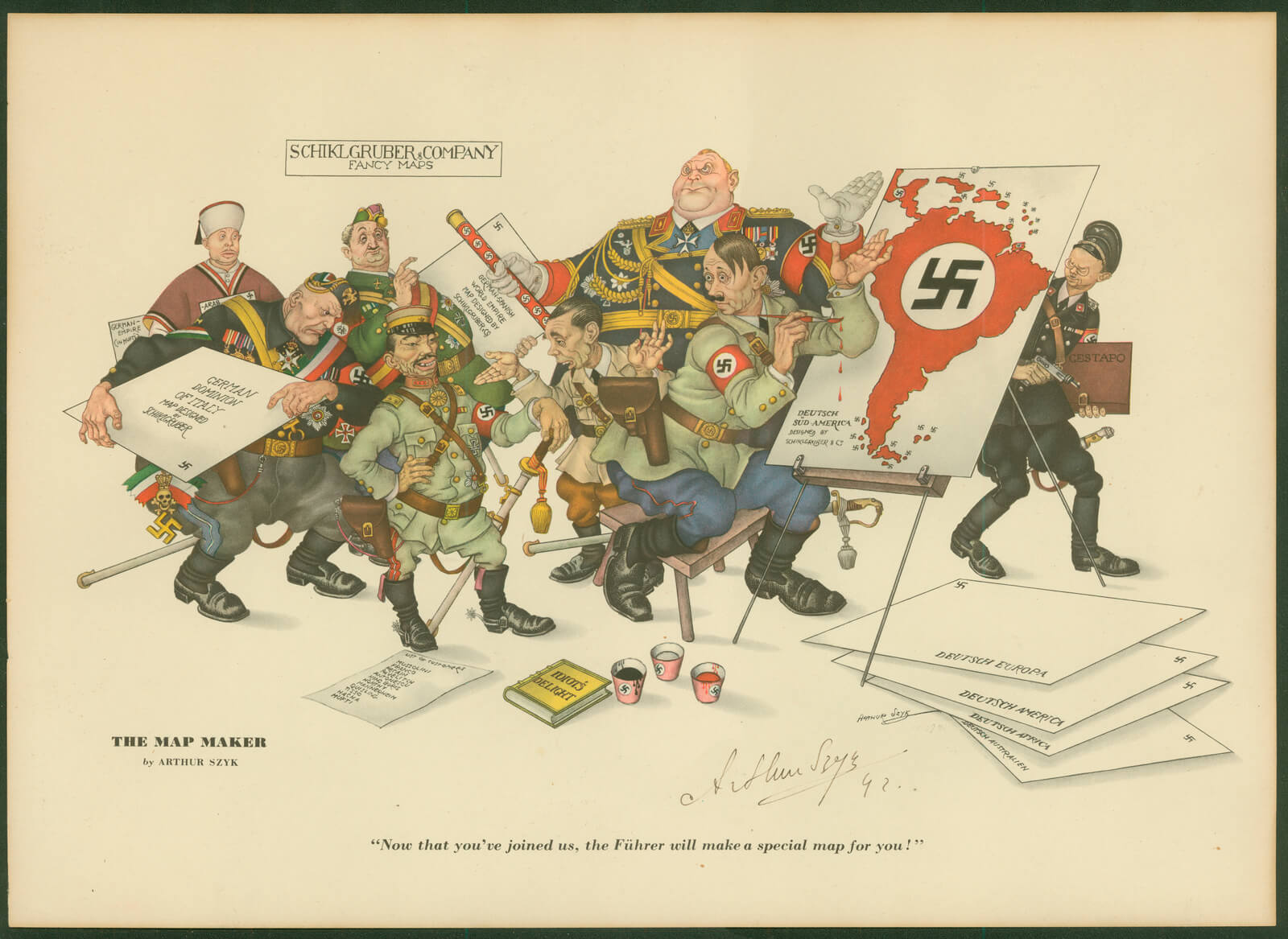
The Map Maker, a 1942 political cartoon by Arthur Szyk, depicts Hitler and other fascist figures including Joseph Goebbels and Mussolini. Courtesy of Arthur Szyk/The Museum of Jewish Heritage
The heroic image of George Washington standing in a boat as it cuts through the icy Delaware River on Christmas Eve in 1776 is etched into the collective American consciousness. But when Polish-born political artist Arthur Szyk painted the scene in 1942, he recast it for a nation at war.
In his Washington Crossing the Delaware, the soldiers are not uniform. Instead, they reflect a diverse America, where freedom and protection belong to everyone. Intricately detailed, the richly pigmented painting is one of more than 100 works by Szyk on view in Art of Freedom: The Life and Work of Arthur Szyk at New York City’s Museum of Jewish Heritage. The exhibition pulls together rarely seen material into public view as the United States approaches the 250th anniversary of its founding.
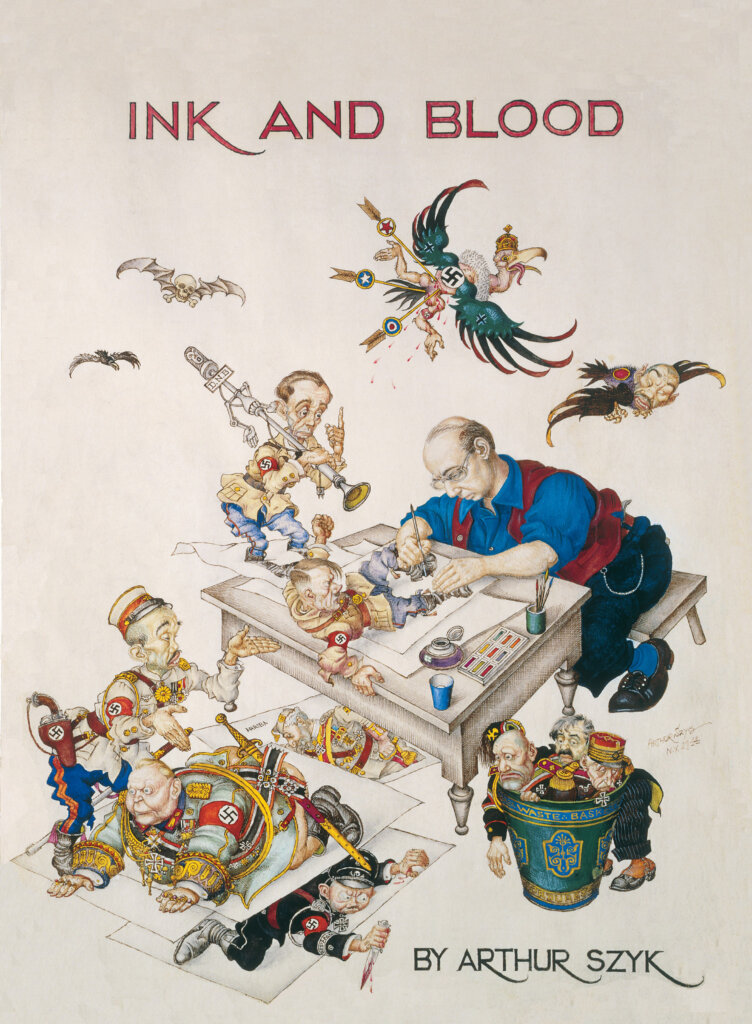
“What makes this exhibition and celebration of Arthur Szyk important for 2026 — 250 years on from the American Revolution and subsequent Declaration of Independence — is how he framed freedom as something to fight for. He loved America and was granted citizenship in 1948,” said Sara Softness, the museum’s director of curatorial affairs. “The title ‘Art of Freedom’ has a double meaning: not only that the artist made pictures about or featuring themes of democratic ideals, anti-Fascism, and pro-pluralism, but that freedom itself is a practice, a metier, a life’s work.”
Born in Łódź, Poland, in 1894, Szyk experienced the major upheavals of the 20th century: two world wars, the rise of totalitarianism and Nazism, the founding of the State of Israel, McCarthyism, as well as deeply entrenched American racism and antisemitism.
After Germany invaded Poland in 1939, he, his wife and two children fled to London, ultimately immigrating to the United States in 1940.
While Szyk was an established artist when he arrived in the U.S., most Americans first encountered him through the lavishly illuminated Szyk Haggadah. Completed in Poland in the 1930s and published in London in 1940, The Times of London praised the work as “worthy to be placed among the most beautiful of books that the hand of man has ever produced.”
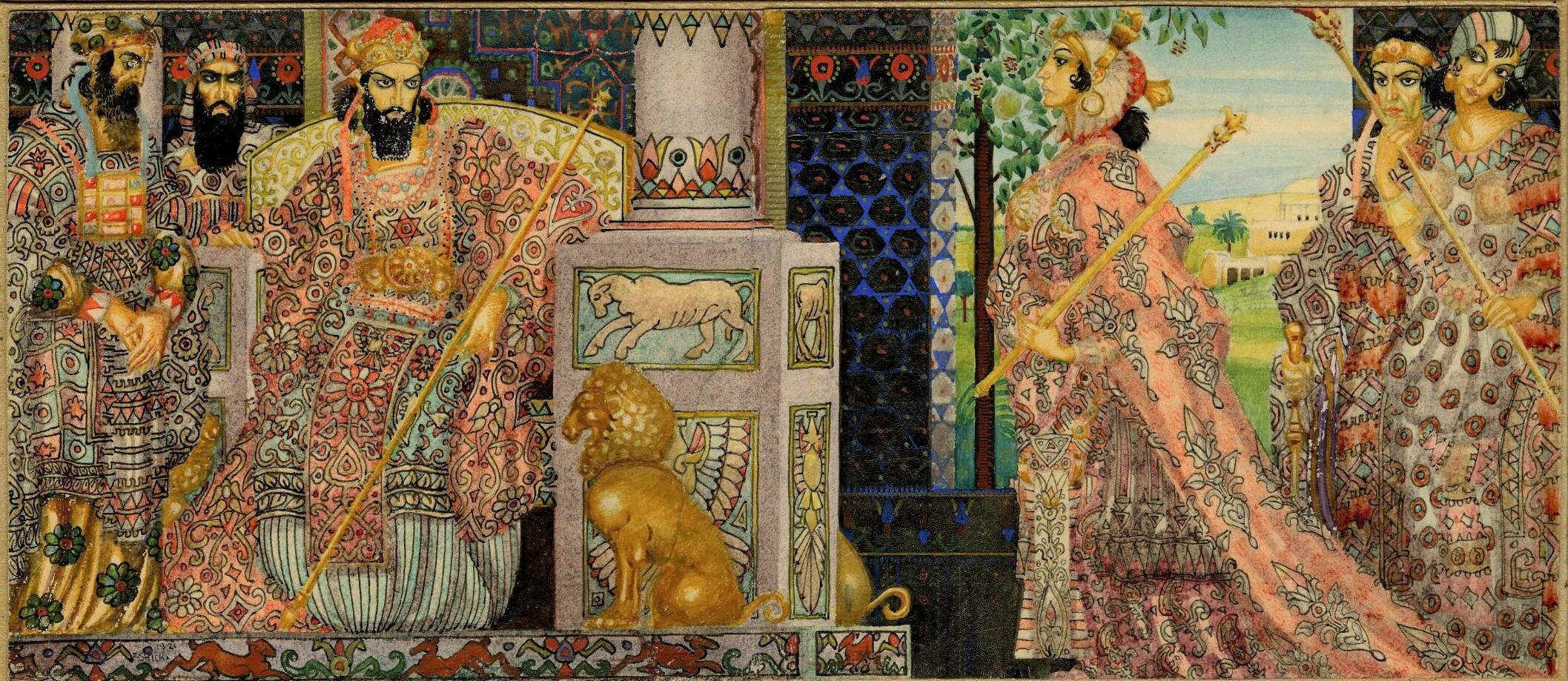
Running through July 26, 2026, the show includes 18 never-before-seen pieces and 38 original works, the majority of which are on loan from Irvin Ungar, a rabbi-turned-antiquarian.
The show includes commercial cartoons Szyk produced for Collier’s magazine and illuminated manuscripts, as well as his 1928-1929 sketchbook for the Washington and His Times series. Visitors get an up-close look at the painstaking labor required to accurately show pivotal battle scenes from the American Revolution as well as Szyk’s efforts to draft the highly specific weaponry and military dress of the Revolution’s fighters.
A fierce anti-fascist, themes of military might pervaded Szyk’s works throughout World War II.
This is never more evident than in his 1942 suite illustrating the Four Freedoms that hung in President Franklin D. Roosevelt’s White House. Each miniature, on display for the first time in 80 years, portrays a medieval knight on a quest to secure Roosevelt’s four essential freedoms — Speech, Religion, Want and Fear.
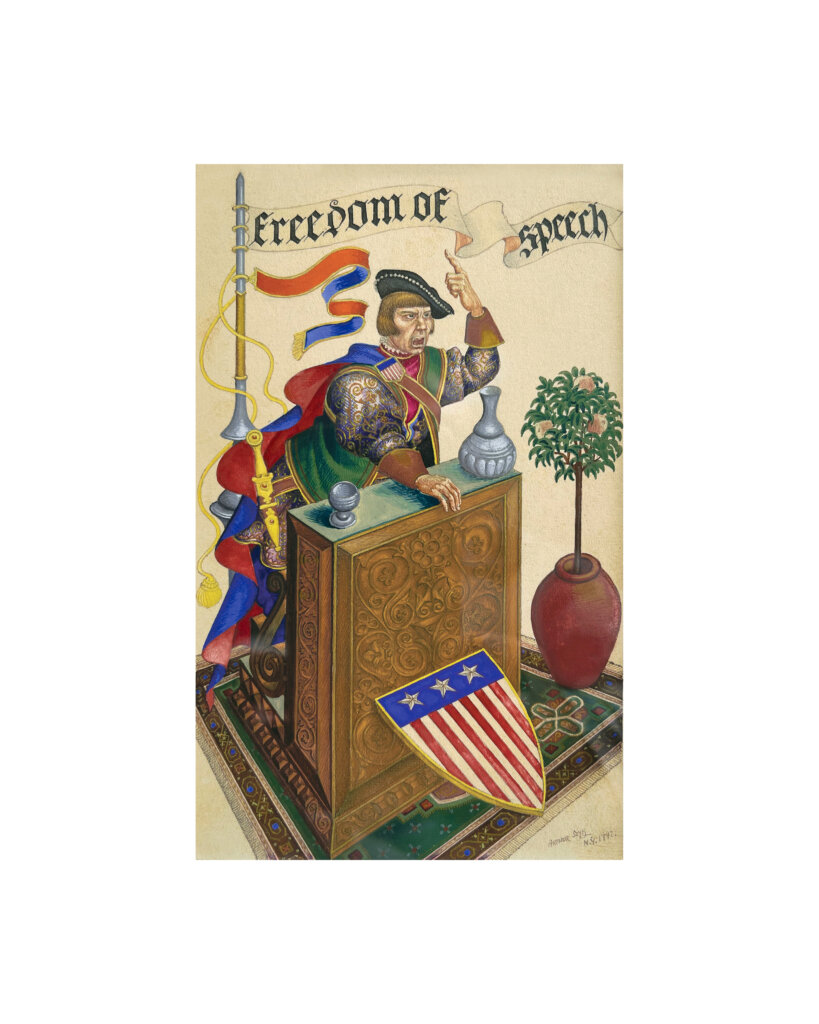
Freedom of Speech shows the knight wearing a red and blue cape pounding a lectern as he speaks freely; a shield embossed in the colors of the American flag rests nearby. In Freedom from Want, abundant food surrounds the knight. In Freedom of Religion he kneels in prayer, and in Freedom of Fear he charges into battle.
Many of Szyk’s works meld American ideals with his firm belief that the government must do all it can to rescue Jews. During this period, many of his miniatures were sold as stamps and posters to generate much-needed wartime funds. In this way, Szyk not only highlighted the fight against the Nazis, he cemented the defense of these freedoms as a moral obligation for all Americans.
“The exhibition is a portrait of a person who, with his pen, inks and gouaches, never put down the fight — whether for Allied victory or Jewish salvation or, what his career embodied so thoroughly, for freedom of expression,” Softness said.
The latter eventually drew the glare of the House Un-American Activities Committee. Szyk was primarily investigated for his works that challenged racism, whether it was highlighting the experience of Black veterans during World War II or the segregationist policies of the South, as well as his outspoken support for Jewish refugees.
Like the medieval knight he depicted in Freedom from Fear, Szyk charged ahead. Indeed he threw down the gauntlet in his 1951 piece Thomas Jefferson’s Oath.
The jewel-toned work illuminates Jefferson’s famous quote: “I have sworn upon the altar of God eternal hostility against every form of tyranny over the mind of man.”
74 years after he died in his home in New Canaan, Connecticut, Szyk’s legacy endures.
“He refused to dilute identity or politics. He worked loudly, explicitly, and without apology — a proud American, a committed Jew, and a relentless defender of civil rights,” Softness said.