In a new opera, Tevye’s forgotten daughter takes the spotlight
‘Tevye’s Daughters’ recalls a repressed memory from the women’s perspective
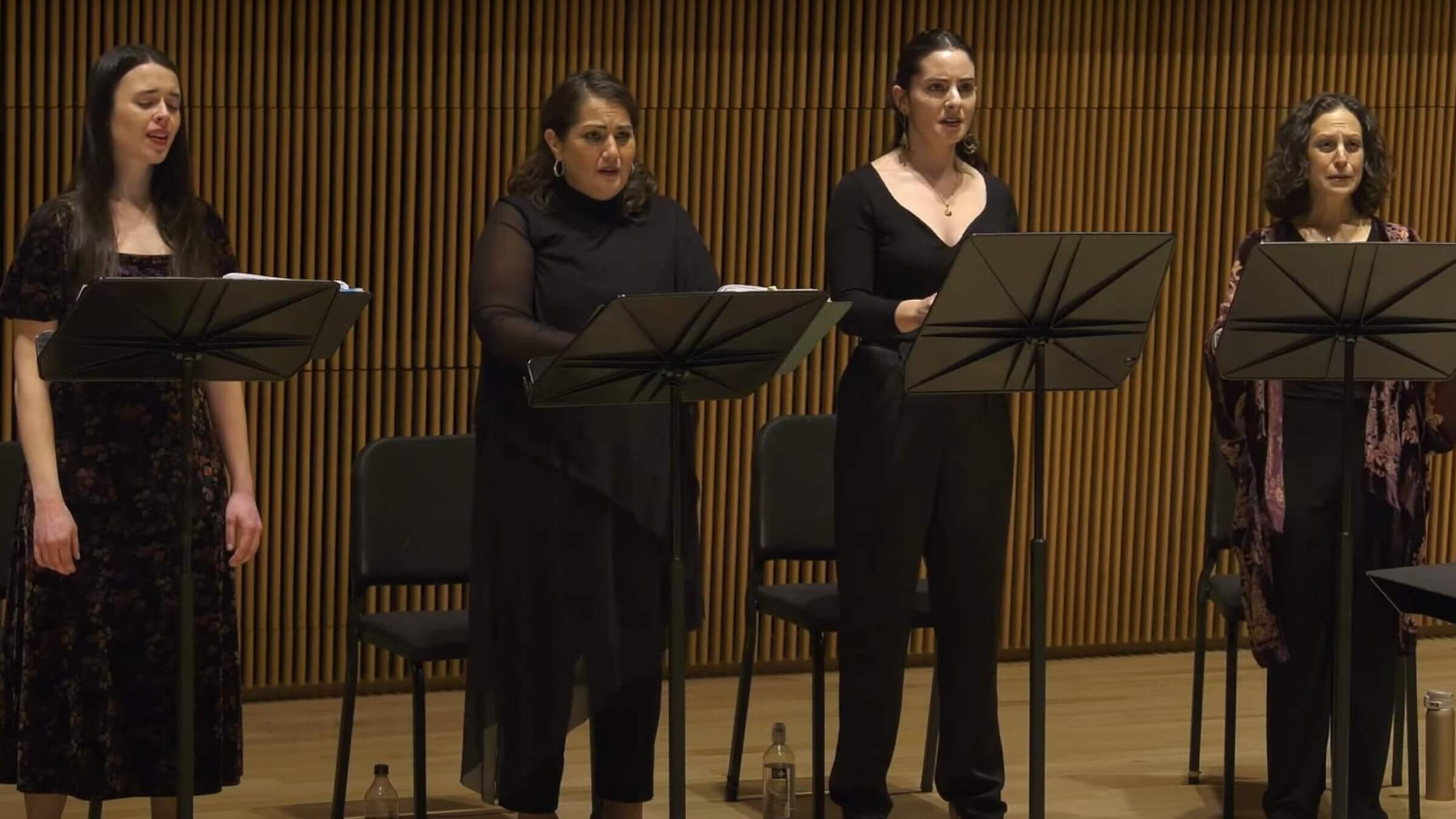
The cast of Tevye’s Daughters in an early performance. Photo by Alex Weiser

By PJ Grisar March 6, 2026
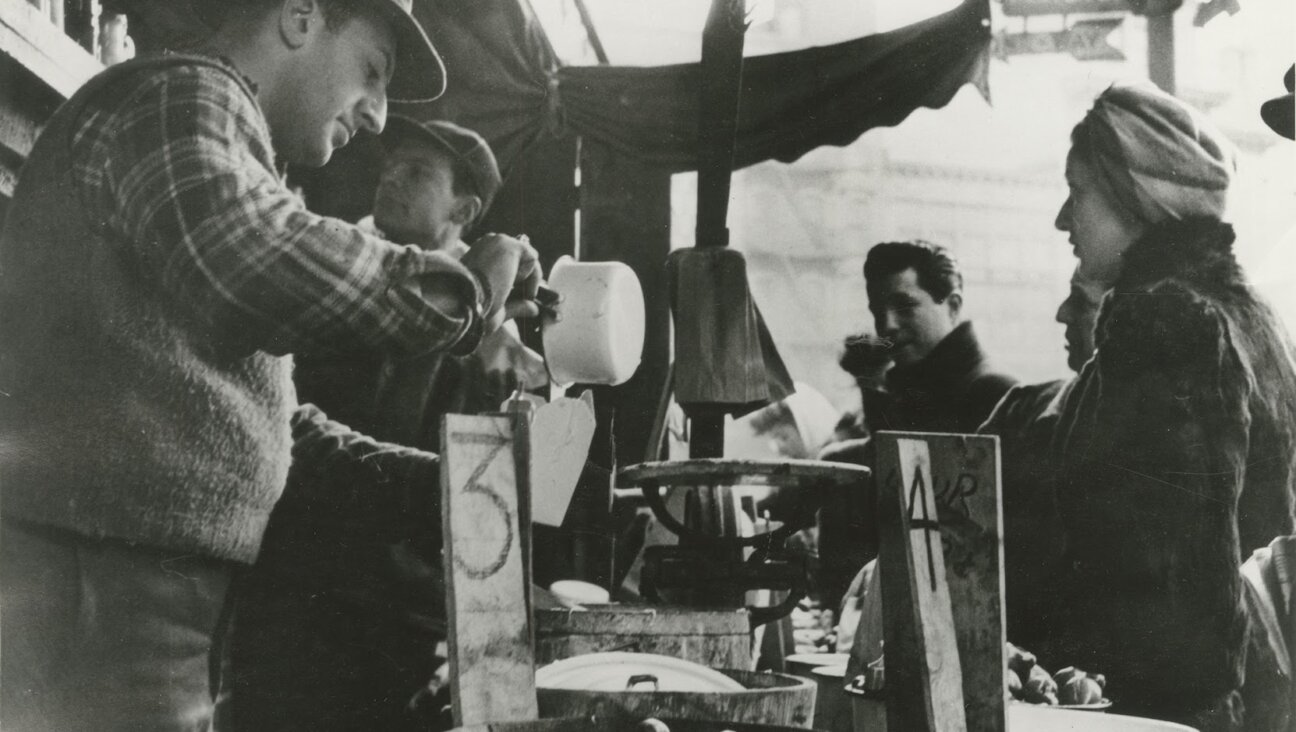
For most, the story of Tevye the milkman is tumble-down, work-a-day Anatevka — and it’s a man’s world.
That the Sholem Aleichem stories situated the philosopher dairy deliverer outside of a shtetl, and even that he had two daughters beyond Hodl, Tseytl and Khava, is known to Yiddishists, but may be more obscure to musical theater fans.
Composer Alex Weiser and librettist Stephanie Fleischmann’s new opera, Tevye’s Daughters, which will have a concert performance March 19 at the Museum of Jewish Heritage in New York, is inspired by the story of Tevye’s second-youngest daughter Sphrintse, who took her own life after the failure of an engagement.
Weiser, whose operas include a portrait of Theodor Herzl’s marital squabbles and the battle over a Yiddish dictionary, knew he was reckoning with a titan of American Jewish identity when he picked this material. That’s part of why he and Fleischmann were drawn to it.
“Fiddler itself is really in the popular imagination on the one hand,” Weiser said in a Zoom interview. On the other hand, as Tevye would say, the lesser known stories are ripe for exploration. Weiser and Fleischmann hope audiences will walk in with a certain familiarity, but come away recognizing something more nuanced.
Key to Weiser and Fleischman’s approach is a framing device of their own invention. Tseytl, Khava and Beylke recall the story of their sister’s death decades later, as old women in a cabin in the Catskills in 1964. That memory parallels the journey of Rose, Tseytl’s social justice-minded granddaughter, who is involved in protest marches and is breaking off her engagement after falling in love with a woman. (The actor who plays Rose doubles as Sphrintse; the older women also play their younger selves.)
“In a way, Sholem Aleichem’s story of Sphrintse is a kind of suppressed memory, culturally, for all of us,” said Weiser. “So we kind of dramatize that by having the sisters also kind of suppress this memory.”
What’s novel about Fleischmann’s libretto is the way it shifts focus. It’s called Tevye’s Daughters, but Tevye is only a bumbling bit part, whereas in the Sholem Aleichem stories, he was the sole — and certainly unreliable — narrator. The plot, and the score, reflect the underexamined role of women.
On three occasions, his daughters interrupt a potential monologue to say “it’s not your story to tell.”
In writing the libretto, Fleischmann, whose recent projects include In a Grove, which adapts a story by Japanese writer Ryūnosuke Akutagawa, looked to the work of Yiddish poets like Kadia Molodowsky. The opera features songs underscoring women-led rituals like braiding challah and lighting shabbos candles. Centrally, it makes use of tkhines, private Yiddish prayers written for women who may not have known Hebrew.
“The sound of those prayers becomes something that’s really at the heart of the opera,” said Fleischmann, noting how the text was drawn from the archives at the YIVO Institute of Jewish Research, where Weiser is the director of public programming.
Instead of a klezmer sound — or the American Songbook stylings of Fiddler composer Jerry Bock — Weiser’s music is more typically operatic (though there are clarinets). A vibraphone is used for the 1964 scenes and there are moments of solo violin that tip their hat to Fiddler, while not being of it.
The sonic quality, which pulses like water on the lake where Sphrintse drowned, hints at a hidden narrative. In the opera, Tevye’s daughter Beylke, who decides to stay single, is understood to be gay. Fleischmann and Weiser found interviews in the archives with women born around the time of Beylke, in shtetlach, explaining growing up queer in a rigid milieu governed by tradition.
For Fleischmann, writing these characters reminded her of her immigrant father, and his “history of exile and resettling.”
At a time of ICE raids, the opera, while it concerns a different community of immigrants, and a different time of political protest, is rooted in a past that feels familiar.
“We can talk today about how it speaks to a resurgence of activism,” said Fleischmann. “How are we going to move forward in the world?”
The opera argues that it is the very voices from history that were traditionally silenced that can speak the loudest to us now.
Corrections: A previous version of this article said Sphrintse was in an arranged marriage — she was engaged.
This is a moment of great uncertainty. Here’s what you can do about it.
We hope you appreciated this article. Before you go, we’d like to ask you to please support the Forward’s independent Jewish news this Passover. All donations are being matched by the Forward Board - up to $100,000.
This is a moment of great uncertainty for the news media, for the Jewish people, and for our sacred democracy. It is a time of confusion and declining trust in public institutions. An era in which we need humans to report facts, conduct investigations that hold power to account, tell stories that matter and share honest discourse on all that divides us.
With no paywall or subscriptions, the Forward is entirely supported by readers like you. Every dollar you give this Passover is invested in the future of the Forward — and telling the American Jewish story fully and fairly.
The Forward doesn’t rely on funding from institutions like governments or your local Jewish federation. There are thousands of readers like you who give us $18 or $36 or $100 each month or year.
Support our mission to tell the Jewish story fully and fairly.