Harvard offers fellowship to ex-Human Rights Watch head who criticized Israel
The school’s dean had originally decided not to offer the fellowship to Ken Roth, but now says that was an ‘error’
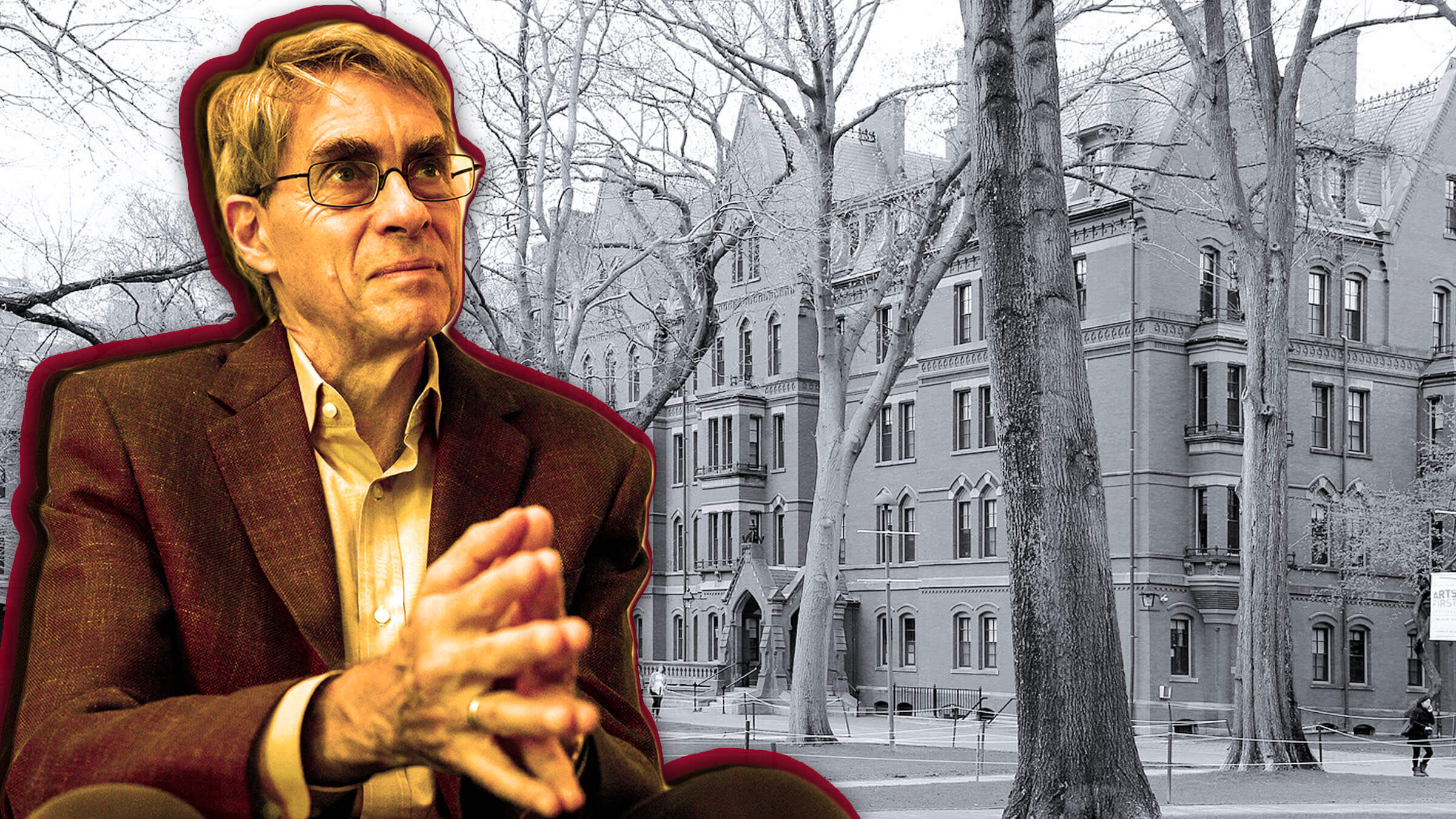
Former Human Rights Watch executive director Kenneth Roth. Background: Harvard University’s campus. Photo by Angela Weiss/AFP via Getty Images; Forward Montage
By Beth Harpaz January 19, 2023
In a reversal of an earlier decision, the Harvard Kennedy School will offer a fellowship after all to Ken Roth, the retired head of Human Rights Watch who is publicly critical of Israel.
In a statement published on a Harvard website, the school’s dean, Douglas Elmendorf, called his original decision to deny Roth the fellowship an “error.” He added: “I am sorry that the decision inadvertently cast doubt on the mission of the School and our commitment to open debate in ways I had not intended.”
In a Jan. 10 article in The Guardian, Roth had accused Elmendorf of vetoing the fellowship “because of my criticism of Israel. As best we can tell, donor reaction was his concern.”
Harvard students, faculty and alumni had complained that the decision was a violation of academic freedom and reflected the undue influence of donors.
Elmendorf disputed that accusation. “Donors do not affect our consideration of academic matters,” he wrote. “My decision was also not made to limit debate at the Kennedy School about human rights in any country.” Instead, he said his original decision to deny Roth the one-year fellowship at the Carr Center for Human Rights Policy was “based on my evaluation of his potential contributions to the school.”
In a statement Roth posted to Twitter, he said he was thrilled by the news and called the school a “congenial place” to work on his next book. He said he was grateful for the support of faculty and students at Harvard and elsewhere, whose “disapproval” of the original decision led to the reinstated offer. But he criticized the dean for a lack of transparency in not naming the individuals who led to his initial veto, and said he was “worried about academic freedom.”
“The problem of people penalized for criticizing Israel is not limited to me, and most scholars and students have no comparable capacity to mobilize public attention,” Roth said.
The New York Times reported that Roth, who is Jewish and whose father fled Nazi Germany, in the meantime took a fellowship at the University of Pennsylvania, and it wasn’t clear from Roth’s tweeted statement how soon he might take on the Harvard post.
In a recent op-ed, Forward columnist Dany Bahar, an Israeli Harvard alumnus, decried Elmendorf’s original decision. Bahar said that while he rejects much of Roth’s views on Israel, “engaging with critics of Israel is our responsibility, and attempting to cancel them only reinforces the view that Israel is not an open society.” He added that Roth “would have been a tremendous asset to Harvard’s Jewish and Israeli students.”
A Kennedy School spokesperson said it would have no comment beyond Elmendorf’s statement.
Editor’s note: This story has been updated with a link and excerpts from the dean’s letter, and with Roth’s statement.

Hello, fellow Forward reader! I’m Joel Brown, a Forward reader and supporter for more than 15 years, and currently the chair of the board of directors.
I’m an avid Forward reader because it ticks so many of my essential boxes: excellent journalism, Jewish focus and diverse viewpoints. In today’s political climate, what I most appreciate is the Forward’s independence — made possible by the generosity of its membership.
The Forward is committed to bringing you unbiased, nuanced Jewish news. From my position as board chair, I see an exciting future as we expand our position as the definitive independent voice of contemporary American Judaism.
That’s why I’m paying it Forward, by matching $36,000 of reader gifts. It’s an investment in the Forward’s newsroom, to continue telling the American Jewish story with truth and independence.
— Joel Brown, Forward board chair
Support our mission to tell the Jewish story fully and fairly.