Anti-BDS order will test Mamdani on day one
Outgoing Mayor Eric Adams issued the executive order as debates intensify over future City Hall policy on Israel
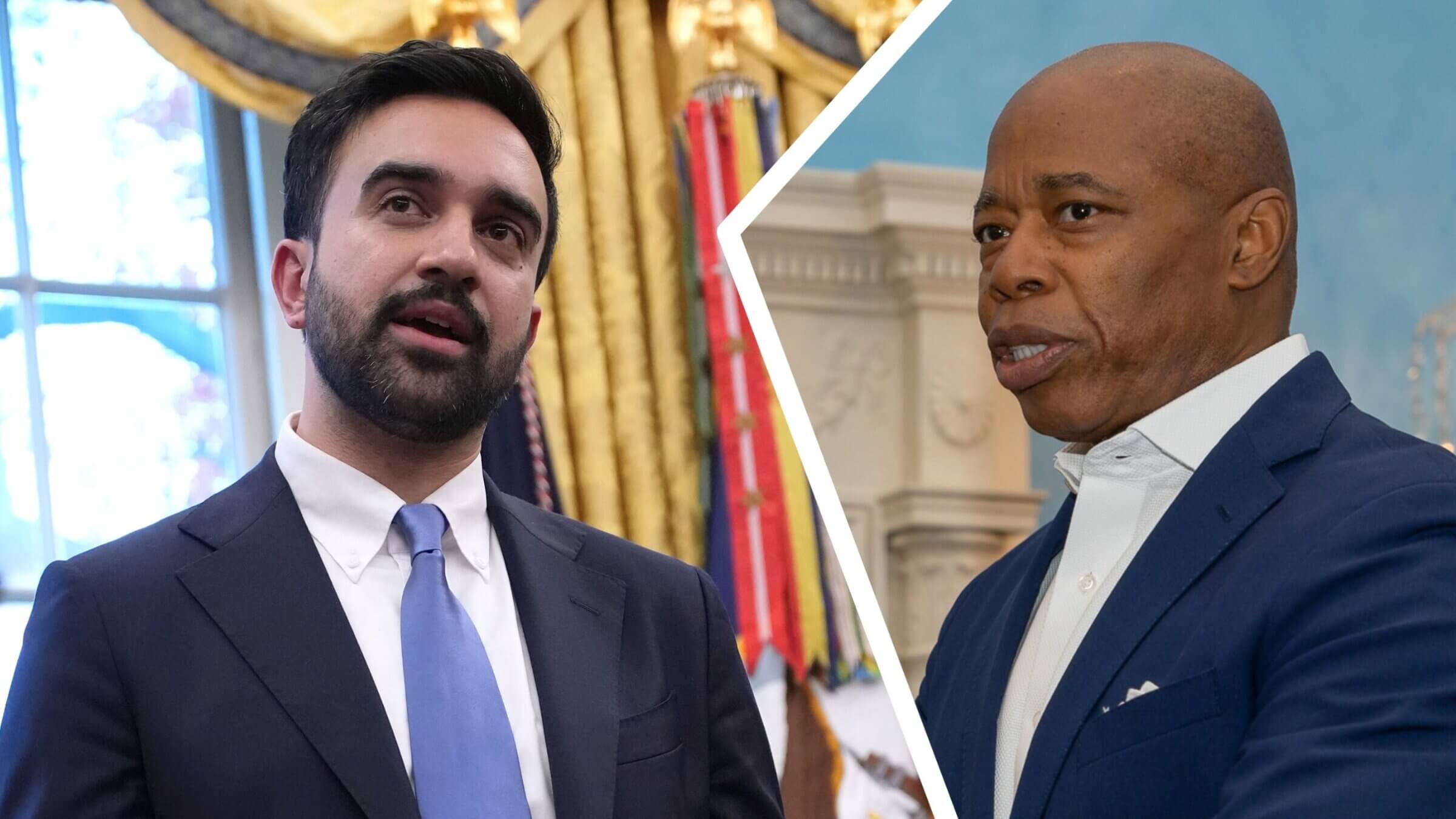
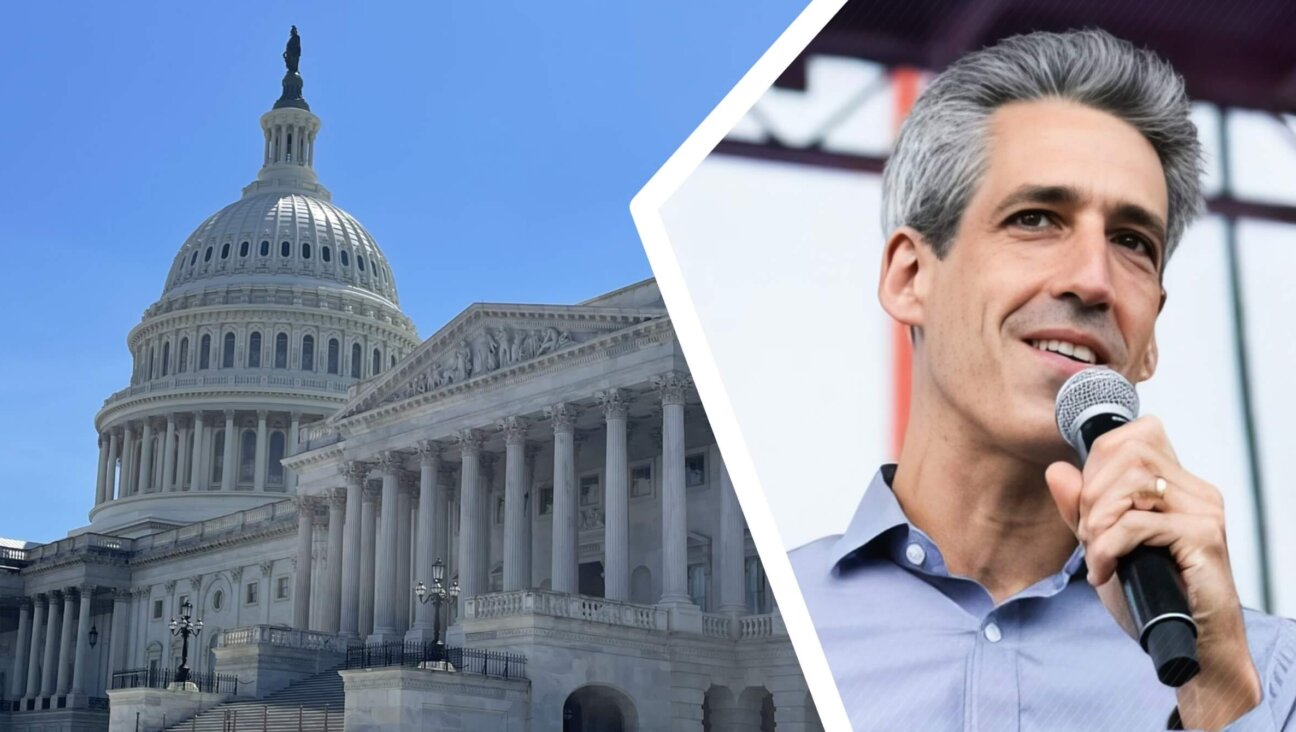
NYC Mayor-elect Zohran Mamdani and outgoing Mayor Eric Adams. Photo by Collage photo — Andrew Harnik/Getty Images and Benny Polatseck/Mayoral Photography Office

By Jacob Kornbluh December 4, 2025
Outgoing New York City Mayor Eric Adams is immediately testing his successor’s position on the boycott Israel movement as Zohran Mamdani takes office, at a moment when the city’s Jewish community remains divided over the next mayor’s priorities and his stance on Israel.
On Wednesday, Adams signed an executive order barring city agencies from participating in Boycott, Divestment and Sanctions efforts, which would pre-empt any moves by city officials to divest from Israel Bonds and other Israeli investments. Mamdani, a strident critic of Israel, has pledged to end the city’s decades-long practice of investing millions in Israeli government debt securities and has said he would order the arrest of Prime Minister Benjamin Netanyahu if he visits New York.
Mamdani’s transition team had no immediate comment.
But Adams was prepared for a response. “If the incoming administration wants to reverse” the executive order, then “that is on their watch,” he said.
At an event later on Thursday, Mamdani told reporters, “The mayor is free to issue as many executive orders as he’d like with the less than 30 days that he has in office, and then we will be taking a look at every single one once we actually enter into City Hall.”
Why ban BDS now?
Adams announced the measure in remarks at the North American Mayors Summit Against Antisemitism, organized by the Combat Antisemitism Movement, in New Orleans, Louisiana. “You are being targeted,” Adams said. “And we have to be as intelligent and as focused, as strategic as possible. … That’s why I am signing an executive order today to deal with BDS, so we can stop the madness that we should not invest in Israel.”
Fabien Levy, the deputy mayor for communications, said the move, weeks before Adams departs, was “a flag in the ground” to state that the current administration “will not waver in the fight against antisemitism.”
New York City is home to the largest concentration of Jews in the United States. Many Jews view the bonds as a bulwark against the BDS movement, whose co-founder has stated that the goal is to apply economic pressure on Israel to end its occupation of the West Bank and to abolish Israel as a Jewish state.
The city’s investment in Israeli bonds was a flashpoint in the Democratic primary for mayor and in the general election. Mamdani, who co-founded the Students for Justice in Palestine chapter at Bowdoin College, pledged to publicly back the movement to boycott Israel. In an interview with the Forward in April, Mamdani said he would end Adams’ policies that he regarded as a violation of international law and human rights.
The city’s Jewish voters split in the competitive mayoral election last month — with former Gov. Andrew Cuomo receiving the support of most voters who identify as Jewish and dominating in Hasidic and Orthodox strongholds, while Mamdani got 31% of the vote and swept progressive Jewish neighborhoods in Brooklyn and Manhattan on his way to a citywide win. A recent poll of 745 American Jews by the Jewish People Policy Institute found that 64% of respondents view Mamdani as both anti-Israel and antisemitic, and 67% believe his election would make New York City’s Jews less safe.
Nonetheless, Mamdani’s positions on BDS and stance on the Israeli-Palestinian conflict resonated with a plurality of voters. Nearly half of Mamdani voters, 49%, said his position was a factor in their support, according to a CNN exit poll.
Levy, who is Jewish and accompanied Adams both on his four-day farewell trip to Israel and to Louisiana, said that the mayor is sending a message about what the city’s values are, “even if hating Israel has suddenly become ‘the cool thing’ by some.” In meetings and public remarks during his swing in Israel, Adams pointed out that Mamdani won with 50.4% of the vote, and that his policies were not popular. Mamdani met with Adams at Gracie Mansion earlier this week, a meeting that was kept private.
Mamdani will also have to decide whether to disband the recently-created mayor’s office to combat antisemitism, which has pursued a measure adopting the controversial International Holocaust Remembrance Alliance definition of antisemitism, which considers most forms of anti-Zionism as antisemitic. He’ll also need to decide whether to take action on Adams’ new New York City–Israel Economic Council, an initiative to strengthen economic ties with the Jewish state.
What the executive order says
Adams’ anti-BDS order bars agency heads, chief contracting officers and other mayoral appointees with contracting authority from adopting practices that discriminate against Israel or Israeli citizens. It also directs the city’s chief pension administrator and pension trustees appointed by the mayor not to support divestment from Israel Bonds or other assets.
Brad Lander, the outgoing city comptroller overseeing pension fund investments and a Mamdani ally, ended the city’s half-century practice of investing millions in Israeli government debt securities in 2023 when the holdings matured.
At the time, the city’s pension funds held $39 million in Israel Bonds, with a roughly 5% return. Lander, who is Jewish, maintained that he was following the city’s policy of avoiding foreign sovereign debt, treating Israel the same as other countries rather than giving it special treatment in the pension portfolio.
City pension funds also held more than $315 million in Israel-based assets, including nearly $300 million in common stock and over $1 million in Israeli real estate investment trusts.
Mark Levine, the comptroller-elect who is also Jewish, pledged to repurchase the bonds as part of the city’s portfolio. “This has been a rock-solid investment for decades,” he said. “Israel has never missed a bond payment, and a good, balanced portfolio should have global diversity.”