For Moroccan Jews, Passover Has a Sweet Ending
Graphic by Angelie Zaslavsky
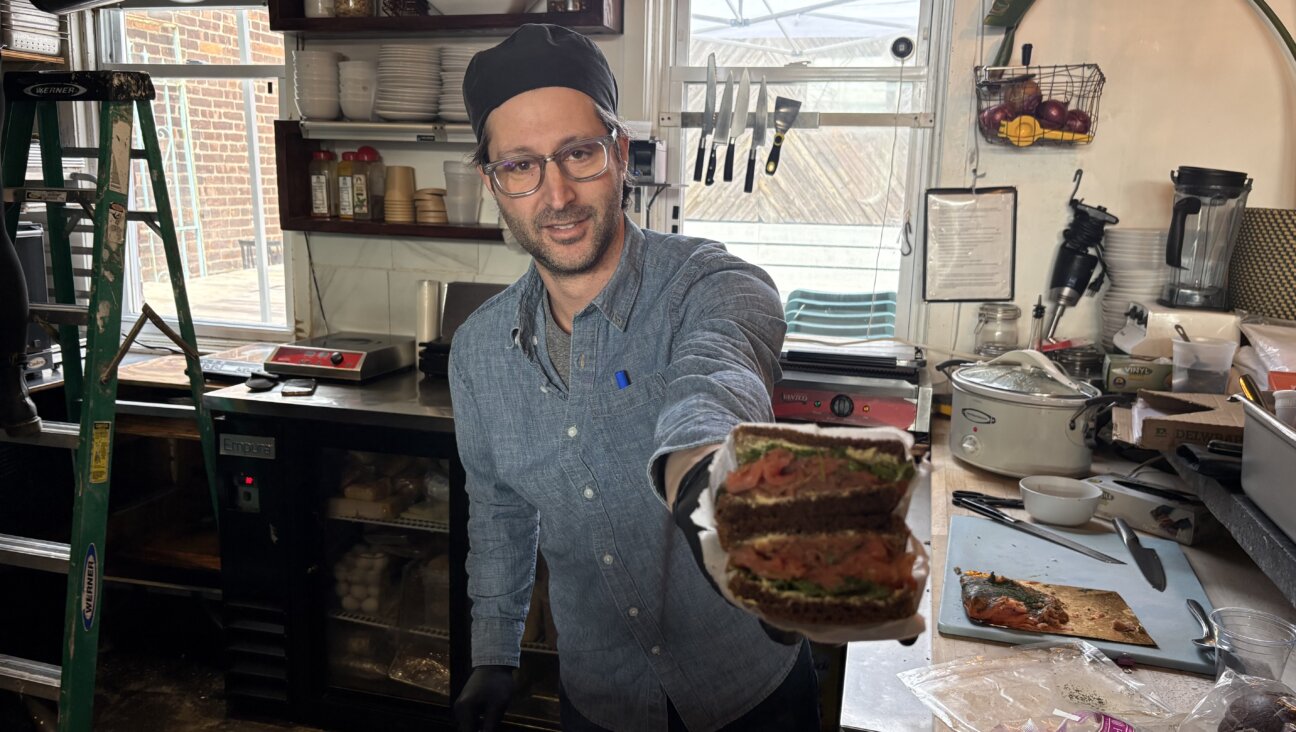
Tonight, right after sundown, chef Simon Elmaleh will discard the Passover matzo, set out fine platters laden with leavened, sugary sweets and welcome friends into his home with cries of terbhou ou tseedou, Arabic for “good luck.”
For Moroccan Jews like Elmaleh, the end of Passover marks the start of the Jewish-Moroccan festival Mimouna — a night of open house parties complete with a feast of traditional sweets that honors the Exodus story.
This year, Elmaleh has prepared platters that glisten with sugary glazes: slivers of candied orange peels, fat eggplants in sweetened ginger syrup, poached Bosch pears in a Cointreau-based syrup and figs cooked in syrup with white wine and vanilla.
Observing Mimouna is “a beautiful thing,” Elmaleh told me in early April while taking a break from cooking tagine and couscous at his cozy restaurant Simon’s Café in Los Angeles. In Montreal young Jews gather for Mimouna hops and in Israel, Moroccan Jews welcome their Ashkenazi neighbors. “The welcoming — that’s the big thing,” explained Elmaleh.
Growing up in Morocco, his family would leave their door open for the night, welcoming friends and neighbors to a party where men would don elegant fez hats, while women wore gold jewelry and shone in bright caftans adorned with gold stitching. Guests would sing and dance until dawn to Moroccan party music on the stereo while sipping mint tea, yogurt drinks and coffee.
Elmaleh’s mother would spend entire days during Passover preparing sweets for the family and their guests. The centerpiece of Mimouna in their home was always mufleta, a thin pancake made with dough and lightly fried, meant to be topped with butter, honey, jam or chocolate. As a kid, Elmaleh would help his mother make coconut macaroons, stuffed dates, marzipan, jams and preserves.
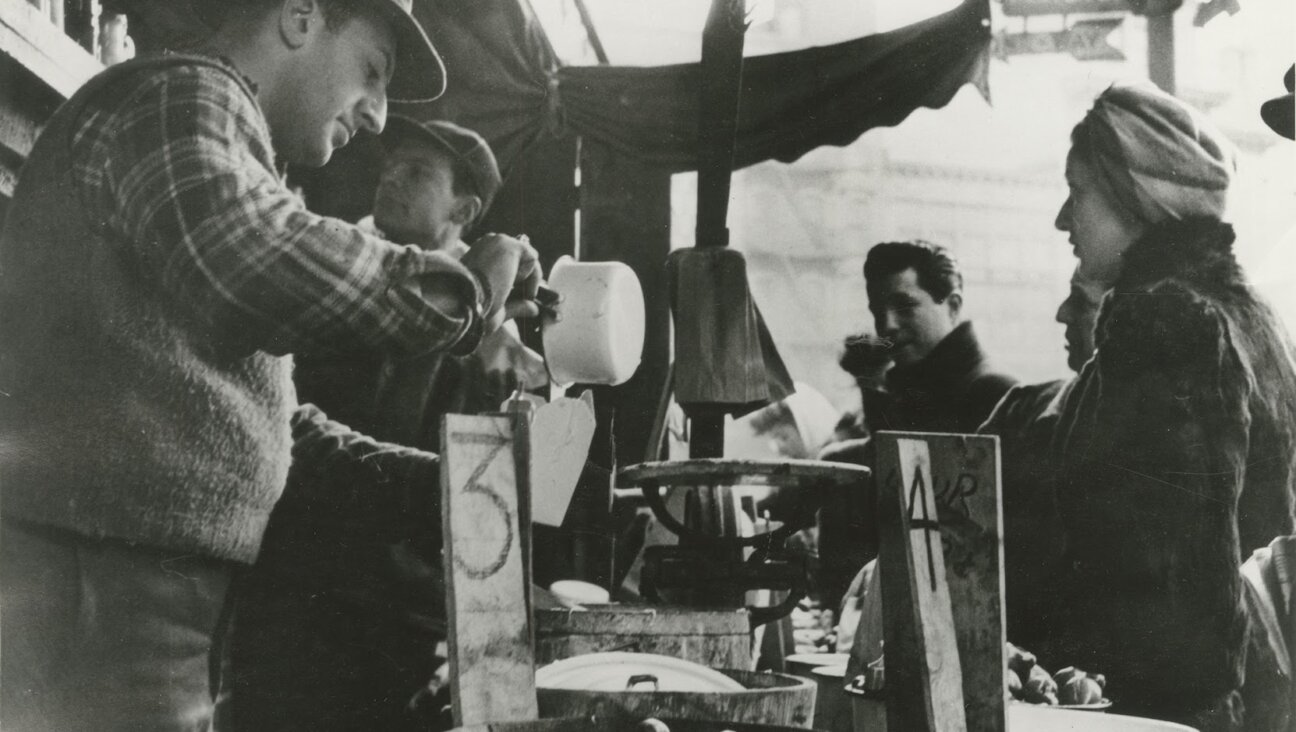
They would visit the busy souks, or marketplaces where vendors would hawk dates and walnuts, yelling at the tops of their voices, “Hey, this is for the Mimouna!”
When his family moved to Israel when he was 12, they brought their Mimouna along. Later, Elmaleh carried it with him to Japan where he worked as a chef for nearly two decades. And now, his family’s Mimouna has found its way to Los Angeles.
Elmaleh knows only a few other Jewish Moroccan families here, so the festivities are considerably smaller than what he remembers growing up.
But, he still cooks his mother’s syrupy figs and sugar-soaked pears saying, “even if only a few friends come, that’s good too.”
Mimouna Recipes
Chocolate Dipped Candied Orange
Photos by Daina Beth Solomon
This is a moment of great uncertainty. Here’s what you can do about it.
We hope you appreciated this article. Before you go, we’d like to ask you to please support the Forward’s independent Jewish news this Passover. All donations are being matched by the Forward Board - up to $100,000.
This is a moment of great uncertainty for the news media, for the Jewish people, and for our sacred democracy. It is a time of confusion and declining trust in public institutions. An era in which we need humans to report facts, conduct investigations that hold power to account, tell stories that matter and share honest discourse on all that divides us.
With no paywall or subscriptions, the Forward is entirely supported by readers like you. Every dollar you give this Passover is invested in the future of the Forward — and telling the American Jewish story fully and fairly.
The Forward doesn’t rely on funding from institutions like governments or your local Jewish federation. There are thousands of readers like you who give us $18 or $36 or $100 each month or year.
Support our mission to tell the Jewish story fully and fairly.