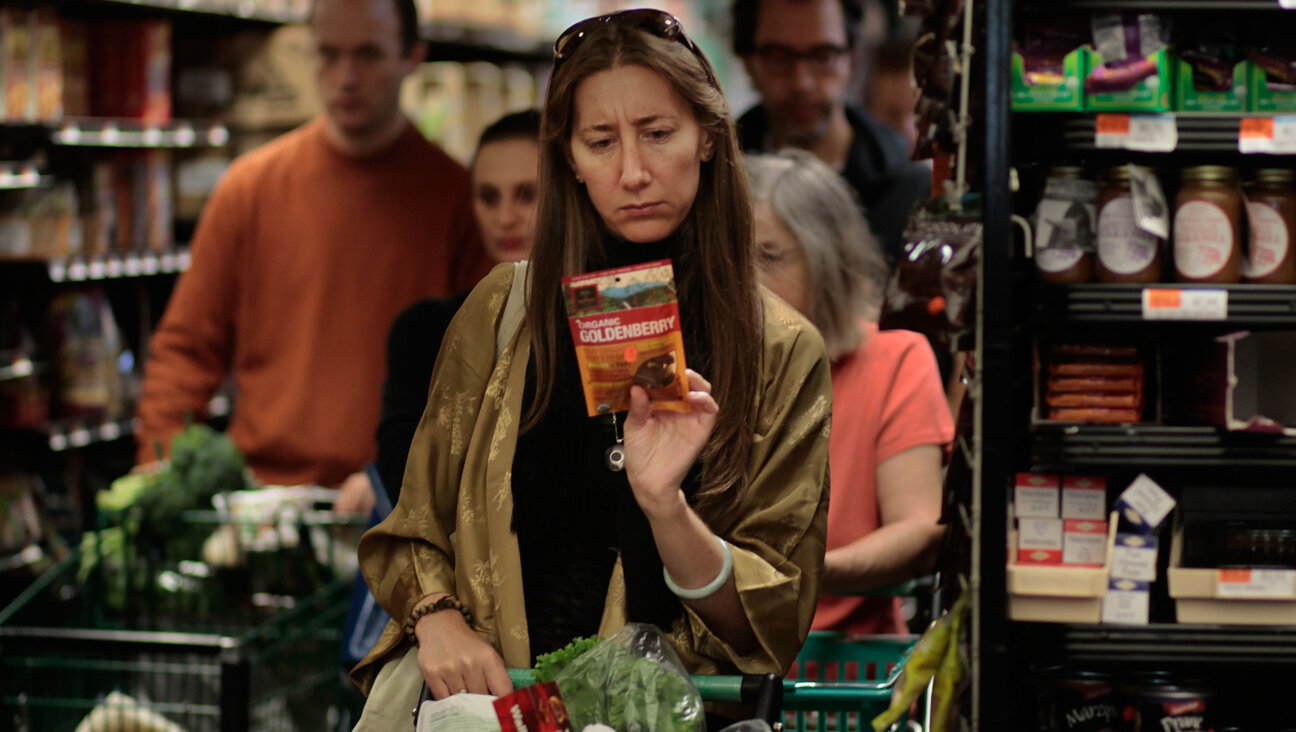
5 Smart Answers to Stupid Kosher Questions
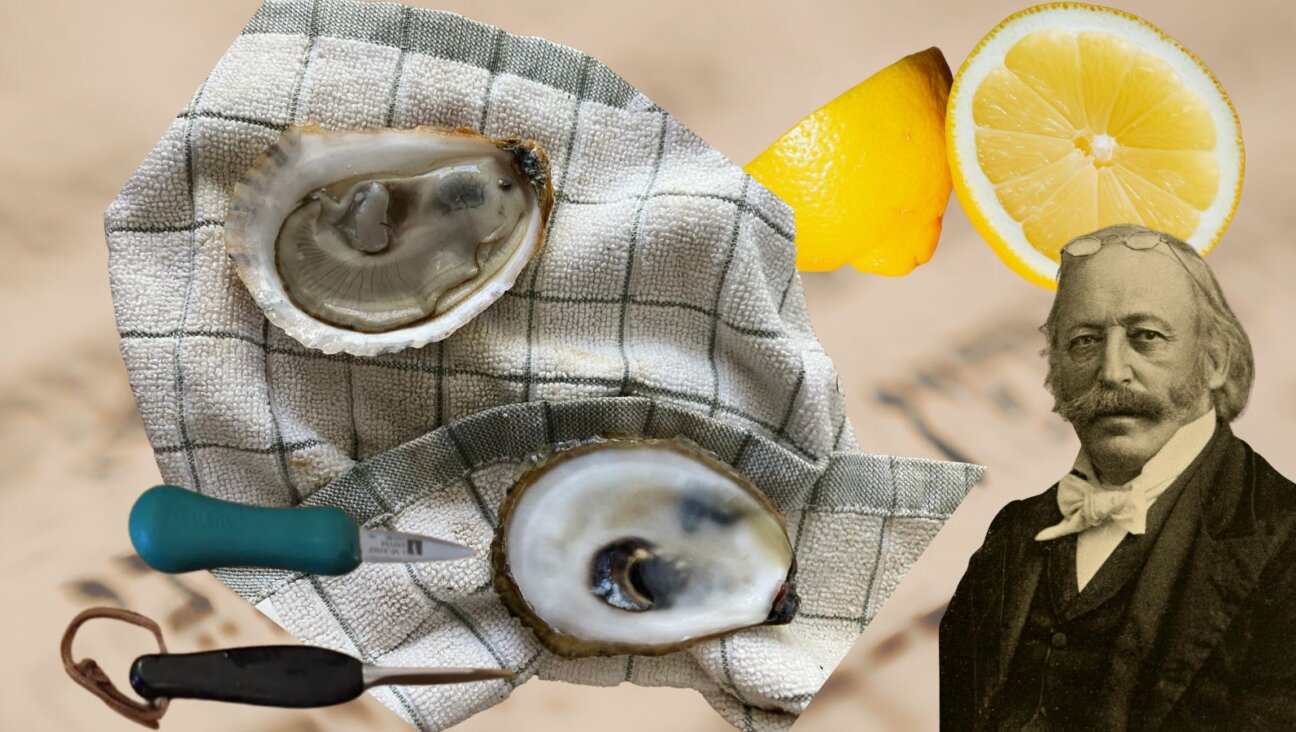
Graphic by Angelie Zaslavsky
If you keep kosher and have a diverse group of friends and dining partners, it seems inevitable that you will at some point have to explain yourself. Kosher can be complicated, and of course a 3,000-year-old practice will never be as fashionable as the diet du jour. Then again, Paleo came back from the Stone Age, but I digress.
Inequality being what it is, the lucky 1% either inherited or somehow acquired an aptitude for the clever comeback. That leaves the rest of us with the useless skill of ruminating over a missed comeback for days, only to come up with the perfect response just in time to beat ourselves up for the delay.
So we’ve consulted with Marty Nemko, award-winning career coach, radio personality and Psychology Today contributor, for bulletproof answers to common questions about keeping kosher.
1. What does it mean to keep kosher?
SHORT, SERIOUS ANSWER: It means following a set of dietary laws, he explains, including but not limited to the following: “We don’t eat meat with milk, and we avoid shellfish and pork. It’s a tradition with its roots in religion as well as rationality, because in ancient times, food preservation wasn’t what it is and shellfish kept poorly, for instance.”
MORE EFFECTIVE RETORT: “For the same reason Christians eat those fruit cakes with green things in them.” Nemko explains: “This answer is inclusive rather than defensive. It’s a way of saying I’m not weird, every religion has its own seemingly random or inexplicable traditions.”
CONCISE COMEBACK: “Like Hebrew National Hotdogs, we answer to a higher authority.”
2. Does this mean you’re, like totally Orthodox?
Click here for your answer options.

Did you know that only 2% of Forward readers donate to support our nonprofit newsroom? That 2% make it possible for millions to read the Forward without a paywall or subscription — removing any barriers to the full and fair Jewish story.
But while the Forward is free to read, it isn’t free to produce. Big stories — like deep dives into the antisemitism data, political scoops or reporting trips to college campuses — take months of research and fact-checking. All while we keep you informed of what you need to know each day.
— Rachel Fishman Feddersen, Forward Publisher & CEO
Support our mission to tell the Jewish story fully and fairly.