How to greet people in Yiddish on the Jewish holidays
Learn how to wish someone a Happy New Year and beyond with this Yiddish language guide
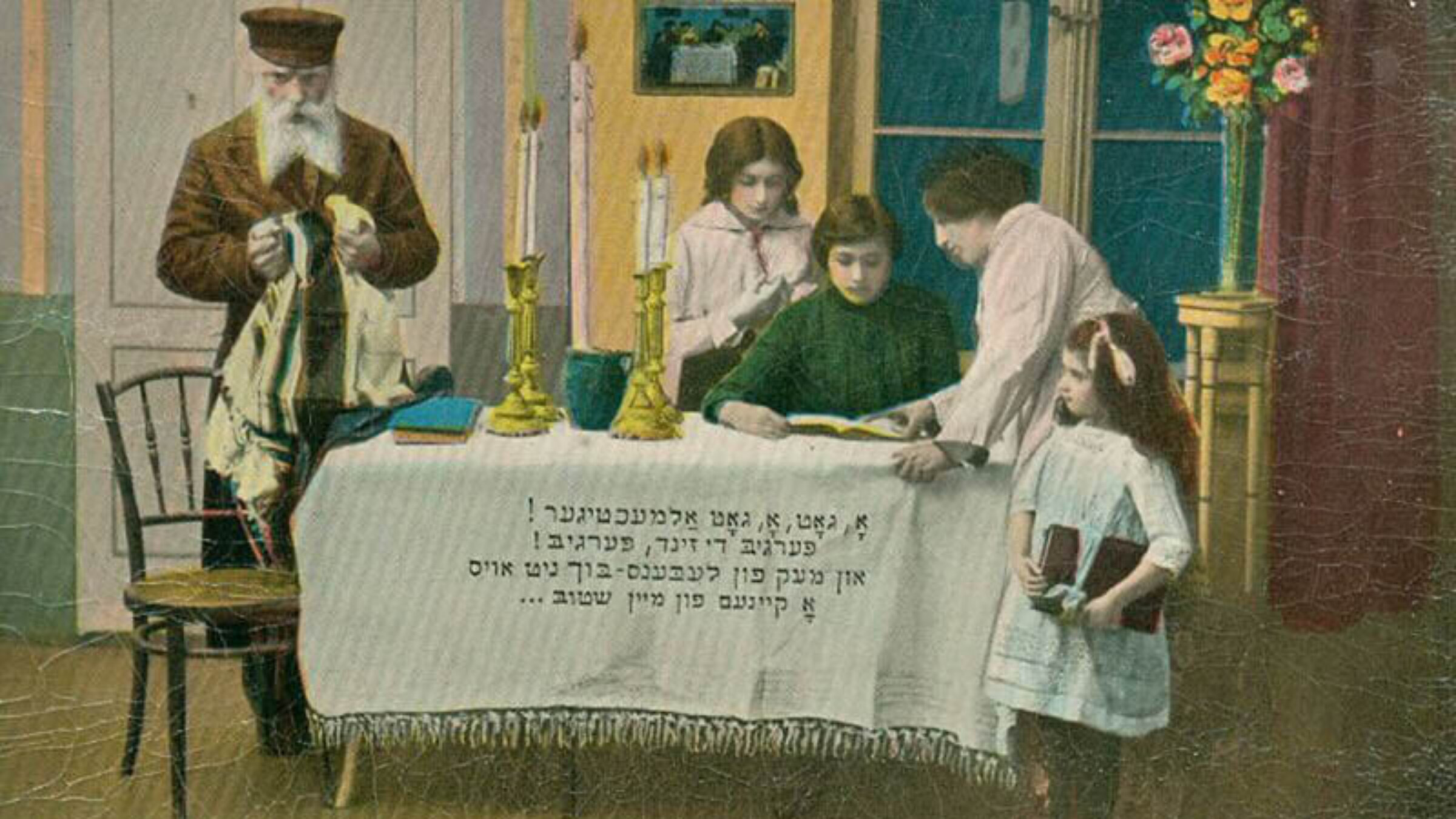
A Yiddish greeting card, circa 1900 Photo by Wikimedia Commons
When people start learning Yiddish, there are so many lessons to master that there’s often not enough time to learn the various ways of greeting people on Shabbos and the Jewish holidays.
And Yiddish has plenty of those. Sometimes one phrase is used when seeing the person and another one when saying good-bye, reflecting the deep significance that these days of the calendar have on the Jewish psyche.
To make it easier to know which expression to use, Yiddish activist Jonah Boyarin has compiled this handy list of bagrisungen (greetings) for shabbos and all holidays, presenting each expression in Yiddish, English transliteration and translation. Those phrases that may not be easily understandable are accompanied by explanatory notes:
This is a moment of great uncertainty. Here’s what you can do about it.
We hope you appreciated this article. Before you go, we’d like to ask you to please support the Forward’s independent Jewish news this Passover.
This is a moment of great uncertainty for the news media, for the Jewish people, and for our sacred democracy. It is a time of confusion and declining trust in public institutions. An era in which we need humans to report facts, conduct investigations that hold power to account, tell stories that matter and share honest discourse on all that divides us.
With no paywall or subscriptions, the Forward is entirely supported by readers like you. Every dollar you give this Passover is invested in the future of the Forward — and telling the American Jewish story fully and fairly.
The Forward doesn’t rely on funding from institutions like governments or your local Jewish federation. There are thousands of readers like you who give us $18 or $36 or $100 each month or year.
Support our mission to tell the Jewish story fully and fairly.