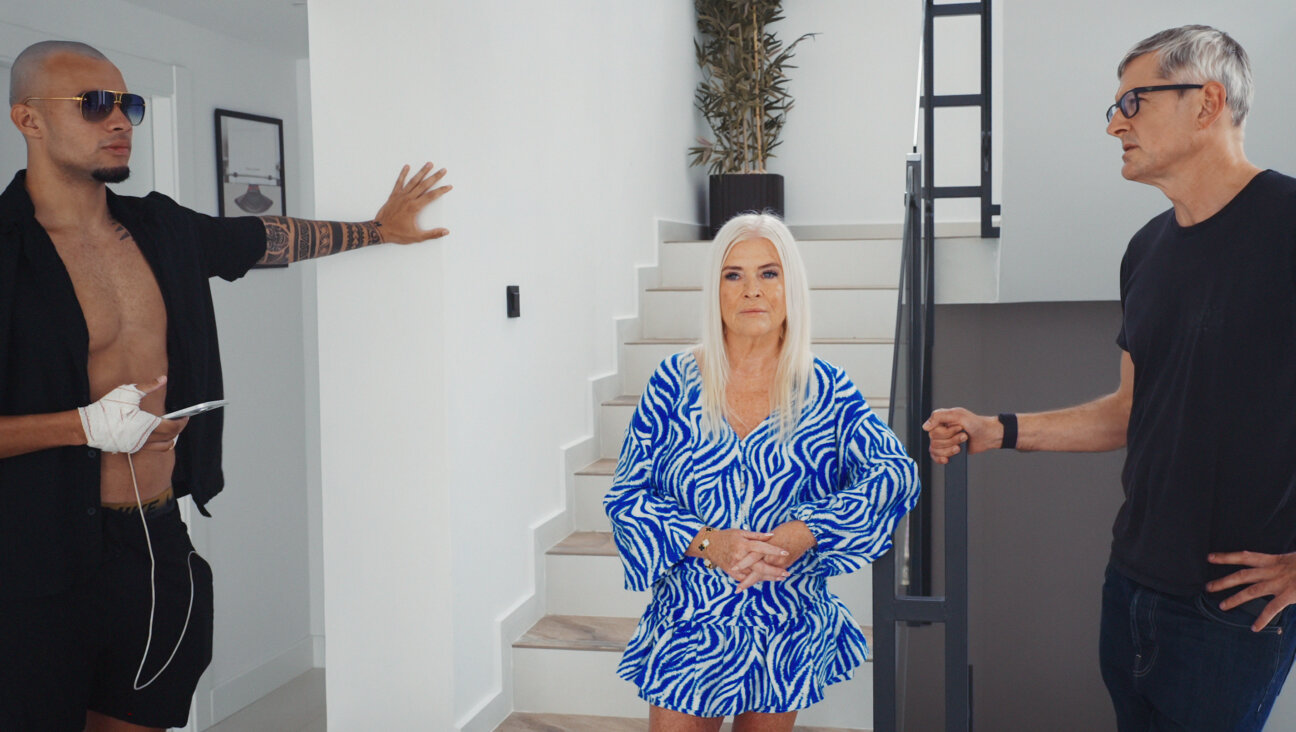
Is Fashion Advice for Female Interns Sexist?
Graphic by Angelie Zaslavsky

By Elissa Strauss May 18, 2013
In a recent post on Slate’s DoubleX, Katherine Goldstein provides tips for female summer interns on what exactly is appropriate to wear to a workplace. The advice on how to avoid looking like a “skintern” includes avoiding see-through anything, concealing undergarments and leaving the four-inch heels at home. Goldstein ends the post by telling women that by following these rules and focusing on impressing everyone with their “hard work” and “keen intellect” they will be sure to break the glass ceiling.
Was this sexist?
Sure, this is set of codes and rules that only apply to young women, or more specifically, their bodies. It told them that some parts of their bodies are considered vulgar and that wearing a pair of high platform heels might give others the wrong idea about their, well, purity. It is putting the responsibility on them to cover up, instead of on men to stop gawking. As another DoubleX contributor put it a few months ago in response to a call for longer skirts at a middle school, “If you don’t want girls judged by their hemlines, stop judging them by their hemlines.”
I see the logic here and can remember, almost viscerally, the deep embarrassment I felt as a teenager when my breasts went from barely existent to ample in a matter of months. I wish someone had helped me understand that young women shouldn’t feel overly conscious of their bodies or think about them in exclusively sexual terms. None of the boys felt that way.
But with all this said, I think there is still a conversation to be had with young women on how to dress, especially in a time when fashion seems almost uniformly inspired by Julia Roberts in “Pretty Woman.” “I choose-my-choice” feminism sometimes leads women to empowerment, and other times leads them to choose “choices” from a patriarchal or, worse, misogynist culture.
Take the intern who wants to wear a miniskirt and four-inch platforms. She might be able to convince herself that these fashion choices are truly her own. That she is proud of her body and not ashamed of her sexuality. That if a male colleague can’t take her seriously while simultaneously bearing witness to her upper thighs, that’s his problem, and not hers.
Maybe this is her authentic self speaking. Maybe. More likely, she has absorbed the many ways in which porn and strip-club culture have infiltrated mainstream culture — and what she takes for empowerment is really rooted in the commodification and degradation of female sexuality. Somebody needs to tell her this. They also need to tell her that it is way easier to walk in flats.
This is a moment of great uncertainty. Here’s what you can do about it.
We hope you appreciated this article. Before you go, we’d like to ask you to please support the Forward’s independent Jewish news this Passover.
This is a moment of great uncertainty for the news media, for the Jewish people, and for our sacred democracy. It is a time of confusion and declining trust in public institutions. An era in which we need humans to report facts, conduct investigations that hold power to account, tell stories that matter and share honest discourse on all that divides us.
With no paywall or subscriptions, the Forward is entirely supported by readers like you. Every dollar you give this Passover is invested in the future of the Forward — and telling the American Jewish story fully and fairly.
The Forward doesn’t rely on funding from institutions like governments or your local Jewish federation. There are thousands of readers like you who give us $18 or $36 or $100 each month or year.
Support our mission to tell the Jewish story fully and fairly.