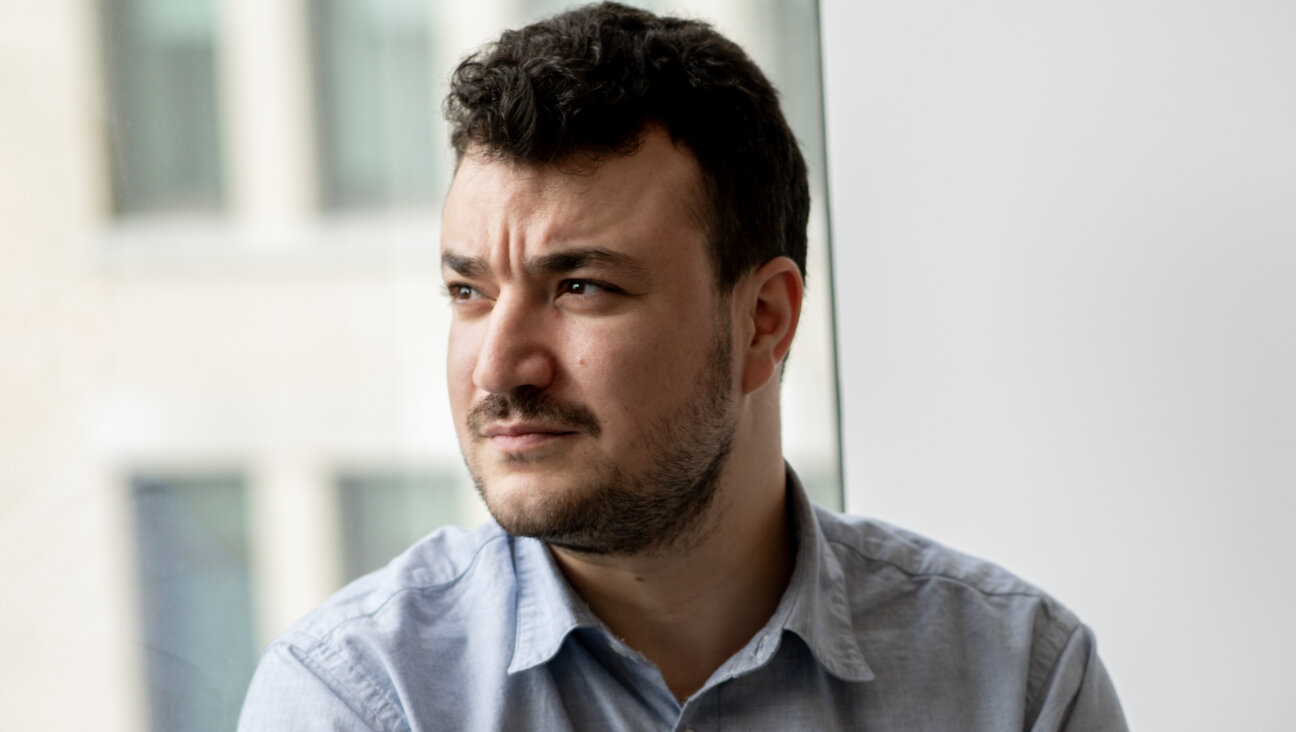
Shmuel Lefkowitz

Graphic by Angelie Zaslavsky
Shmuel Lefkowitz, 68, leads the Orthodox fight to allow Jewish people to die according to their religious beliefs. But as the Forward showed this year, Lefkowitz’s organization, Chayim Aruchim, also believes in challenging a patient’s or relative’s wishes if those wishes contravene Jewish law. In one case, a lawyer to whom Chayim Aruchim refers cases fought a health care proxy’s right to discontinue life support for his godmother who converted to Catholicism from Judaism 60 years earlier. In another case, the same lawyer challenged a Jewish brother’s right to decide his developmentally disabled sister’s end-of-life care.
Because Jewish law emphasizes the sanctity of life, ultra-Orthodox families often favor aggressive treatment and are wary of palliative care. In some cases, Chayim Aruchim helps families challenge doctors who advocate discontinuing aggressive treatment. But in others, Chayim Aruchim also helps reassure families that a palliative course of treatment is in accordance with Jewish law.
Chayim Aruchim’s reach is broad. And it’s growing. In recent years, the group pressured New York State legislators to amend a bill that forced doctors to discuss palliative options for dying patients. Doctors must now discuss aggressive treatment options, too. Under Lefkowitz’s leadership, Chayim Aruchim also persuaded a New York hospital group to alter its end-of-life protocols for brain-dead patients. Previously, brain-dead patients were kept on life support for 72 hours. Today, life support is removed only after the patient’s heart stops beating. At its most recent board meeting, Chayim Aruchim celebrated its successes and discussed expanding to Israel, Canada and the United Kingdom.
This is a moment of great uncertainty. Here’s what you can do about it.
We hope you appreciated this article. Before you go, we’d like to ask you to please support the Forward’s independent Jewish news this Passover. All donations are being matched by the Forward Board - up to $100,000.
This is a moment of great uncertainty for the news media, for the Jewish people, and for our sacred democracy. It is a time of confusion and declining trust in public institutions. An era in which we need humans to report facts, conduct investigations that hold power to account, tell stories that matter and share honest discourse on all that divides us.
With no paywall or subscriptions, the Forward is entirely supported by readers like you. Every dollar you give this Passover is invested in the future of the Forward — and telling the American Jewish story fully and fairly.
The Forward doesn’t rely on funding from institutions like governments or your local Jewish federation. There are thousands of readers like you who give us $18 or $36 or $100 each month or year.

Support our mission to tell the Jewish story fully and fairly.