Antisemitism group keeps board member who emailed Epstein on the legality of transporting minors for sex
Before he joined the Brandeis Center, Mitchell Webber was part of Jeffrey Epstein’s defense effort as he fought Florida probes, newly released files suggest
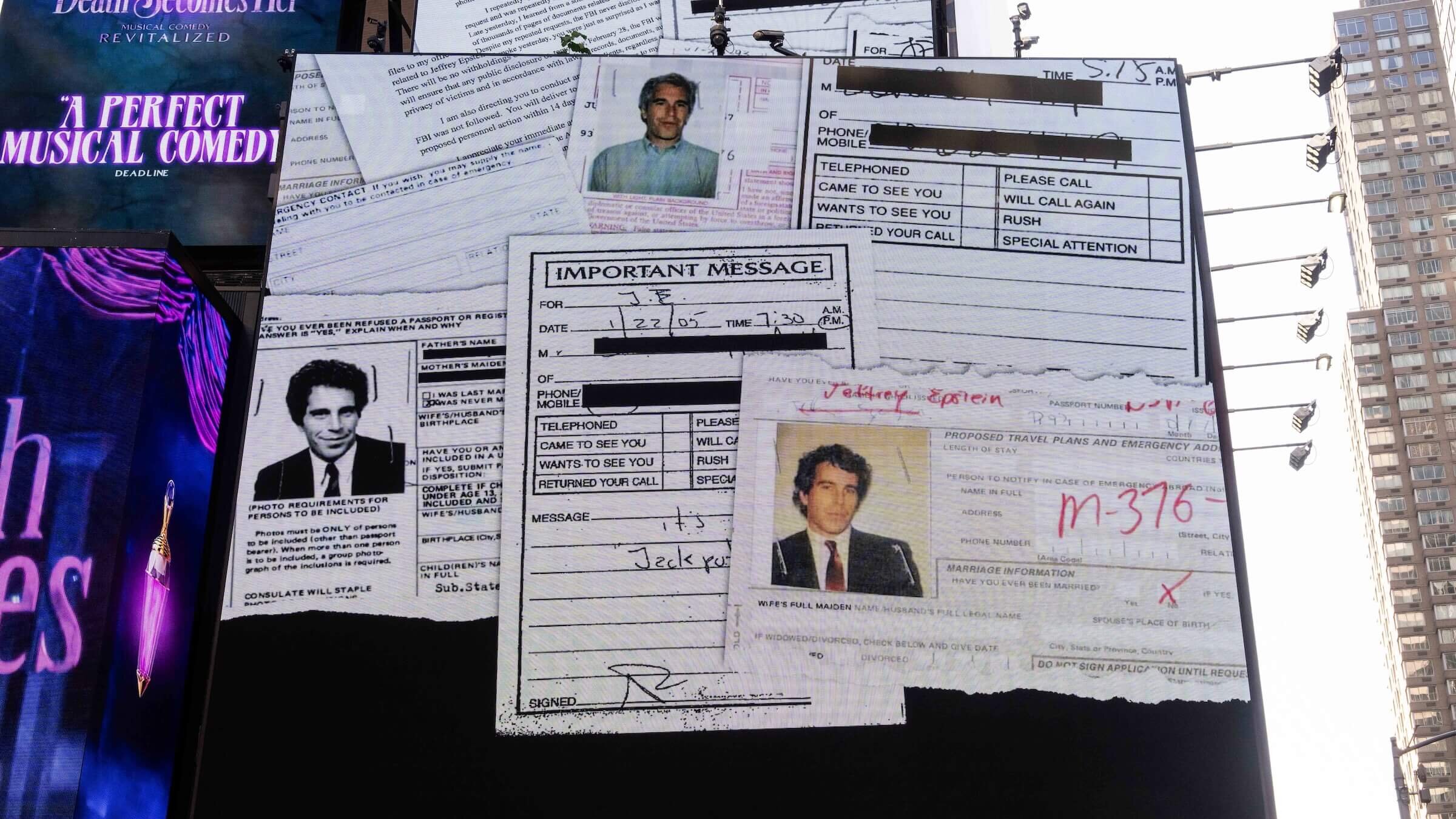
A billboard in Times Square calls for the release of the Epstein Files in July 2025. Photo by Adam Gray/Getty Images

By Hannah Feuer and Arno RosenfeldFebruary 4, 2026
A lawyer who emailed Jeffrey Epstein on the legality of transporting minors across state lines for sex remains on the board of a group focused on combating antisemitism in higher education, months after his communication to Epstein became public.
Mitchell Webber is on the board of the Brandeis Center for Human Rights Under Law and has been involved in litigation on behalf of Jewish students.
Now new documents released as part of the U.S. Department of Justice’s massive trove relating to the late Epstein’s prosecution for sex trafficking shed light on Webber’s role, working with attorney Alan Dershowitz, in helping Epstein reach favorable deals with prosecutors in connection with investigations into reports that Epstein had sexually abused underage girls.
Webber’s emails to Epstein were first revealed by Bloomberg in September.
“The question is: what would happen if one were to transport a minor for sex — or transport oneself with the intent to have sex with a minor — into a state in which the age of consent is below eighteen (assuming the minor is above the age of consent in the given state)?” Webber wrote in an August 2006 email to Epstein that Bloomberg obtained, which appears to follow up on a phone call. “And your intuition was right. The answer is that there is no violation of law.”
“Let’s also look at sex tourism laws,” Epstein later replied, “going someplace with specific intent ot [sic] have underage sex.”
Webber, then a Harvard law student working as a research assistant to Dershowitz, was helping defend Epstein as local police investigated allegations that Epstein had paid a 14-year-old girl for a massage.
Webber told the Forward in a statement that, in his capacity as a research assistant after graduating law school, he “occasionally did research, took notes, and emailed clients on Professor Dershowitz’s behalf. Professor Dershowitz did not use a computer and relied on his administrative assistants and research assistants to email for him.”
He added: “Jeffrey Epstein never asked for my legal opinion or advice. I never provided my legal opinion or advice to Jeffrey Epstein. I only relayed advice from his counsel, Professor Dershowitz.” Webber also said that he never met or socialized with Epstein.
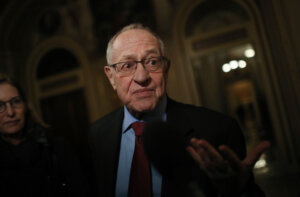
When asked by the Forward about Webber’s account, Dershowitz responded in an emailed statement that he has never used a computer, and that Webber’s email to Epstein “represent[s] my words not his. I would never advise a client to transport anyone for improper purposes. To suggest such a thing would be defamatory and wrong.”
He added, “Webber did research under my direction. I would provide him my interpretation of the law and ask him to find cases that support it. This research was directed exclusively to Epstein’s past conduct as part of my 6th amendment role in defending E against allegations of past misconduct,” referring to the constitutional right to legal counsel of criminal defendants. “It had absolutely nothing to do with advising him about future or then current conduct.”
The case ended in a favorable plea agreement for Epstein, and billing records that were part of the new Justice Department release show $21,728 paid to Webber as part of the Dershowitz legal effort. That amount matches the total attributed to Webber in an email to Epstein from Epstein’s accountant in 2009.
In his statement to the Forward, Webber said he “never billed Jeffrey Epstein” and “was never paid by Jeffrey Epstein.” Dershowitz said he paid Webber for his research, “as I did all my research assistants.”
Dershowitz also said he did not recall Webber ever meeting with Epstein. And he bristled at the focus on his former assistant: “Webber did nothing wrong and to suggest otherwise because he did research on a controversial case is pure McCarthyism,” Dershowitz said.
Webber, a partner at the law firm Paul, Weiss — which reached a $40 million agreement with the Trump administration in March that included providing free legal work related to antisemitism — joined the Brandeis Center board in 2021 after prominent roles in the first Trump administration and has represented the organization in litigation on behalf of Jewish college students who say they faced discrimination on campus.
He has also lectured for the Brandeis Center on “defining bias.”
The Brandeis Center, which states that its mission includes “the pursuit of justice for all peoples,” did not respond to an email and voicemail asking about its knowledge of Webber’s work for Epstein and whether the recent revelations would impact his role on the board.
In the mix
The newly released documents illuminate Webber’s role in navigating toward the favorable deal between Epstein and federal and state prosecutors in 2008.
Local police had originally referred the case to the FBI, which concluded that Epstein had abused more than a dozen teenage girls over a six-year period and recommended 32 federal charges. In 2007, however, the U.S. Attorney’s Office in southern Florida agreed to drop those charges and grant Epstein federal immunity in exchange for him pleading guilty to two state-level offenses. Epstein ultimately served 13 months in a minimum-security jail, where he was permitted to leave for up to 12 hours a day for work.
Emails and depositions depict Webber as part of the defense that negotiated Epstein’s agreement — taking notes for Dershowitz, researching legal strategy, and at times communicating directly with Epstein himself.
According to an internal FBI report included in the DOJ release, a confidential informant told FBI agents that Webber spoke “all the time” with Ghislane Maxwell, who was later convicted of child sex trafficking related to her work with Epstein, during the plea deal negotiations.
“Webber would be a good person to talk to who would have useful information about Maxwell,” the FBI agent who interviewed the informant wrote.
“No matter what happened between Epstein and his masseuses, the fact that they kept coming back militates powerfully against any sort of pressure on Epstein’s part,” Webber wrote in a November 2006 email that appeared in Epstein’s inbox, as published by Bloomberg.
In a 2016 deposition released by the Department of Justice, Dershowitz recalled attending a meeting with the Florida state attorney’s office, which was prosecuting Epstein for sex crimes, where he said Webber was present.
Webber “had done some of the research for me on the case,” Dershowitz said. The meeting had the goal of showing that others accused of similar sex crimes to Epstein had not been sentenced to prison. Dershowitz said Webber took notes at the meeting but did not participate.
In another document included in the DOJ release, Dershowitz responded to what appeared to be a journalist’s questions about allegations that Dershowitz visited Epstein’s Palm Beach home while several nude girls were present, and that one was forced to have sex with him on another occasion on the island of Little St. James. Dershowitz denied the allegations, writing in the document that he had only visited a handful of times — including once when Webber accompanied him to Epstein’s Palm Beach home while working on the case.
Webber later advocated for Dershowitz as he faced allegations of sexual assault from Epstein victim Virginia Guiffre, including in a 2015 letter to a National Review journalist supporting Dershowitz’s defense. Dershowitz sued Guiffre for defamation, and she later dropped her claims, saying she may have “made a mistake” in accusing Dershowitz.
From Dershowitz’s assistant to White House
As a student at Harvard Law, Webber said Dershowitz inspired him to become a lawyer — and joked about his mentor’s confrontational style.
“Letters addressed to ‘Asshole, Harvard Law School’ get to him,” Webber told an audience at a Jewish National Fund event honoring Dershowitz in 2005, according to The Harvard Crimson.
Webber’s work for Dershowitz propelled him into elite conservative legal circles: He served as associate counsel and special assistant to President Donald Trump from 2019 to 2021, and in 2021 Trump appointed him to a five-year term on the United States Holocaust Memorial Council. That same year, Webber joined the board of the Brandeis Center, where he has also represented the group in litigation.
“We have worked with Mitch Webber for several years, and he is one of the best and smartest lawyers in the field,” Kenneth Marcus, the Brandeis Center’s founder and chairman, said after Webber was appointed to the board in 2021.

Did you know that only 2% of Forward readers donate to support our nonprofit newsroom? That 2% make it possible for millions to read the Forward without a paywall or subscription — removing any barriers to the full and fair Jewish story.
But while the Forward is free to read, it isn’t free to produce. Big stories — like deep dives into the antisemitism data, political scoops or reporting trips to college campuses — take months of research and fact-checking. All while we keep you informed of what you need to know each day.
— Rachel Fishman Feddersen, Forward Publisher & CEO
Support our mission to tell the Jewish story fully and fairly.