Why an exhibit that honors the Oct. 7 hostages still draws crowds in the US, even after their release
The traveling installation about the Nova music festival avoids politics and focuses instead on ritual, memory, and the painstaking work of making order after horror
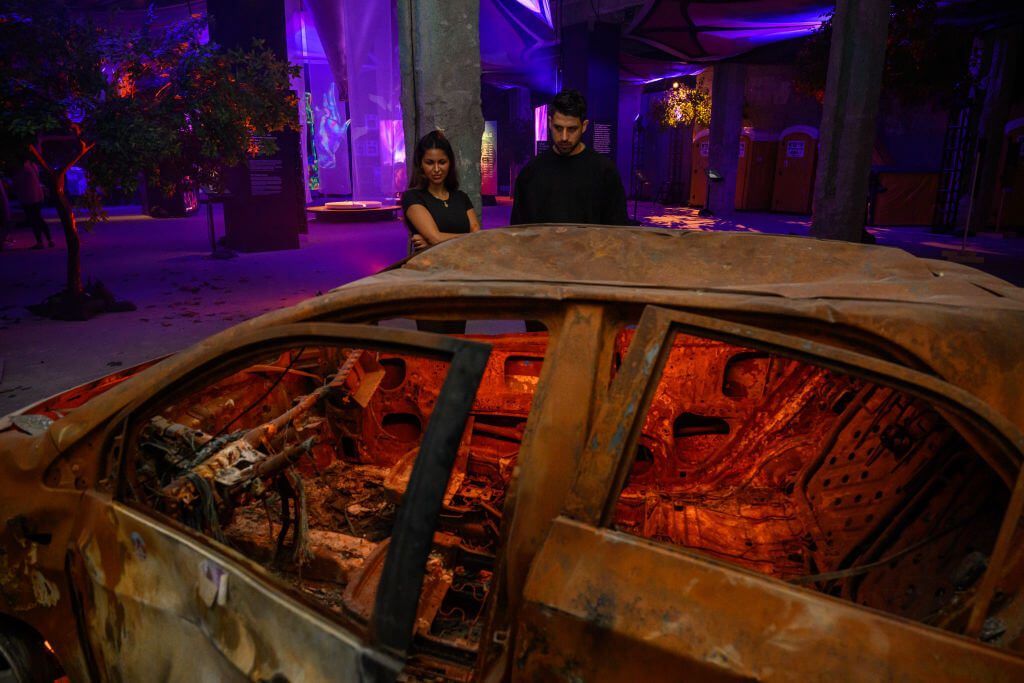
Nova survivor Natalie Sanandaji, and Reef Peretz, Chairman of the Nova Foundation, look at destroyed cars taken from the Nova festival at The Nova Music Festival Exhibition in April 2024 in New York City. Photo by Alexi Rosenfeld/Getty Images for The Nova Music Festival Exhibition

Alanna E. Cooper December 8, 2025
When I traveled to Chicago recently to tour the Nova Music Festival Exhibition, I expected to find it nearly empty. More than two years have passed since Oct. 7, 2023. All the living hostages have been returned home, and only one hostage’s remains are still being held in Gaza. I figured people were done revisiting the horrors, and ready to move on.
I was wrong. In Chicago, 1,200 visitors had purchased tickets for that day alone. This traveling exhibition, which uses actual objects from the Nova festival grounds to reconstruct the scene of the attacks, has been drawing massive crowds since it opened in Tel Aviv in December 2023.
By the time it reached Chicago after stops in New York, Los Angeles, Miami, Boston, Washington, D.C., Berlin and Toronto, more than 500,000 people had already passed through its doors. And the crowds continue to visit. The exhibition’s website announces, “new cities coming soon,” even as the events of October 7 recede into the background.
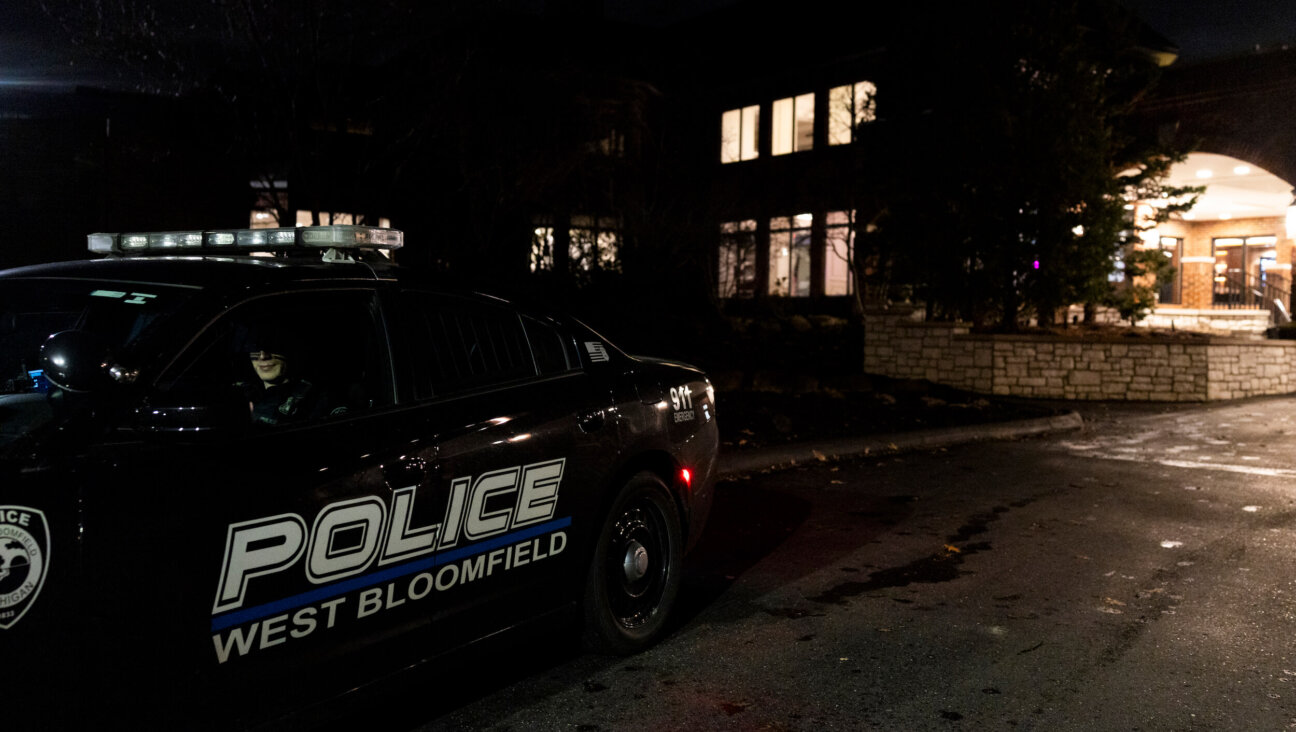
When my Uber pulled up to the exhibition — held in a warehouse — I saw lines of people, police cars, and security personnel. What were all these people doing here, I wondered?
The question wasn’t idle. I had my own doubts about what had drawn me. Was it morbid curiosity? Perhaps a voyeuristic urge? Beyond these unsettling questions, accusations from protesters who had demonstrated outside the June 2024 New York installation had gotten into my head. They had tried to shut down the exhibition there, calling it “apartheid apologia,” designed to justify Israel’s war on Gaza. Were they right?
I recoiled from each of these explanations but still could not pinpoint what exactly had motivated me to visit this re-creation of the site where so many people had met their brutal ends. It took two hours of walking through the installation, moving from one area to the next, to understand.
Why Hamas is absent
The exhibition begins in a small, dark holding room where visitors gather before entering the main space. A large wall panel provides the barest introduction to orient the viewer. After a long night of intense music, dancing and revelry — the text reads — just as the sun was coming up over the horizon, the rave party was shattered when the “Angel of Death” swooped in, firing a barrage of missiles, which were precursors to the “inconceivable horror” that was soon to follow.
Referring to the attackers as “The Angel of Death” matters. From these very first words, the story turns away from naming the perpetrators. Hamas is absent, as is any wider political context. That absence speaks for itself. This exhibition does not weigh in on Israel’s actions after Oct. 7. Its focus, instead, lies solely on the experiences of those who were abused, terrorized, kidnapped, and killed.
Passing through heavy drapery, visitors enter the festival grounds in the early hours of Oct. 7. Sand is spread underfoot, and small tents are strewn across the landscape. Yoga mats, sweaty T-shirts, flip-flops, cereal boxes and other personal belongings litter the ground. Burned-out cars and bullet-ridden porta-potties mark failed hiding places. Cigarettes and empty bottles lie scattered at the bar, as though party-goers were present just moments before.
Objects alone cannot tell the whole story; Screens scattered through the wreckage reveal the unfolding terror. Some mounted on stands, and others glowing inside the tents or dangling on wires play videos on a loop. One woman hiding between bushes, speaks into her own camera, “I’m filming so that later there will be a video of all this.” Another captured himself huddled with others in a trash bin.
More footage comes from the Go Pro cameras of the terrorists themselves. Taken from a pickup truck zigzagging across the road, one of these recordings shows terrified people running, trying to escape. Some are shot and collapse to the ground as the vehicle speeds past.
Additional screens feature survivor testimonies. One tells how her husband took a fatal bullet so she could flee, another lived by keeping cover beneath dead bodies.
This recounting represents what unfolded that day. At the Nova festival alone over 400 were killed, and 43 were kidnapped. What popularly came to be referred to as a single attack, fractured into thousands of separate experiences, each person caught by surprise, and left to confront the terror on their own. The confusion is conveyed through the disorienting structure of the exhibit itself. Visitors are not given a clear route through the space, or directions about where to look first and then next. Nor do we progress as a group. I am among strangers and without a guide, leaving each of us to absorb the fragments of horror in our own way.
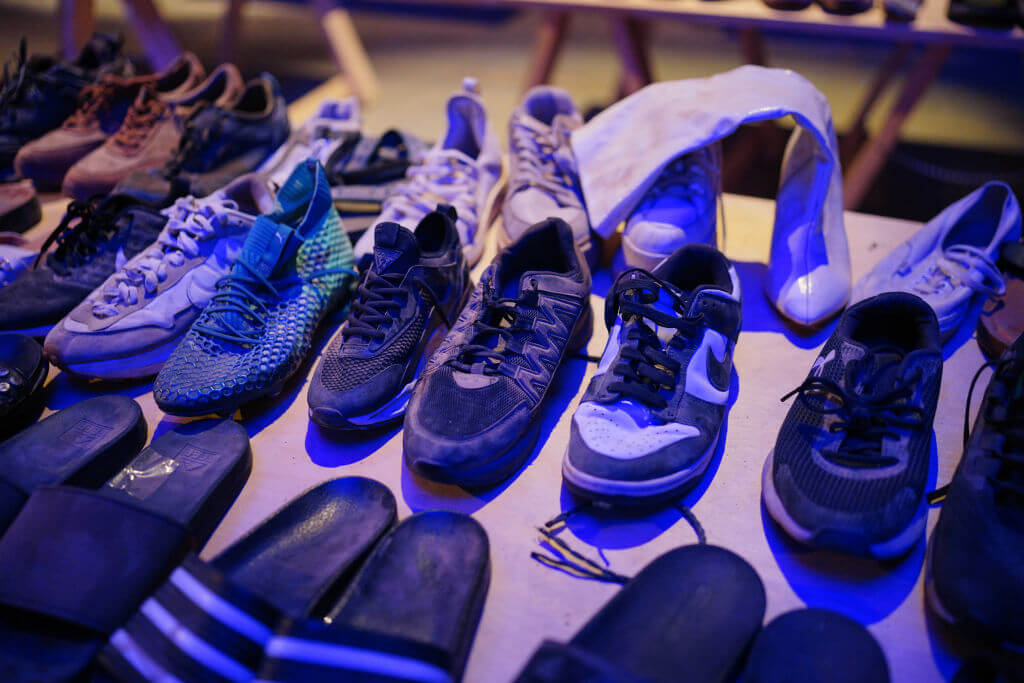
Then comes the pivot. Visitors turn a corner, and the exhibition shifts to a tightly organized space that directs viewers along a deliberate path. A map marks where each festival-goer met their fate. No longer immersed inside the horror, we now see its larger shape. After the map, rows of tables are arranged, holding neat piles of folded sweatshirts, lines of eyeglasses, and carefully arranged pairs of shoes. No labels explain, and none are needed. It’s clear that these personal items are the pieces picked up after the massacre, sorted by volunteers who handled each with care.
Order in the aftermath
Now I am beginning to understand. Walking through the disorienting chaos was necessary to appreciate the ways in which order is made in the aftermath. Not only through collecting and tending to the objects left behind, but to the affected people as well. A wall display shows photos of the 44 hostages taken from Nova, with a message that the “Nova Community” holds all “their pain, their courage and their hope.”
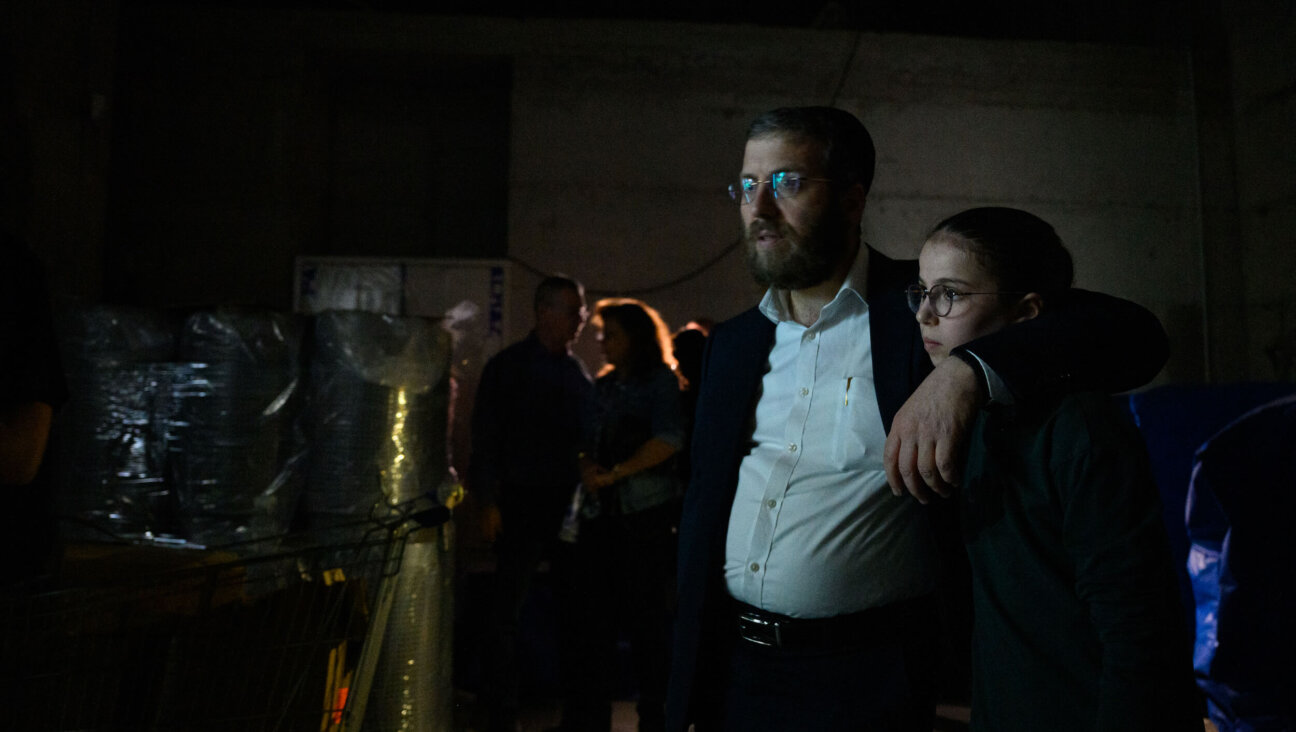
In fact, the more than 3,000 revelers who attended the Nova rave were not a community at all. They came from different backgrounds, from all over the country and abroad, with no prior connection to one another. But the survivors, the bereaved, and the families of the kidnapped have gathered in the aftermath under the auspices of “The Tribe of Nova Foundation,” to offer each other support. Established by the festival’s producers immediately after the attack, the foundation provides therapy, healing services, and memorial events, all needed even now after the ceasefire.
Exiting the last dark portion of the exhibit, we walk beside a long board laid out on the floor, arranged with memorial candles and hundreds of notes written by fellow visitors. Most echo the installation’s message: “Wrapping you in love.” “Remembering all those who lost their lives and who are still healing,” and “We will dance again.”
But one hand-scrawled message breaks through: “Fuck Hamas.”
This stops me. Not because I don’t share the rage — I do. But the sentiment feels jarring here, disrupting a sense of sanctity whose contours are fully revealed in the final room.
Here, black drapes and heavy shadows give way to earth tones, warm lights, jute carpets, and macramé lanterns. Small coffee tables and wicker chairs are arranged around the space, as though we have entered a living room. Having left the horrors of Oct. 7 behind, this is a room for the living. It is also a shiva — a ritual space where visitors sit with mourners and let them speak.
People take seats, facing a Nova survivor who is regularly present at the front of the room. Articulate and composed, she begins with photos of her best friend whom she lost in the attack, and ends with a story of her own survival, and a message of not taking life for granted.
Here, the hesitations and doubts I carried into the exhibition fall away. I now understand what brought me here, and why so many others have come. It is not morbid curiosity, nor propaganda meant to justify war. It is the need to sit shiva. This space draws its power from gathering and caring for the scattered objects, and from bringing the bereaved together to witness, mourn, and remember.
The Nova Exhibition is a contemporary phenomenon, employing modern technology and immersive design to respond to contemporary trauma. Yet it draws on ancient traditions of telling and listening to stories, sitting together, gathering what was scattered, and working to stitch ourselves whole again. This cultural work remains relevant even now — more than two years later, with nearly all hostages home and bodies laid to rest. The exhibition will travel to new cities, and it should. Grief continues to unfold, and mourning takes time.