Lorin Maazel Remembered as Conductor, Friend of Israel
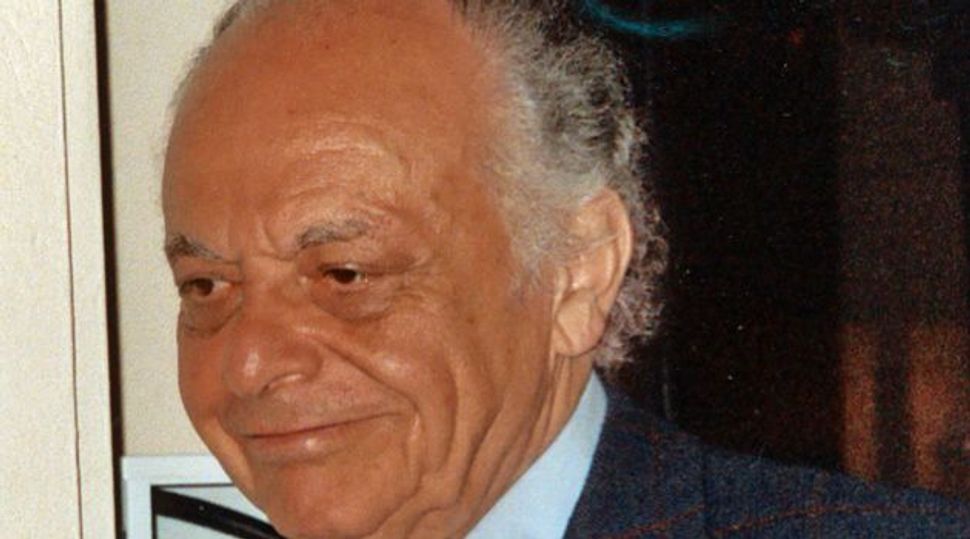
Image by karen leon
Lorin Maazel, cerebral conductor — who died aged 84 on July 13 from complications of pneumonia — was a presence in my columns not only because of his international renown and as conductor of the N.Y. Philharmonic, but also because of his support of Israel’s cultural and humanitarian institutions.
At the January 23, 2003 joint Israel Philharmonic and New York Philharmonic Orchestras Gala benefit, New York mayor Michael Bloomberg welcomed the black tie audience with: “In New York you get a great deal, two for one! Two conductors — Zubin [Mehta] and Lorin [Maazel] —and two mayors” — a reference to his Tel Aviv-Jaffa counterpart, mayor Ron Huldai.
“It’s the first time in twenty years that both perform together — a symbol of our love for each other, our cities, our countries and our peoples,” said Bloomberg.
While both orchestras, on their feet, performed thrilling renditions of “Hatikvah” and “The Star Spangled Banner,” Huldai touted New York and Tel Aviv-Jaffa as “standing for diversity and tolerance” adding: “We have always valued music and not the sounds of war…. We have one objective — to keep playing even with gas masks on.”
With Mehta conducting Tchaikovsky’s Fourth Symphony and Maazel conducting Mahler’s First Symphony, I remember my amusement at the Yiddish-sounding German program notations for Mahler’s opus — “langsam shleppen” (literally “drag slowly”). But, on a serious note, what was shocking to the guests were the rifle-toting police and sharpshooters surrounding Tavern on The Green’s huge tent for the post-concert dinner because of the presence of a significant number of Israeli diplomats. Inside the tent Mehta schmoozed and joshed with the guests — a cool Maazel accepted compliments from admirers.
At the January 20, 2007 Israel Philharmonic Orchestra Benefit Concert for Meir Panim Relief Center in Israel, as Maazel came out on stage at Carnegie Hall’s Isaac Stern Auditorium, someone behind me quietly hummed the refrain from the 1950’s hit “You Gotta Have A Little Mazel.” After a flawless rendition of Beethoven’s Leonore Overture No. 3 which was followed by a standing ovation, the audience was informed that Meir Panim was “the biggest, not-for-profit food and aid organization of its kind in Israel benefitting largely secular Jews… often Russian as well as Ethiopian immigrants while also serving non-Jews — Arabs, Druze, Bedouins.
A most poignant memory — and my last sighting of Maazel — was at the December 2008 America-Israel Cultural Foundation’s Aviv Award Celebration held at Jazz at Lincoln Center Rose Theater. Award honoree Maazel declared: “There is nothing more distressing as arriving at an age when they begin to give you prizes and honors.”
Music director of the New York Philharmonic, Maazel mused: “I think I am no different than my colleagues who perform… complain… move into the next day-after-day… season-after-season…” After accepting the Aviv award from pianist “Jonathan Bliss” — himself a winner of the 2005 Leonard Bernstein Award — Maazel walked off the stage and notwithstanding thunderous applause — did not return for an extra bow.
This is a moment of great uncertainty. Here’s what you can do about it.
We hope you appreciated this article. Before you go, we’d like to ask you to please support the Forward’s independent Jewish news this Passover. All donations are being matched by the Forward Board - up to $100,000.
This is a moment of great uncertainty for the news media, for the Jewish people, and for our sacred democracy. It is a time of confusion and declining trust in public institutions. An era in which we need humans to report facts, conduct investigations that hold power to account, tell stories that matter and share honest discourse on all that divides us.
With no paywall or subscriptions, the Forward is entirely supported by readers like you. Every dollar you give this Passover is invested in the future of the Forward — and telling the American Jewish story fully and fairly.
The Forward doesn’t rely on funding from institutions like governments or your local Jewish federation. There are thousands of readers like you who give us $18 or $36 or $100 each month or year.

Support our mission to tell the Jewish story fully and fairly.