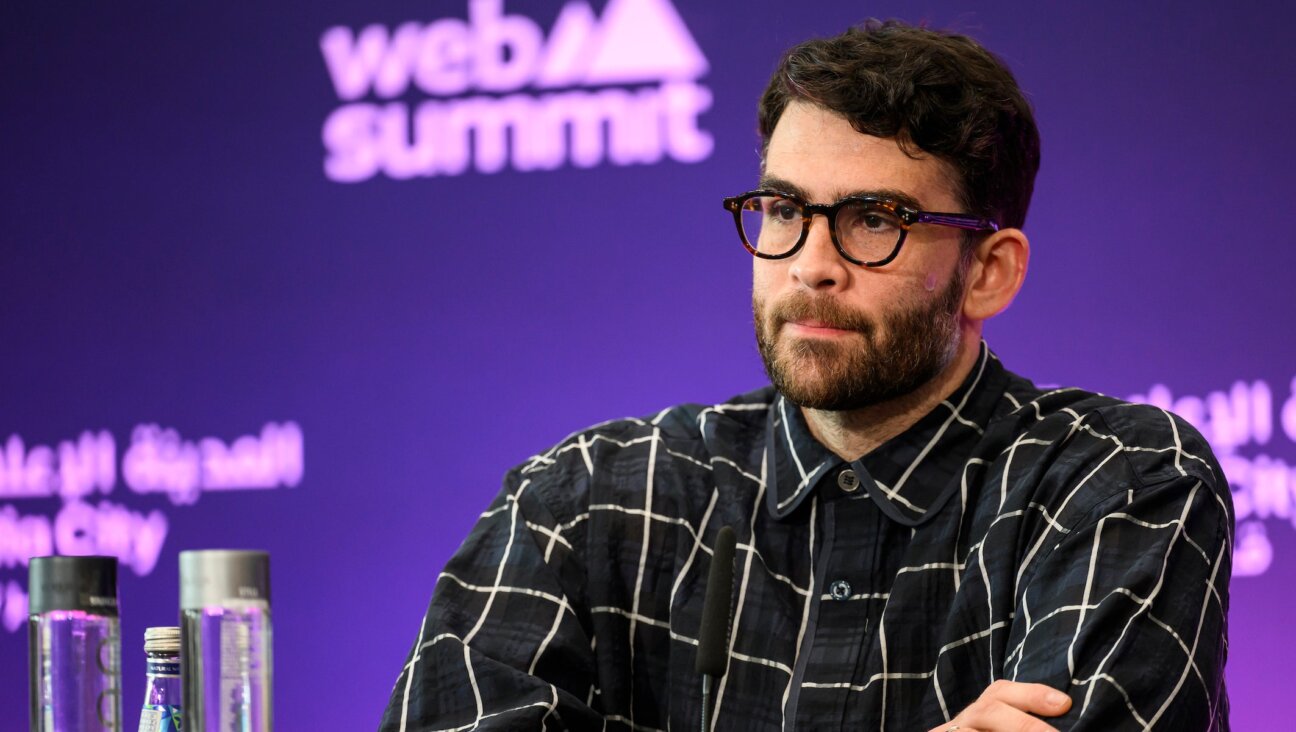
Alison Klayman

Image by getty images
Armed with a day school education and a college history degree, Alison Klayman, now 28, graduated from Brown University in 2006 and headed for Beijing, to learn the language and explore the culture. She told her parents that she’d stay for a few months; six years later, she is garnering international acclaim for her documentary film about China’s most famous dissident artist, Ai Weiwei.
Her timing was exquisite. She met Ai just as he was transforming from an avant-garde artist to an outspoken political dissident, criticizing the Chinese government for its handling of the 2008 Olympics and the devastating earthquake in Sichuan. His savvy use of video and social media ensured that his story had an audience, even when he was badly beaten by government thugs, or arrested and detained for 81 days last year.
Throughout, Klayman kept her camera trained on Ai, capturing his unpredictable narrative and its personal consequences with moving footage of the toll this life takes on his family. “Ai Weiwei: Never Sorry” debuted at Sundance, where it received a special jury prize, was the opening night feature at Tel Aviv’s DocAviv Inernational Film Festival and won audience awards from Rio de Janeiro to Taiwan. In June Klayman was named as an artist to watch in ARTINFO’s “30 Under 30.”
Writing in the Forward about why she made the film, Klayman, granddaughter of Holocaust survivors, said, “I saw in Ai Weiwei the Chinese version of the quintessential Jewish outsider.” She is proof that the imperative to bear witness is carried on by a new generation.
This is a moment of great uncertainty. Here’s what you can do about it.
We hope you appreciated this article. Before you go, we’d like to ask you to please support the Forward’s independent Jewish news this Passover.
This is a moment of great uncertainty for the news media, for the Jewish people, and for our sacred democracy. It is a time of confusion and declining trust in public institutions. An era in which we need humans to report facts, conduct investigations that hold power to account, tell stories that matter and share honest discourse on all that divides us.
With no paywall or subscriptions, the Forward is entirely supported by readers like you. Every dollar you give this Passover is invested in the future of the Forward — and telling the American Jewish story fully and fairly.
The Forward doesn’t rely on funding from institutions like governments or your local Jewish federation. There are thousands of readers like you who give us $18 or $36 or $100 each month or year.
Support our mission to tell the Jewish story fully and fairly.