An important Yiddish learning tool has been added to the Forward website
The goal is to help readers correctly pronounce Yiddish words that are derived from Hebrew and Aramaic
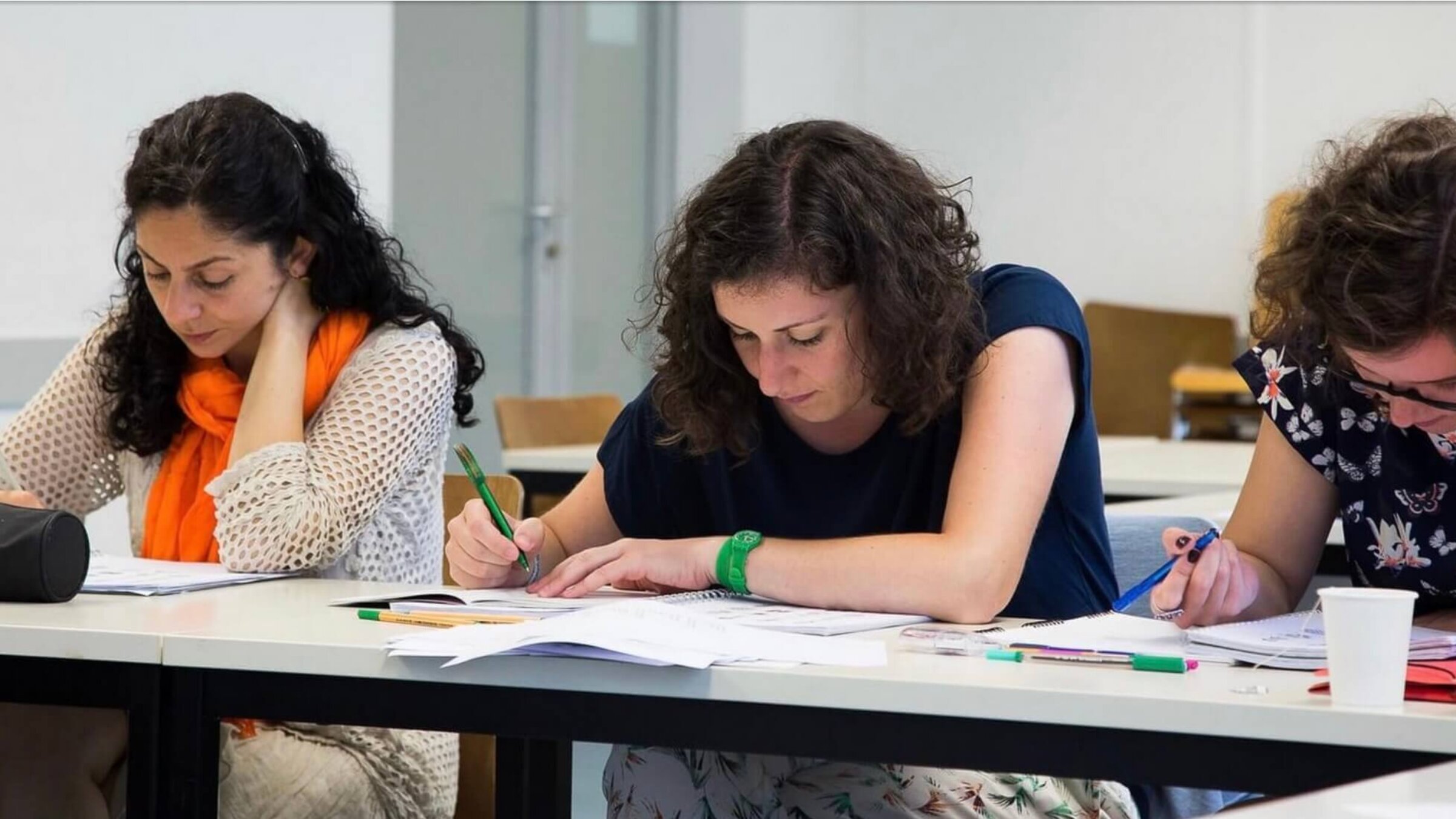
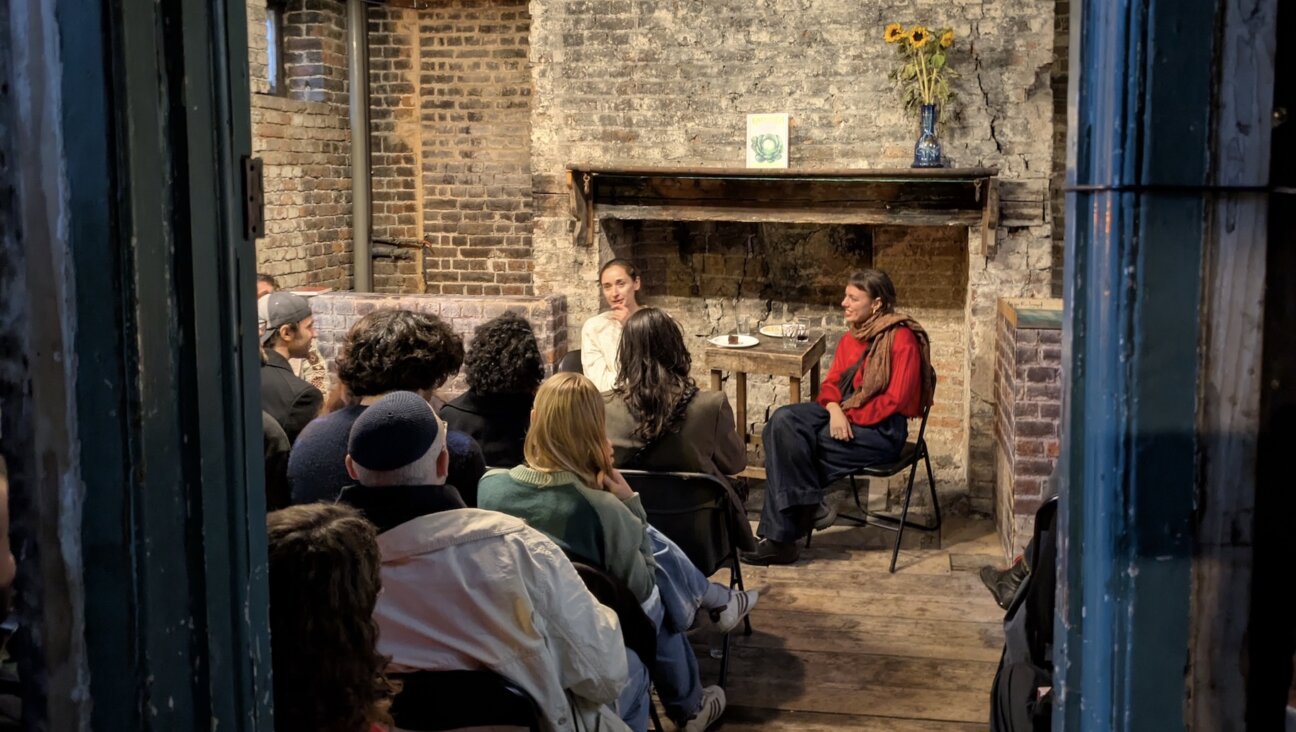
Students learning Yiddish at the Paris Yiddish Center Photo by Naama Landau / Paris Yiddish Center
By Rukhl Schaechter June 11, 2025
As many visitors to the Forverts (the Yiddish section of the Forward) know, you can get an immediate English translation to almost all words you find in the Yiddish-language articles. Just click on the word and the translation pops out.
Now a new feature has been added: All words and phrases in the Forverts articles that are derived from Hebrew and Aramaic (terms known as loshn-koydesh, or the holy tongue) are now accompanied by their pronunciation. This should be helpful to many Forverts readers since words from those two Semitic languages are often pronounced differently in Yiddish than they are in their original languages and as a result are often mispronounced.
About 10% of the words in the Yiddish language stem from Hebrew or Aramaic, and often refer to religious concepts, although over the centuries many of them have come to mean mundane, and occasionally even humorous, concepts as well.
The word batlen, for example, was initially a Talmudic term for a man who has the leisure to attend the service of the synagogue and therefore can usually be relied on to help make a minyan, a quorum of ten men.
In Yiddish, though, the word has come to mean a loafer or a a good-for-nothing, because after all (so the thinking goes) who can better be relied on to help make the minyan than a man who’s unemployed?
For years, Yiddish instructors and students have told us how useful they find our translation feature since they no longer need to look up unfamiliar words in a Yiddish dictionary when reading our articles. As far as I know, the Forward is the only Yiddish website that has this tool.
The reason that readers can access these immediate translations is that a highly regarded Yiddish dictionary is embedded into the Forward website. The Comprehensive Yiddish-English Dictionary by Solon Beinfeld and Harry Bochner includes over 37,000 entries. Shortly before the book was published as a 744-page hard copy in 2013 by Indiana University Press, it was also embedded into the Forverts website.
Hopefully, adding a pronunciation guide for all the loshn-koydesh terms in our Yiddish content will give students the confidence to use those words when speaking Yiddish in the classroom or in their daily lives.
This is a moment of great uncertainty. Here’s what you can do about it.
We hope you appreciated this article. Before you go, we’d like to ask you to please support the Forward’s independent Jewish news this Passover.
This is a moment of great uncertainty for the news media, for the Jewish people, and for our sacred democracy. It is a time of confusion and declining trust in public institutions. An era in which we need humans to report facts, conduct investigations that hold power to account, tell stories that matter and share honest discourse on all that divides us.
With no paywall or subscriptions, the Forward is entirely supported by readers like you. Every dollar you give this Passover is invested in the future of the Forward — and telling the American Jewish story fully and fairly.
The Forward doesn’t rely on funding from institutions like governments or your local Jewish federation. There are thousands of readers like you who give us $18 or $36 or $100 each month or year.
Support our mission to tell the Jewish story fully and fairly.