Rabbis Pressure Christine Quinn Over Sick Leave

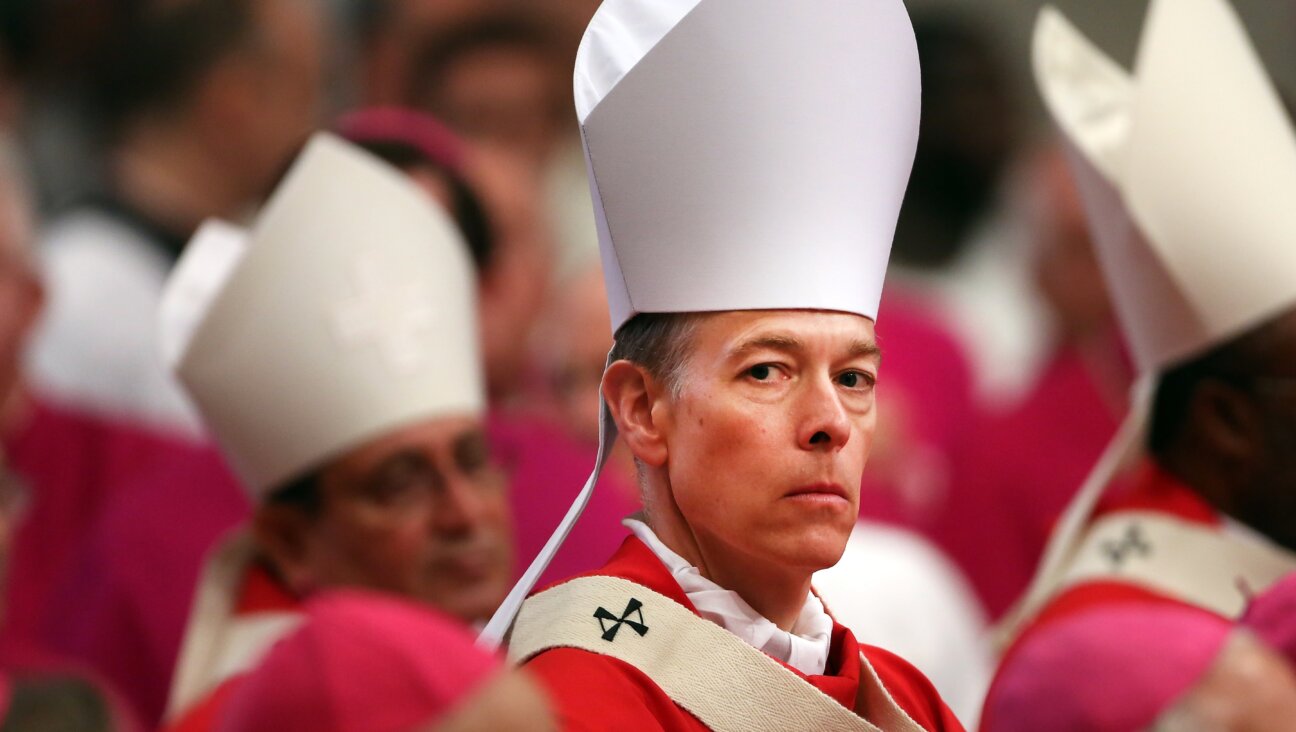
Mayoral Wannabe: In what could be early jockeying for the 2013 New York mayoral race, liberal rabbis are pushing Christine Quinn to back a bill that would force most businesses to provide paid sick leave to employees. Image by getty images

By Josh Nathan-Kazis October 26, 2012
Dozens of prominent liberal New York City rabbis are demanding that 2013 mayoral frontrunner Christine Quinn approve a bill that would require city businesses to provide employees with paid sick days.
Members of the City Council overwhelmingly support the bill, as do a handful of other potential mayoral candidates. Quinn, however, the speaker of the City Council, opposes the legislation, and has so far blocked it from coming to a vote.
The Democratic mayoral primary is nine months away, and the city’s well-heeled liberal Jewish constituency is still without an obvious candidate. According to some observers, Quinn’s next move on paid sick leave could play a role in determining whether or not they wind up backing her.
“The progressive Jewish community, with its deep, longtime narrative of social justice and aggressive fairness, is in no way cemented to Speaker Quinn,” said Michael Tobman, a New York City-based political consultant.
The letter, signed by forty rabbis, asks Quinn to pass a bill called the Paid Sick Time Act, Intro 97. That bill is still being revised, but would require most New York City businesses to provide a handful of paid sick days each year.
Mayor Michael Bloomberg also opposes the measure. Supporters believe they have enough support in the City Council to override a potential mayoral veto.
Similar legislation has passed in recent years in Connecticut and San Francisco. The New York City bill was first introduced in the City Council in 2010.
Signatories to the rabbis’ letter include clergy from Central Synagogue; a large Reform congregation on the Upper East Side, from Congregation Rodef Sholom; a large Reform congregation on the Upper West Side, and from Congregation B’nai Jeshurun, a large Conservative congregation on the Upper West Side. Jews for Racial and Economic Justice, an activist group, organized the letter.
The rabbis are looking for a mayor who is “sensitive to the issues of the vulnerable, of the workers who support the city,” said Rabbi Rolando Matalon, spiritual leader of Congregation B’nai Jeshurun on Manhattan’s Upper West Side and a co-sponsor of the rabbis’ letter. “If [Quinn] can support this bill, this act, it will send a message, a clear message, that she has these concerns in mind.”
While Quinn has opposed the New York City bill, Public Advocate Bill de Blasio, another presumptive mayoral contender, has offered vocal support of the proposal. Until 2010, he represented the liberal, heavily Jewish Brooklyn neighborhood of Park Slope and the Orthodox Brooklyn neighborhood of Boro Park in the City Council. “They could absolutely, easily vote for Bill de Blasio,” Tobman said of the city’s liberal Jews.
Manhattan Borough President Scott Stringer also supports paid sick leave, though it’s unclear whether he’ll run for mayor in 2013.
In a statement emailed to the Forward, Quinn restated her opposition to the paid sick leave law. “I believe providing paid sick leave to hard working families is a worthy and admirable goal,” Quinn wrote. “However, with the current state of the economy and so many businesses struggling to stay alive, I do not believe it would be wise to implement this policy, in this way, at this time.”
Some political observers thought the paid sick day issue and rabbis’ position wouldn’t carry much weight with city Jews. “Anytime a respected member of the clergy speaks out, public officials will always pay attention,” said Evan Stavisky, a partner at New York political consultancy The Parkside Group. “But does this mean that the congregants from these synagogues will vote specifically on this issue? That’s probably still an open question.”
Even some of the rabbinical signatories weren’t sure that the issue would impact the votes of their constituents. “The truth is it’s probably not a central issue on the agenda of most congregants,” said Rabbi Yitz Greenberg, former president of the Jewish Life Network and a signatory to the letter. Still, he added, “I personally felt it was morally a very significant one.”
Other signatories said that they hadn’t had the mayoral race in mind when signgin the letter. “This is a crucial labor right,” said Rabbi Jill Jacobs, executive director of Rabbbis for Human Rights – North America. “I want to know that people who are working hard are able to take care of themselves, health-wise, I want to know that if I go to a restaurant the people who are serving me don’t have the flu.”
This is a moment of great uncertainty. Here’s what you can do about it.
We hope you appreciated this article. Before you go, we’d like to ask you to please support the Forward’s independent Jewish news this Passover.
This is a moment of great uncertainty for the news media, for the Jewish people, and for our sacred democracy. It is a time of confusion and declining trust in public institutions. An era in which we need humans to report facts, conduct investigations that hold power to account, tell stories that matter and share honest discourse on all that divides us.
With no paywall or subscriptions, the Forward is entirely supported by readers like you. Every dollar you give this Passover is invested in the future of the Forward — and telling the American Jewish story fully and fairly.
The Forward doesn’t rely on funding from institutions like governments or your local Jewish federation. There are thousands of readers like you who give us $18 or $36 or $100 each month or year.
Support our mission to tell the Jewish story fully and fairly.