When is Hanukkah 2022?
Hanukkah’s on the ‘late’ side this year. Find out when the holiday starts — and why the dates seem to move so much from year to year
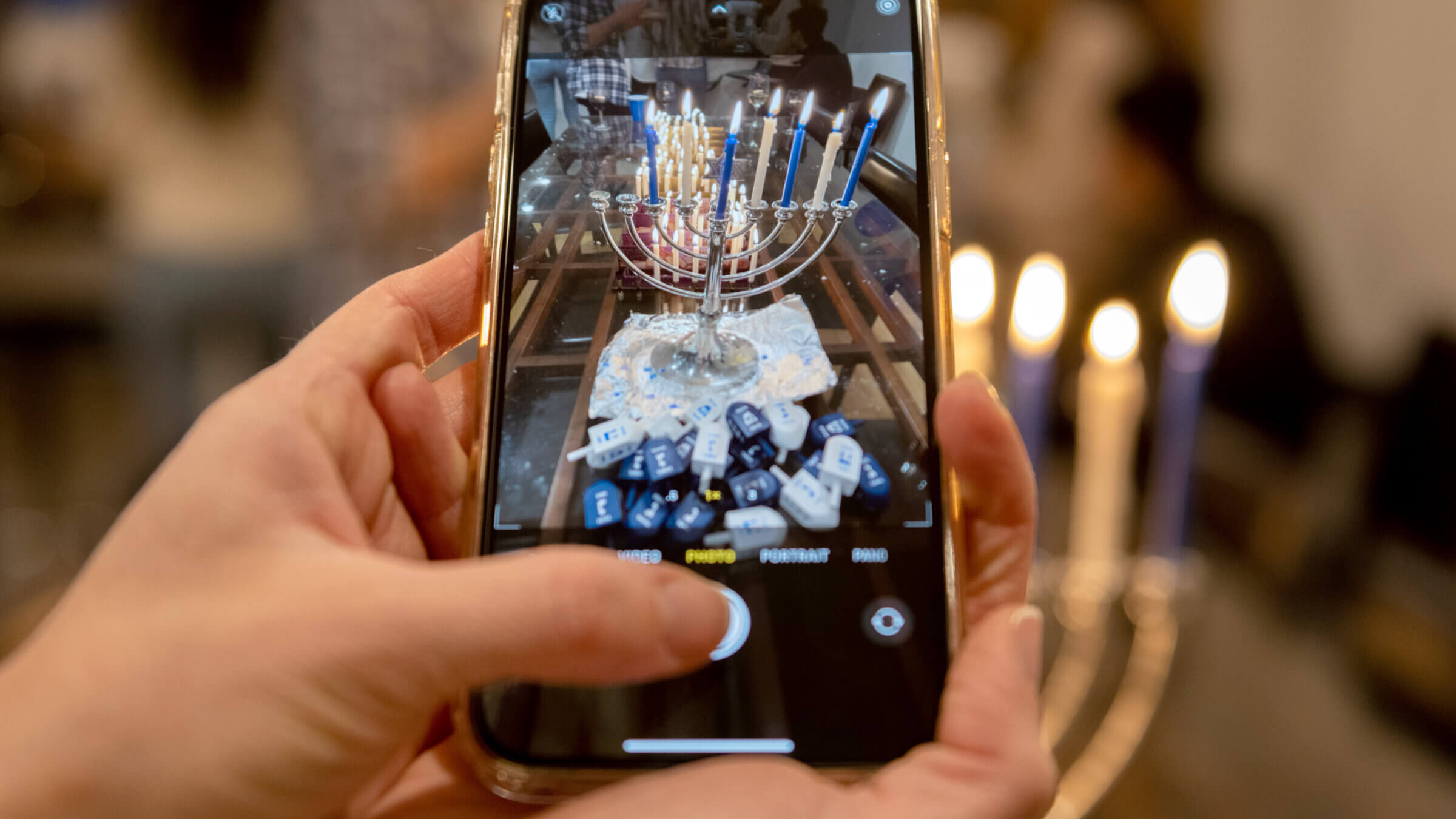
Scheduling a Hanukkah party can be tricky depending on when the holiday falls. Photo by Alexi Rosenfeld/Getty Images

By Beth Harpaz October 26, 2022
Planning ahead for a latke party? Then you’ve probably already done the “When is Hanukkah?” calendar check. But once you know when the holiday falls, you may well catch yourself thinking those eight crazy nights are a bit on the “late” side this year.
Hanukkah 2022 begins at sundown on Sunday, Dec. 18. The last round of candles are lit the evening of Sunday, Dec. 25, which happens to coincide with Christmas, and the final day is Dec. 26.
But why does it seem like Hanukkah is “early” some years and “late” in others? Why do the dates move around so much — especially in contrast to Christmas, which also involves lighting things up during the darkest days of winter?
Actually, Hanukkah doesn’t move at all on the Hebrew calendar. It always falls on the 25th day of the month of Kislev, with the first menorah lighting at sundown the night before.
But the Hebrew calendar does not align with the Gregorian calendar. So the 25th of Kislev can fall as early as Nov. 28, like it did in 2013 when Hanukkah coincided with Thanksgiving, or as late as Dec. 26. In fact, if you think Hanukkah is late this year, just wait: In 2024, Hanukkah starts at sundown on Dec. 25 and runs into January.
Here’s why the two calendars are out of sync. The Gregorian calendar has 365 days, with a 366-day leap year every four years. The Hebrew calendar is usually 353, 354 or 355 days long, but leap years, which occur seven times in a 19-year cycle, run 383, 384 or 385 days.
Now, we’d never want to suggest that Hanukkah is in competition with Christmas, especially since, religiously speaking, Christmas is a big deal for Christians but Hanukkah is a minor holiday in Judaism. Unlike other Jewish holidays, you don’t refrain from working on Hanukkah, and it requires neither fast nor feast. (Latkes and sufganiyot are traditional, but optional.)
On the other hand, this year’s timing makes things a tad complicated if you’re a Jew who likes to celebrate holidays with non-Jews. If you were thinking of inviting your Christian friends, interfaith relatives or secular-but-Christmas-loving neighbors over on the Saturday night of Hanukkah for latkes and dreidel-playing, they might be busy. After all, that’s Christmas Eve this year; they’ll be getting ready for Santa Claus to drop by.
And if you typically get invited to their house for eggnog or coquito on Christmas Day, make sure to get home in time to light your menorah; you don’t want to miss the last night in all its lit-up glory.
Next year, though, the holiday overlap won’t be an issue. Hanukkah starts the night of Dec. 7 in 2023. In other words — it’s early.
This is a moment of great uncertainty. Here’s what you can do about it.
We hope you appreciated this article. Before you go, we’d like to ask you to please support the Forward’s independent Jewish news this Passover. All donations are being matched by the Forward Board - up to $100,000.
This is a moment of great uncertainty for the news media, for the Jewish people, and for our sacred democracy. It is a time of confusion and declining trust in public institutions. An era in which we need humans to report facts, conduct investigations that hold power to account, tell stories that matter and share honest discourse on all that divides us.
With no paywall or subscriptions, the Forward is entirely supported by readers like you. Every dollar you give this Passover is invested in the future of the Forward — and telling the American Jewish story fully and fairly.
The Forward doesn’t rely on funding from institutions like governments or your local Jewish federation. There are thousands of readers like you who give us $18 or $36 or $100 each month or year.
Support our mission to tell the Jewish story fully and fairly.