Can Manischewitz make matzo ball soup hot again?
The age-old brand ran an art show in an attempt to build cool-kid hype for Jewish brands
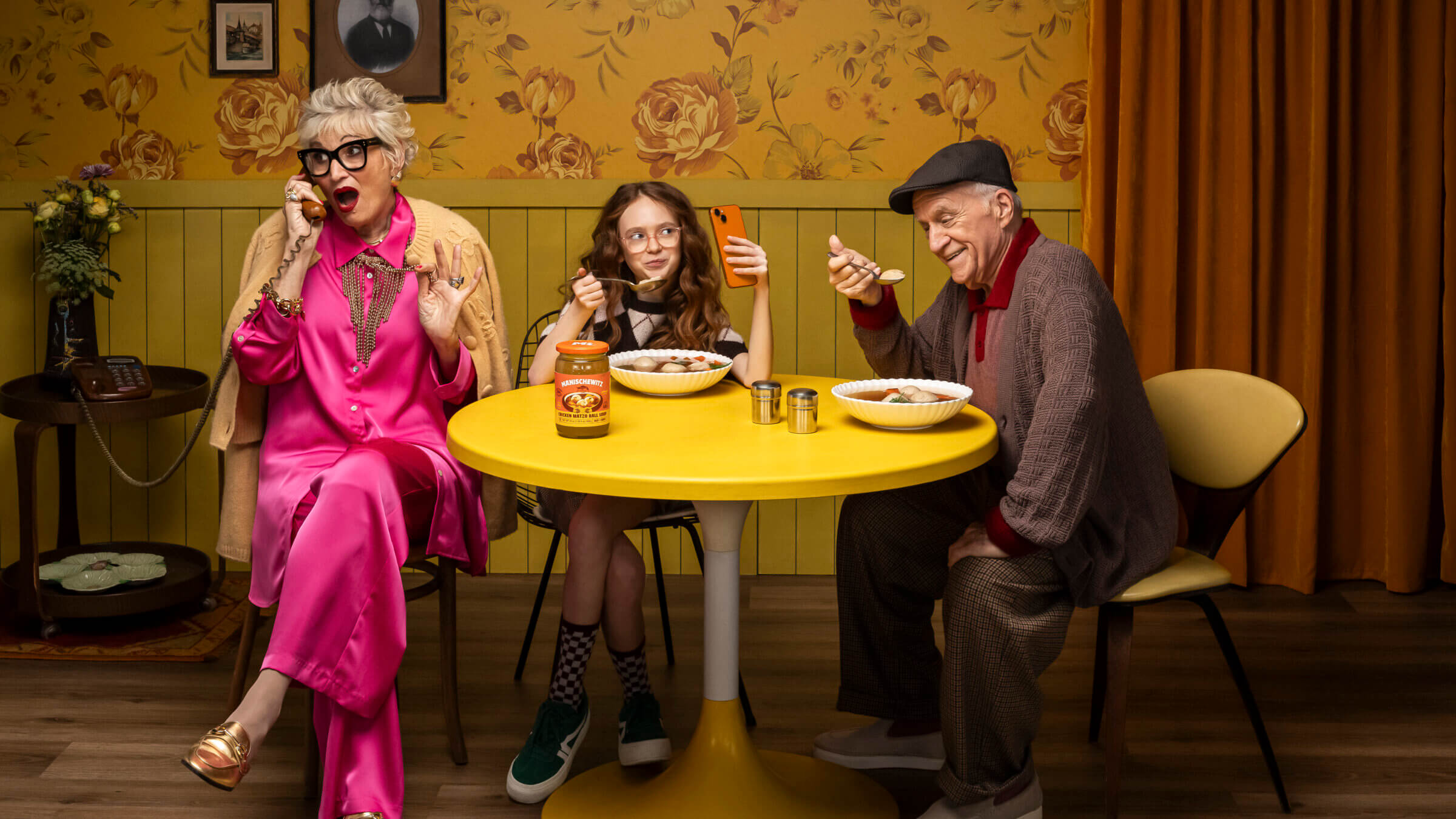
Soup uniting generations, in a photo used in a new ad campaign for Manischewitz. Photo by Ohad Romano via Manischewitz

By Mira Fox February 9, 2026
Last weekend, I was walking through Lower Manhattan, when I strolled past something confusing. Several women in matching baby blue leggings and puffer coats were dancing to pop music in a small park outside the Soho Apple store, surrounded by ice blocks with something — it was hard to tell what — frozen inside them. As I got closer, I realized that they were handing out some kind of greens-boosted energy drink. The set-up was a made-for-Instagram PR stunt.
The whole point of the event seemed to be to cultivate a cool Manhattanite sheen for the brand. People were taking cans of the beverage, because why not — it was free! No one, however, was hanging out and dancing with the paid promoters, who were dancing conspicuously alone. The drink, which was gross, piled up in nearby municipal trashcans. The whole thing left a sour taste in my mouth, and not just from the fake sweetener in the beverage. Do these stunts sell energy drinks? Do they sell anything at all?
These questions were front of mind when I showed up at an art exhibit at a gallery on the Lower East Side. The art show was called SOUP, and it was hosted by Manischewitz to mark the launch of, yes, a line of jarred soups.
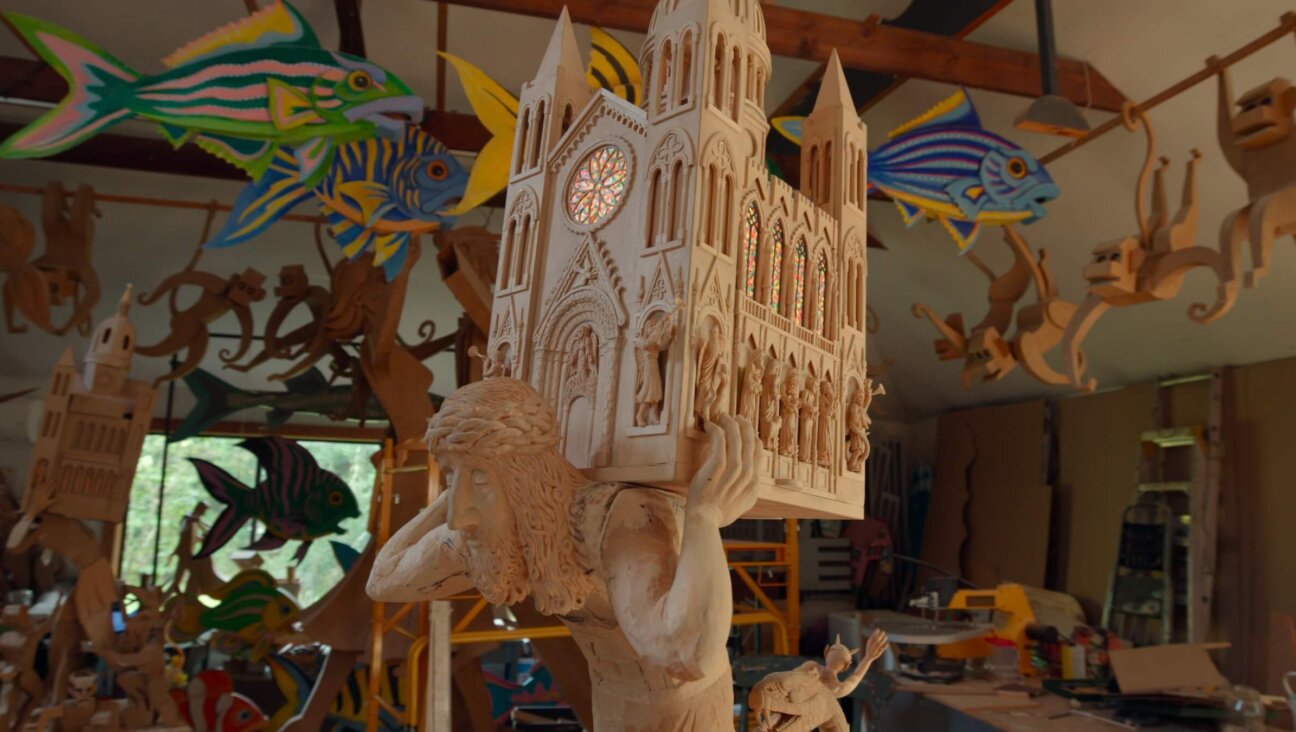
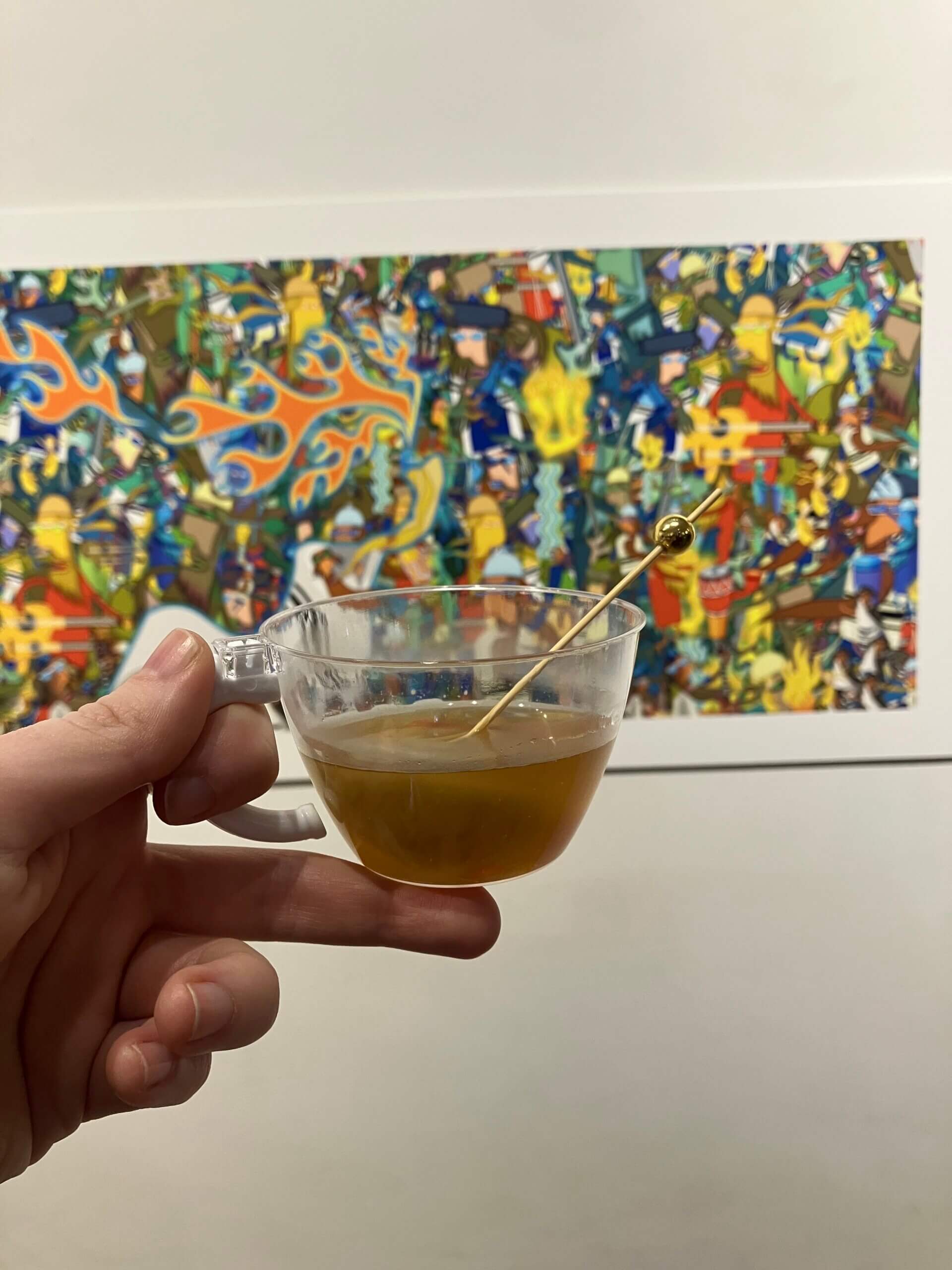
When I walked in, there was a solid crowd mingling in the gallery. Photos from Manischewitz’s newest ad campaign from Ohad Romano — a delightfully campy set of family photos featuring, of course, jars of soup — hung on one wall, opposite the soup-free work of two other Jewish artists, psychedelic scenes by Dan Weinstein and colorful objects from Rosemarie Gleiser.
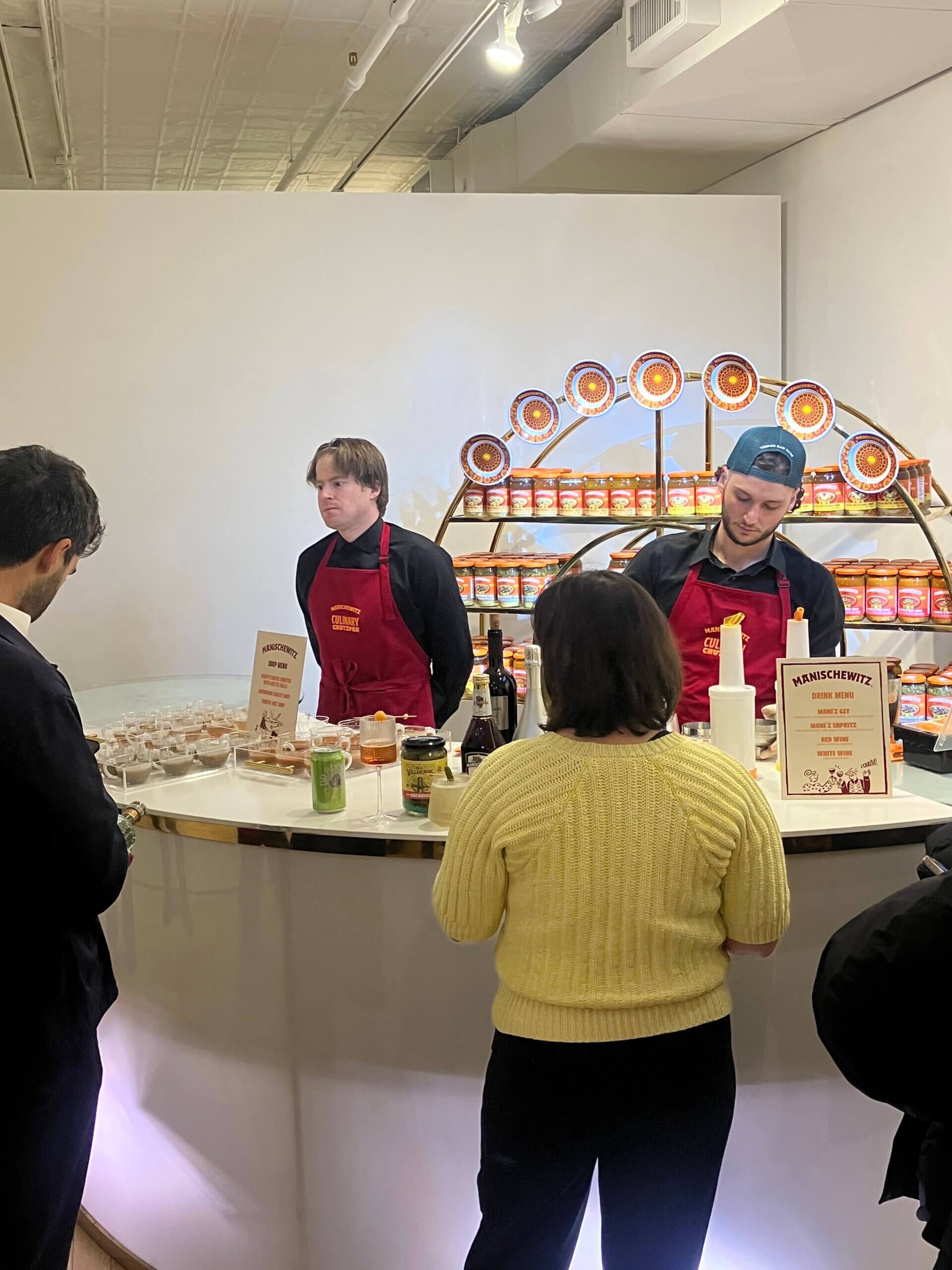
Orange-aproned waiters passed around teacups full of soup and a bartender made gin and tonics featuring Cel-Ray and spritzes with Manischewitz wine. (The wine is owned by a different company than the food products, so was unrelated to the event.) There was a line in the back room to get Manischewitz-themed patches sewn onto Manischewitz-branded hats. A baby on a woman’s hip giggled. A man in a sharp suit, cravat and kippah laughed with a group of friends as they all sipped chicken soup with matzo ball floaters.
But what did any of it have to do with actually selling soup?
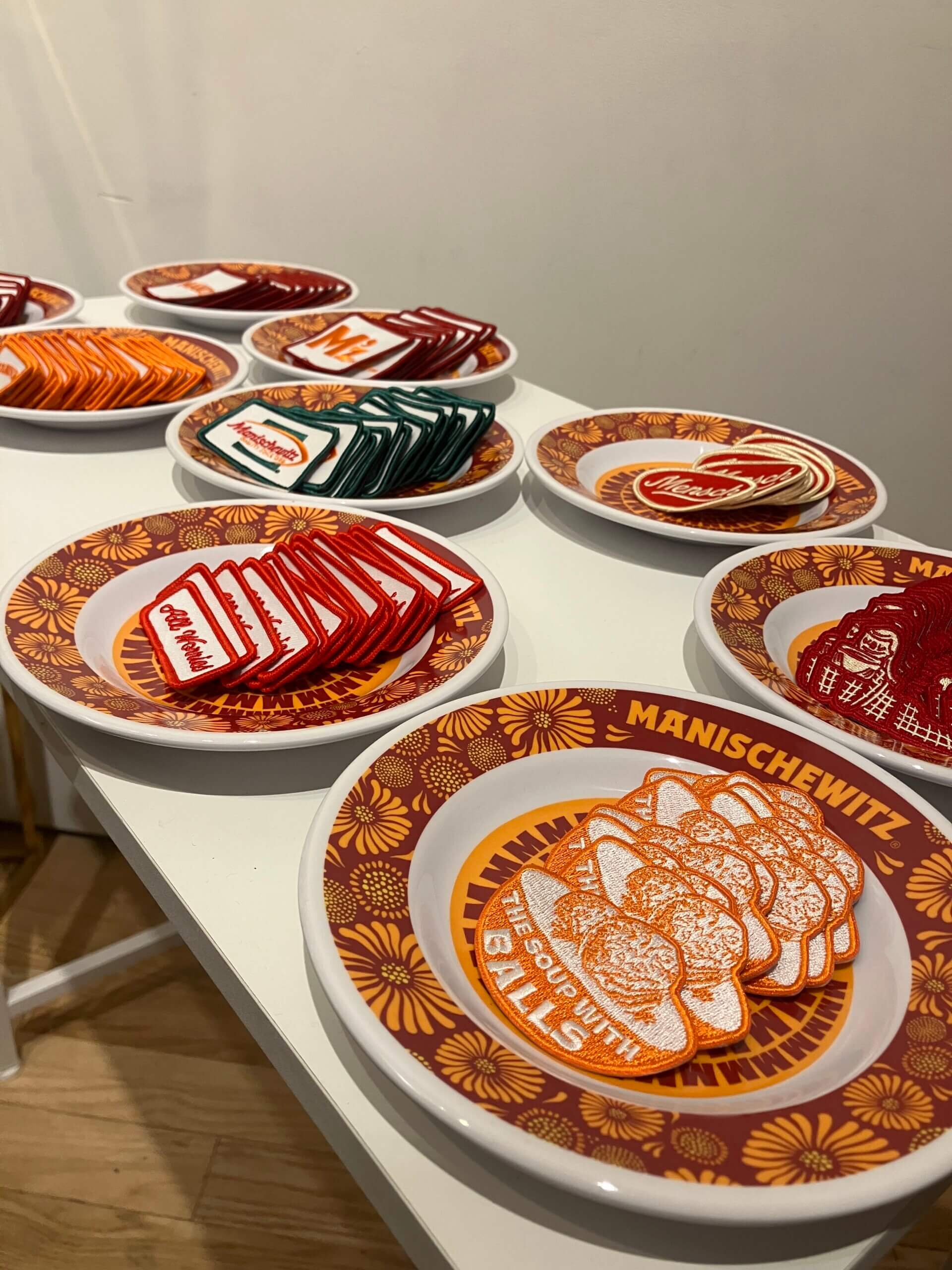
Talia Sabag, a marketing manager at Manischewitz, told me that the art show was part of the rebrand that the company has been rolling out over the past few years. Their boxes of matzo went from a bookish off-white to a bright orange, with scribbled illustrations of little figures carrying bowls of soup across the box that look like they should have walked out of the Jewish Almanac. The company told The New York Times, in 2024, that the rebranding effort was to refresh the brand, but also to target a new base of “culturally curious” consumers. In short, they wanted to sell kosher products to everyone, not just Jews.
Nearly everyone at the art show’s opening, however, seemed to be Jewish. More relevantly, the show was only planned to be up for six days.
While I sipped my teacup of soup, I asked Sabag what the show was meant to achieve for the brand. At first, she stuck to the message, arguing that the show was exactly what it said it was: an art show about soup.
“We want to celebrate the interwoven ways cuisine plays a role in communicating Jewish culture to ourselves and to the world,” she said with a bright smile, all symbolized by “the warmth of soup!”
Eventually, though, we got down to it: “A lot of studies do show that Gen Z does buy products based on that coolness factor,” Sabag told me. (She mentioned Nutter Butter as an example; the cookie started posting surreal, apocalyptic memes and saw their sales spike as a result.) In the words of the Gen Z buyers the brand is trying to attract, the art show is aura farming.
But is it possible to make Manischewitz cool? The brand is so iconic, so central to American Judaism, that it almost feels like asking whether it’s possible to make Judaism itself cool. Whether or not Judaism needs help in that arena is an open question, but plenty of people and brands have been trying to boost its coolness factor, whether it’s handbag designer Susan Alexandra’s glitzy launch party for her line of Judaica or the transgressive Bushwick burlesque show, Sinner’s Shabbat.
“We want to open up the conversation to the younger generations of course,” Sabag said. “But we’re not neglecting our core audience: our bubbes.” That means balancing nostalgia and hipness.
It’s almost impossible to purposefully construct coolness; by its nature, it resists trying. Usually, trying to be cool can only backfire, like the event with the energy drink dancers.
But I have to admit: The art show was kind of cool. It nailed its aesthetic, embracing the absurdity and surrealism of a moment in which a historic, grandmotherly brand like Manischewitz would be running an aura farming event, tonally a perfect fit for an irony-pilled era. Yet it also took itself seriously in the right ways; it was, ultimately, an actual art show with Jewish artists’ work in a neighborhood with deep Jewish roots, serving historic Jewish food. It felt genuine and rooted even as it was irreverent. Every detail was thoughtful. The drinks were actually good. The soup was exactly the same as ever.
The truth is, Manischewitz’s rebrand is cool because Manischewitz has always been cool. So has Judaism.
This is a moment of great uncertainty. Here’s what you can do about it.
We hope you appreciated this article. Before you go, we’d like to ask you to please support the Forward’s independent Jewish news this Passover. All donations are being matched by the Forward Board - up to $100,000.
This is a moment of great uncertainty for the news media, for the Jewish people, and for our sacred democracy. It is a time of confusion and declining trust in public institutions. An era in which we need humans to report facts, conduct investigations that hold power to account, tell stories that matter and share honest discourse on all that divides us.
With no paywall or subscriptions, the Forward is entirely supported by readers like you. Every dollar you give this Passover is invested in the future of the Forward — and telling the American Jewish story fully and fairly.
The Forward doesn’t rely on funding from institutions like governments or your local Jewish federation. There are thousands of readers like you who give us $18 or $36 or $100 each month or year.
Support our mission to tell the Jewish story fully and fairly.