A moving tribute to Soviet Jewry, with uncomfortable contemporary echoes
Yiddish Glory’s follow-up to its Grammy-nominated debut album holds up a mirror to our own age
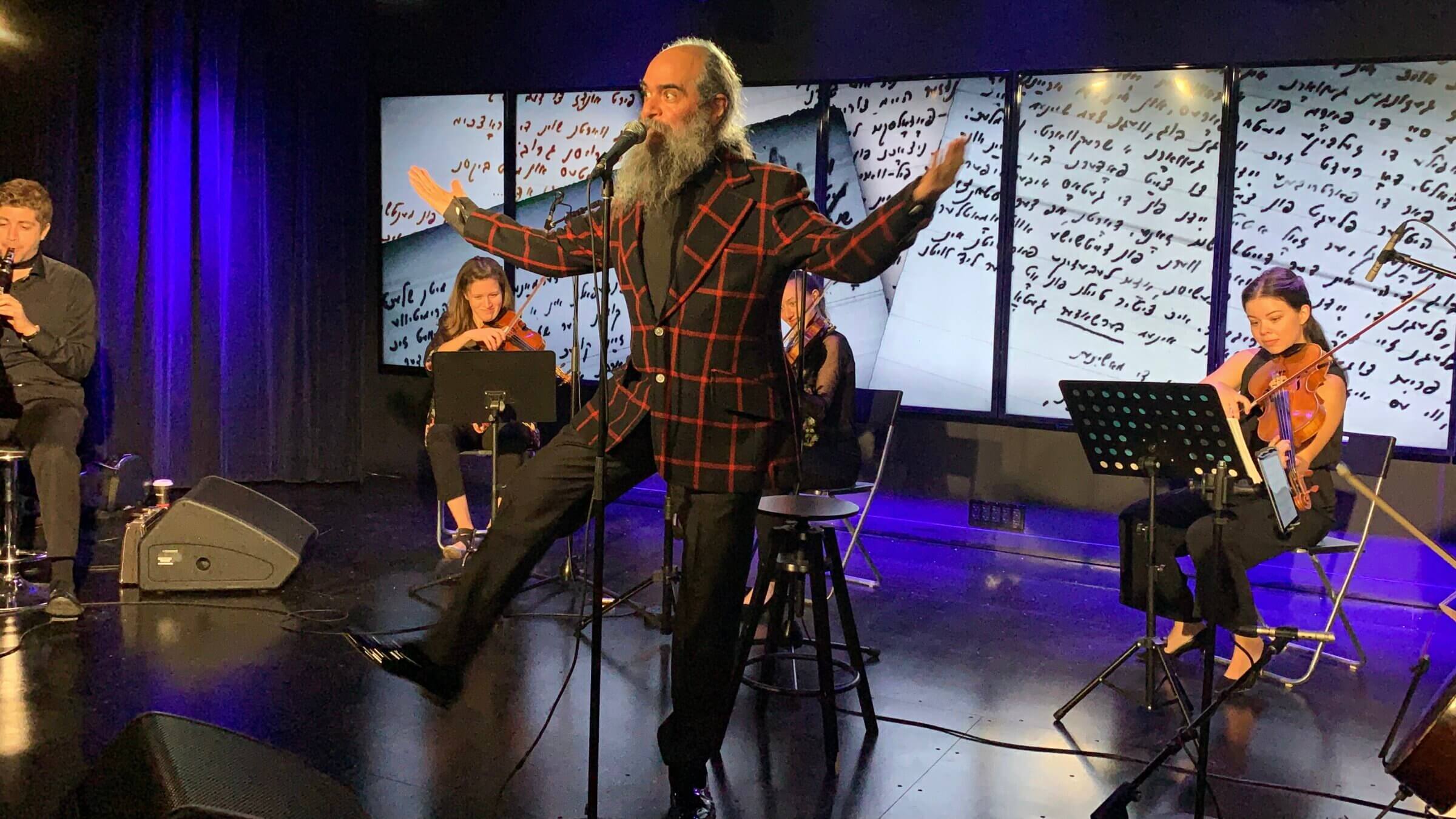
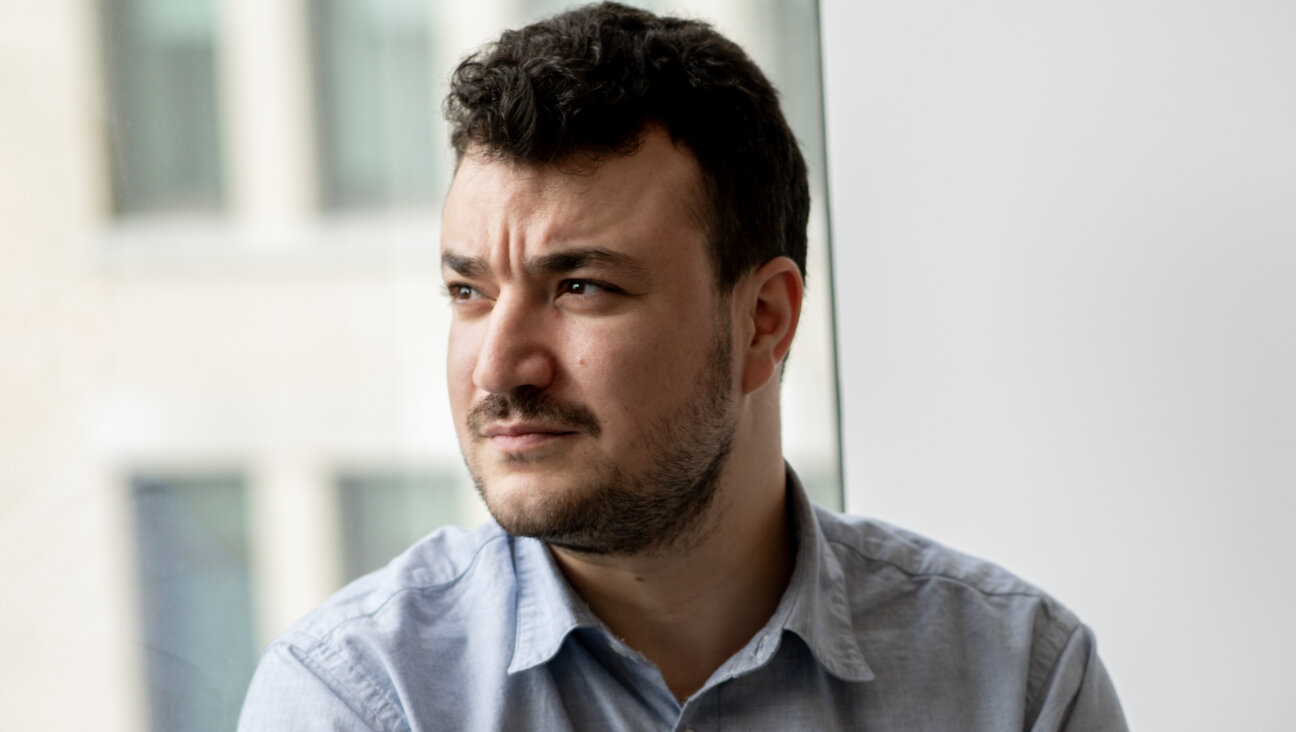
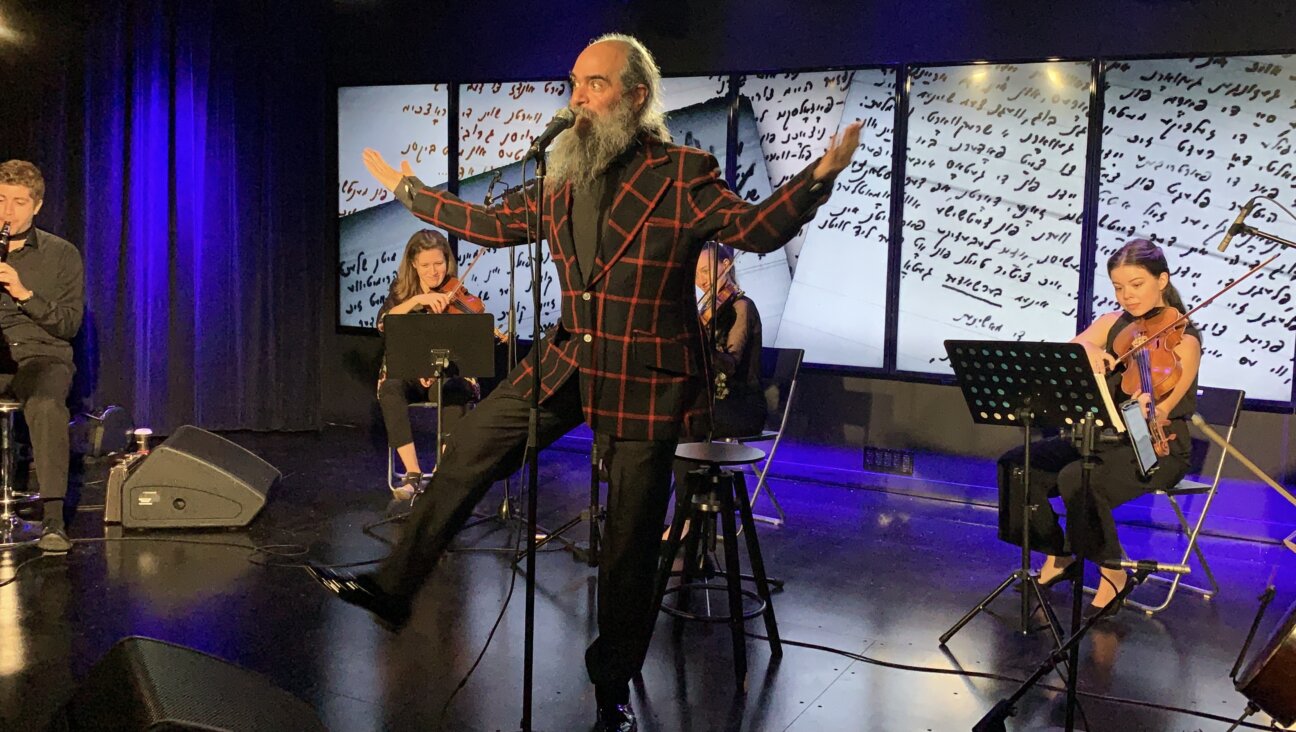
Russian singer Psoy Korolenko, during a recording session for the album Courtesy of Dan Rosenberg
By Noah Hirsch-Rechter April 13, 2026
The first Yiddish Glory album, the Grammy-nominated Lost Songs of WWII, was, give or take, 70 years in the making.
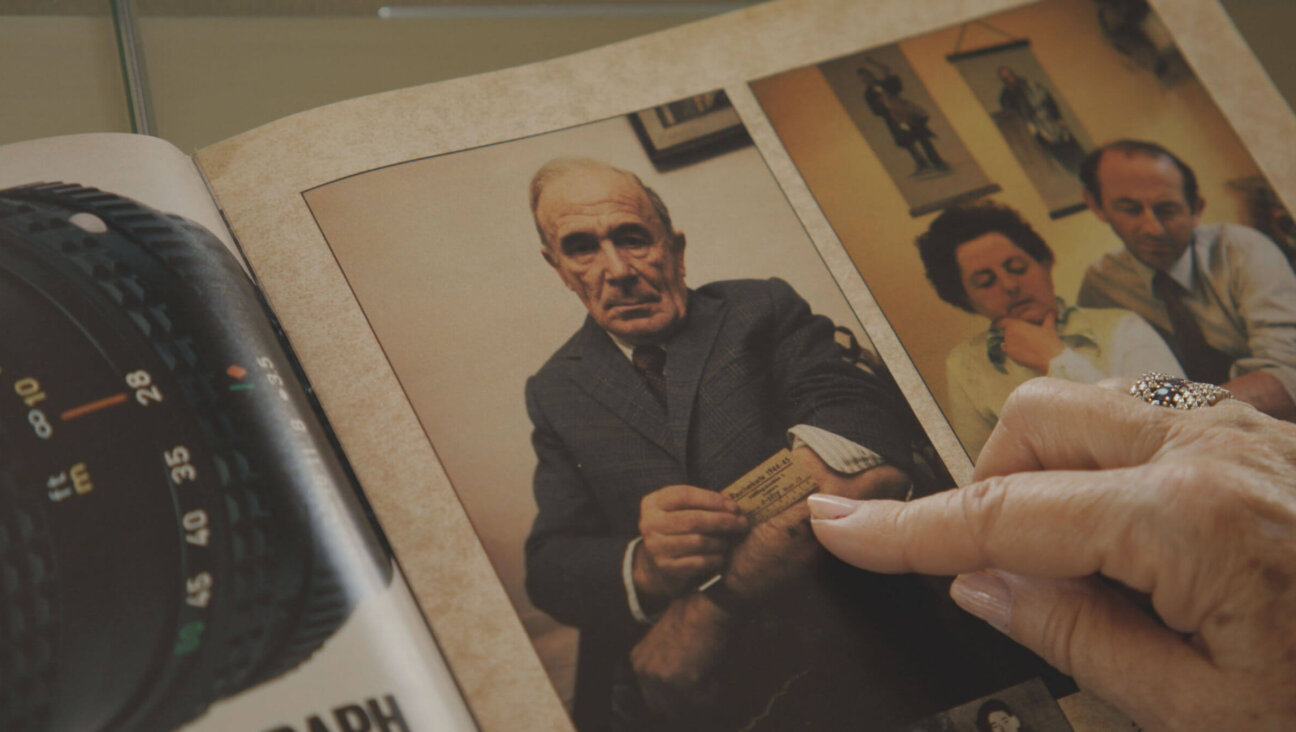
The idea of preserving Soviet-Jewish culture by way of an anthology of Yiddish folk originally belonged to Moyshe Beregovsky, a Ukrainian-Jewish ethnomusicologist in the Cabinet for Jewish Culture. But Beregovsky was arrested by Stalin’s government on suspicion of so-called Jewish nationalism in 1947. The sizable archive that he and his colleagues had amassed during and immediately after the Shoah — 263 original songs in all, constituting a record of a culture on the brink of oblivion — languished in the basement of a Kyiv library until it was discovered by chance in 1990.
Two or so decades later, a group of archivists, academics and musicians — led by Anna Shternshis, professor of Yiddish studies at the University of Toronto — took up Beregovsky’s task, and out of the jumbled archive they pieced together an album of Yiddish songs. The majority of the archive consisted of just lyrics (that is, without sheet music) so Shternshis teamed up with Russian songwriter Psoy Korolenko to compose new melodies, taking care to match the music to the lyrics’ subject, period and geographic origin. The resulting album, released in 2019, was hailed as a spectacular insight into the experiences of Holocaust-era Soviet Jewry.
Now, seven years later, Shternshis and her collaborators are back with their sophomore effort, The Silenced Songs of WWII. And though it builds upon the achievements of its predecessor, giving poignant expression once more to the sorrow and bravery of Soviet Jewry during the Shoah, it also has another object: confronting the historiographical status quo.
“Every song on this album is there because it challenges the way we understand the history of the Holocaust,” Shternshis told me over a video call.
In “A Priest Murdered in Kalisz,” the singer, Leyb Diament, recounts the 1939 murder of a Catholic priest in a central square in the titular town in Poland, describing how German forces had dragged the priest from his home and forced four Jewish boys to publicly shoot him before burying him in a Jewish cemetery.
Diament then wonders aloud whether the Germans had hoped this final humiliation would provoke a backlash from the local Polish population. No such reprisal ever occurred. “The Poles saw all of this, but no pogrom happened,” he writes in the song. “Afterwards, the Germans captured everyone; they shot some and hanged others.”
“I would say that this is the first Yiddish song of the Holocaust,” Shternshis said. “And how interesting is it that it doesn’t talk about murders of Jews, but about a murder of the Catholic priest, and of Polish solidarity with Jews in the face of Nazi invasion.”
“The Sad Camp,” a plaintive song about Soviet Jewry’s annihilation, was written by Bershad ghetto survivor Isaac Semidubosky, who, after being liberated from the ghetto in late 1944, was drafted into the Red Army and ultimately ended up in Berlin — thought not before he helped liberate Auschwitz. Yet the song also calls into question the scholarly categories that have often governed histories of Soviet Jewry.
“During the war Soviet Jews were either killed or put in a ghetto, served in the Red Army, or were refugees that ended up in Central Asia or Siberia,” Shternshis said. “These three groups are studied separately, but when you look at this song and the story of the person who wrote it, you realize that doesn’t make too much sense.”
Silenced Songs is more than just anguish, though; there’s uplift, too, the same injections of hope, levity and defiance that made the first instalment of Yiddish Glory so memorable.
“I am a Typhus Louse,” written by a teacher at an orphanage in the Mogilev-Podolsky ghetto, in the Transnistria region —which today is Moldova — imagines the war from the perspective of an anti-fascist louse. “Me, I am a Typhus louse; I go from house to house; la-la-la-la-la,” the louse declares, before singing that it, too, is afraid of the German doctors who kill lice.
The anonymously written “Yom Kippur Without Fascists,” meanwhile, looks ahead to a holy day without Hitler. “On Yom Kippur he’ll be our sacrificial rooster,” the lyrics go. “And on Simkhes-Toyrehe he’ll burn like a candle at the pole.”
And while “Transnistrian Lullaby” offers a dark account of refugee life, it still concludes almost wistfully. “A storm doesn’t last forever; the war will end,” writes the again anonymous author. “Again the sun will shine for us.”
The song “In Pechera Camp” is particularly notable for addressing, head-on, the question of Soviet complicity in the Holocaust, long a sore subject for Soviet authorities. (Among the reasons for Beregovsky’s arrest was that the archive revealed instances of Soviet collaboration with the Nazis.) The song describes the brutality of the Russian guards at the Pechera camp, an enclosure designed to kill inmates through starvation in the Vinnytsia region of Ukraine. The Soviet Union never formally acknowledged the camp’s existence.
One guard, Lukyan Smetanski, is singled out in the lyrics as especially merciless: “Smetanski came out with a big rifle, oy, oy, oy; two innocent Jews approached, and he shot them for no reason at all.” Smetanski, according to legend, was killed on the spot by a Jewish officer soon after the Red Army liberated Pechera.
History doesn’t repeat — but it rhymes
Maybe the most important decision Shternshis took as curator, though, was to scrub references to warmongering — both Russian and Jewish — that in view of the ongoing conflicts in Eastern Europe and the Mideast would likely have been poorly received.
For where the first Yiddish Glory album was understood principally as an invaluable window onto a bygone era, the follow-up has acquired rather a lot of contemporary importance. Since 2019, Russia has invaded Ukraine, Israel has destroyed much of Gaza, antisemitism is on the rise and Holocaust literacy has never been lower.
Beregovsky’s archive contains more than a few admiring references to the Red Army, several of which were included in the new album’s initial cut; one even name-checked various cities that the Soviets liberated. Russia’s ongoing invasion of Ukraine, however, meant they were omitted.
“A lot of our songs glorify the Red Army and the Soviet Army, they glorify Stalin and they glorify victory,” Shternshis said. “In 2019, we were thinking about this archive as an interesting historical curiosity. Now, it’s like are we really going to glorify the Red Army? It’s a whole different consideration.”
The same rationale drove the decision to exclude songs that gestured at another thorny topic: Jewish militarism. “There are a lot of songs in the archive that praise Jewish soldiers for being violent and cruel towards their enemies,” Shternshis said. “They’re also not on the album.”
Still, Shternshis is optimistic that any parallels between the present turmoil and the album will amplify what she sees as Yiddish Glory’s abiding message. “This album is focused on the most vulnerable victims of the war,” she said. “This is what happens when civilians are caught in that really horrible violence. That message certainly hasn’t lost its significance.”
This is a moment of great uncertainty. Here’s what you can do about it.
We hope you appreciated this article. Before you go, we’d like to ask you to please support the Forward’s independent Jewish news. All donations are still being matched by the Forward Board - up to $100,000 until April 24.
This is a moment of great uncertainty for the news media, for the Jewish people, and for our sacred democracy. It is a time of confusion and declining trust in public institutions. An era in which we need humans to report facts, conduct investigations that hold power to account, tell stories that matter and share honest discourse on all that divides us.
With no paywall or subscriptions, the Forward is entirely supported by readers like you. Every dollar you give is invested in the future of the Forward — and telling the American Jewish story fully and fairly.
The Forward doesn’t rely on funding from institutions like governments or your local Jewish federation. There are thousands of readers like you who give us $18 or $36 or $100 each month or year.

Support our mission to tell the Jewish story fully and fairly.