Could Ecuador Win Freedom for Alan Gross?

Graphic by Angelie Zaslavsky
Officials of the Simon Wiesenthal Center met with Ecuadorian authorities to seek their support in asking Cuba to release American prisoner Alan Gross.
The meetings came on the sidelines of the American Jewish Joint Distribution Committee’s Latin American gathering of Jewish communities in Quito, the capital of Ecuador.
Sergio Widder, the Wiesenthal Center’s Latin American director, and Dr. Shimon Samuels, its director of international relations, in separate meetings with Ecuador’s deputy justice minister, Carmen Simone Lasso, and the Justice Ministry’s legal adviser, Marco Prado, requested “the humanitarian intervention of Ecuador – in view of its close bilateral relations – to urge the Cuban authorities for an early release of U.S. citizen Alan Gross.”
Widder told JTA that Lasso did not comment on future steps regarding the Gross case. Lasso expressed her support for Holocaust education in Ecuador, he said.
Gross, 63, of Potomac, Md., was sentenced last year to 15 years in prison for “crimes against the state.” He was arrested in 2009 for allegedly bringing satellite phones and computer equipment to members of Cuba’s Jewish community while working as a contractor for the U.S. Agency on International Development.
“We believe that President Rafael Correa Delgado is best-placed to convince Havana to make a humanitarian gesture,” Samuels and Widder told Ecuadorian officials.
On Sunday, more than 500 rabbis urged the release of Alan Gross, citing the possibility that he has a cancerous growth, based on a recent assessment of his medical records by a U.S. radiologist.
Also, the Wiesenthal Center expressed its concern at the growing influence of Iran in Ecuador and its ALBA bloc partners of Venezuela, Cuba, Bolivia and Nicaragua.
“This represents a potential danger of Iranian-supported Hezbollah terrorist networks abusing Ecuador’s hospitality as a springboard for expansion throughout South America,” Samuels said.
ALBA is an international organization based on the idea of social, political and economic cooperation among Latin American and the Caribbean countries.
"Why I became the Forward’s Editor-in-Chief"
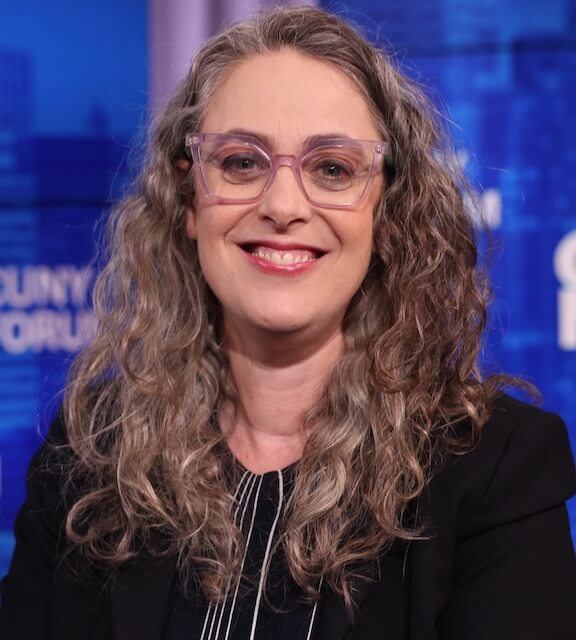
You are surely a friend of the Forward if you’re reading this. And so it’s with excitement and awe — of all that the Forward is, was, and will be — that I introduce myself to you as the Forward’s newest editor-in-chief.
And what a time to step into the leadership of this storied Jewish institution! For 129 years, the Forward has shaped and told the American Jewish story. I’m stepping in at an intense time for Jews the world over. We urgently need the Forward’s courageous, unflinching journalism — not only as a source of reliable information, but to provide inspiration, healing and hope.
Support our mission to tell the Jewish story fully and fairly.