Israeli President Isaac Herzog’s selection as JTS commencement speaker roils graduating class
Two opposing letters are circulating among undergrads at the college, a bastion of Israel support
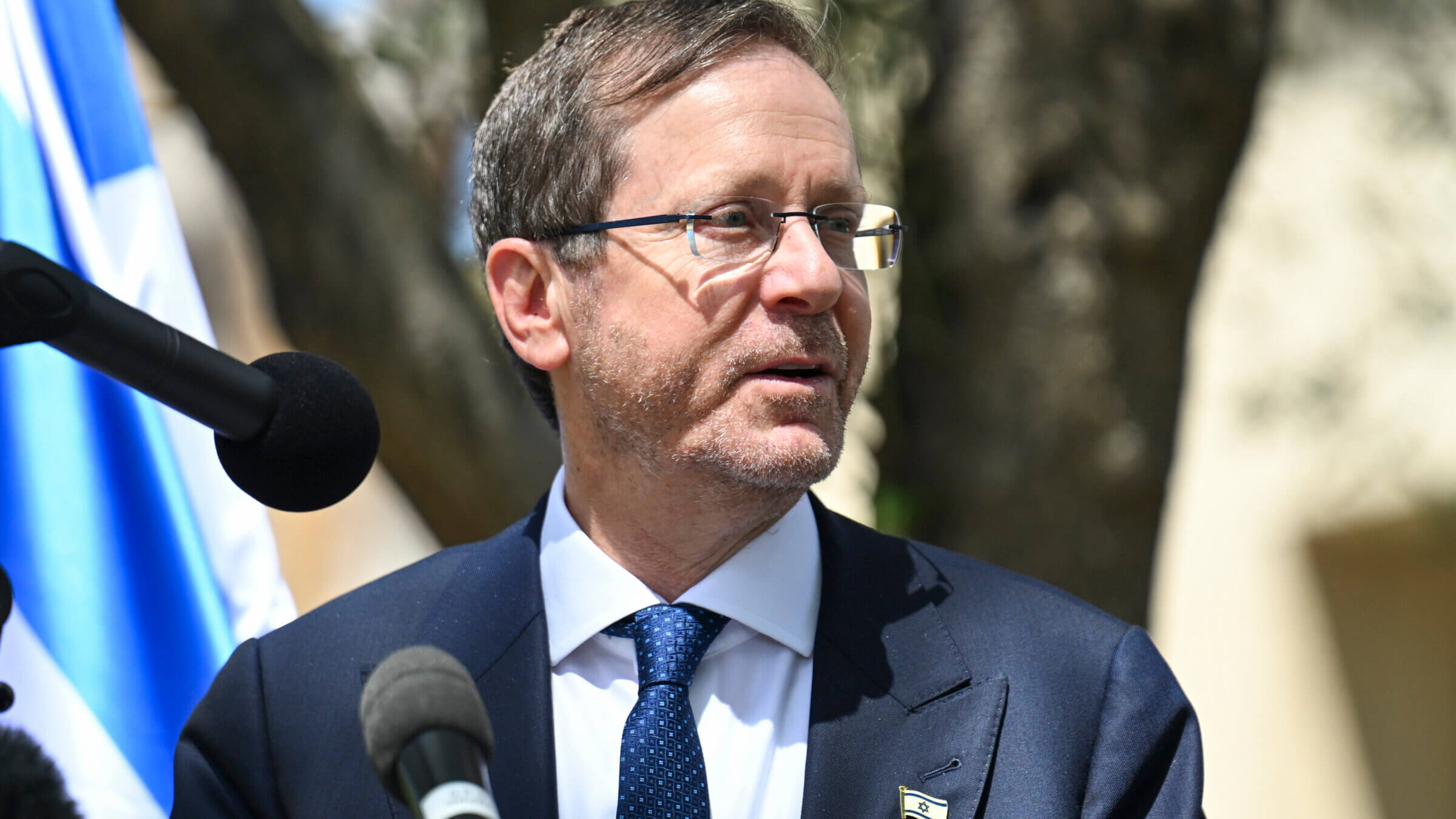
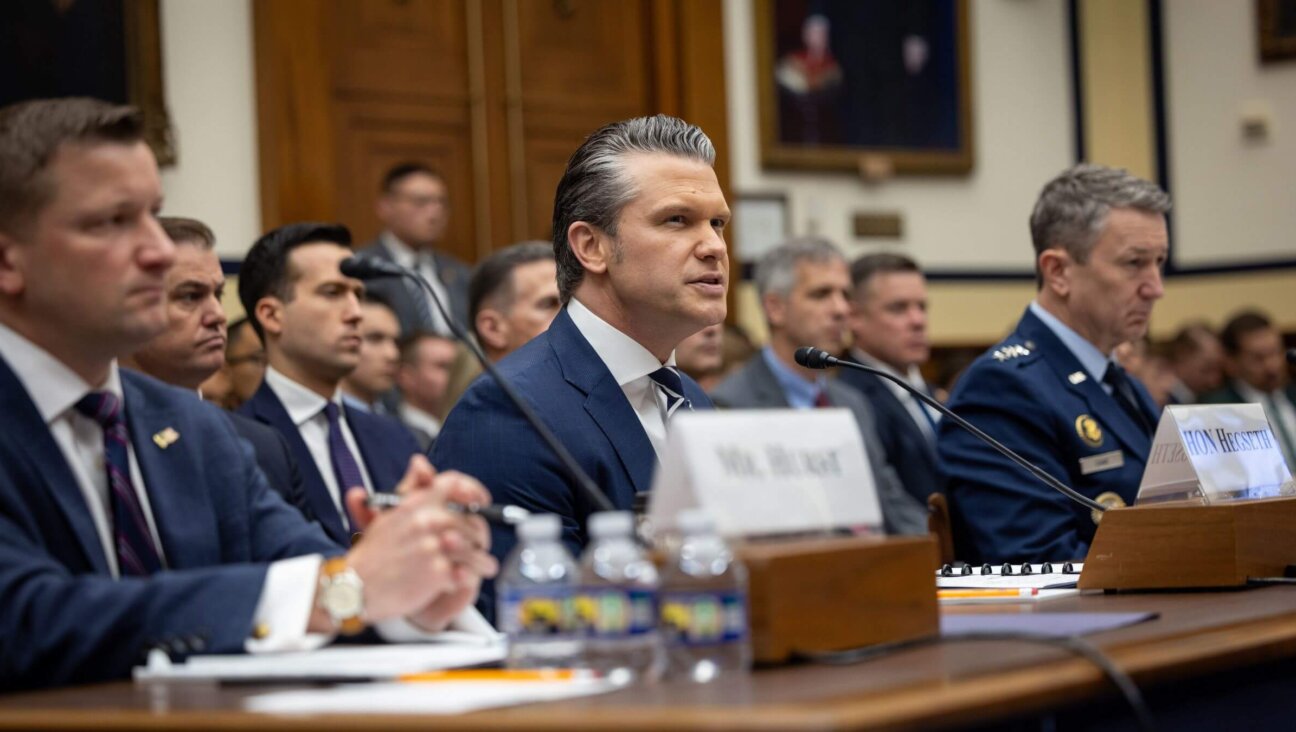
About 30 students and alumni called for JTS to disinvite Israeli President Isaac Herzog as commencement speaker. Photo by Martin Ollman/Newswire – Pool/Getty Images
By Louis Keene April 30, 2026
The selection of Israeli President Isaac Herzog as the Jewish Theological Seminary’s commencement speaker has divided undergraduates at the school, with several seniors and dozens of other current students and alumni signing a letter calling on the school’s chancellor to disinvite Herzog.
The letter accused Herzog of inciting violence against civilians in Gaza — a characterization shared by some human rights groups — and criticized him for not taking action against settler violence in the West Bank.
The students added that Herzog’s involvement in the schoolwide May 19 ceremony — when he will also receive an honorary degree from the seminary — would leave them “morally conflicted about attending.”
“There are many places for members of the JTS community to engage with difficult ideas in nuanced conversation,” they wrote, “but we believe the commencement stage is not the place to engage with such a particularly divisive figure.”
The letter leaked to Chancellor Shuly Rubin Schwartz before it was finalized, according to two of the six seniors who signed it, leading to a meeting during which Rubin Schwartz took issue with the group’s approach and held firm on the decision.
Meanwhile, other JTS seniors affirming the speaker choice wrote a letter of their own that has gathered 24 signatures, representing roughly half of the senior class.
The controversy unfolded amid ongoing tensions around Israel in Conservative Jewish spaces and at Columbia University, which has a joint undergraduate program with JTS. The flagship academic institution of the Conservative movement, JTS includes in its mission deepening students’ connection to Israel, and requires its rabbinical students to spend a year learning there.
Herzog has faced criticism for comments he made after the Oct. 7 attacks, in which he said that it was “an entire nation” that was responsible. Some said the remark carried an implication that there were no innocent civilians in Gaza. (Herzog later said it had been taken out of context and that he did believe there were innocent Palestinians there.)
Herzog’s office did not respond to an inquiry.
Speaking out
In an interview, one of the students who signed the letter, granted anonymity out of concern for professional repercussions, said he had wanted to fight back against a culture of silence around Palestinian suffering in the Jewish world.
“I do feel powerless,” the student said. “I feel like there’s a genocide happening. And the silence is killing all of us.”
Four current JTS rabbinical students signed the letter opposing Herzog, though none was in the class of 2026. JTS rabbinical students walk at the commencement ceremony but are ordained in a smaller gathering the next day.
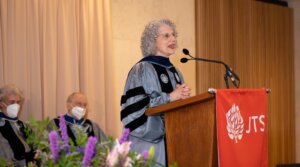
Rubin Schwartz said in a statement that most of the JTS community was excited about Herzog’s address and honorary degree, but that it welcomed “thoughtful discussion and differing opinions” from students, faculty and staff.
“President Herzog, like all 10 previous presidents of Israel, represents the state and its people, rather than its government,” Rubin Schwartz added. “We look forward to honoring him at this year’s ceremony.”
Gabriel Freedman-Naditch, who signed the second letter, said he had been happy to learn Herzog would be the commencement speaker. He applauded Herzog’s leadership during Israel’s judicial overhaul saga, but said the Israeli presidency was mostly a “figurehead” position anyway. And while he said he was not closely attuned to Herzog’s actions since Oct. 7, he was willing to countenance a speaker he did not perfectly align with.
“We’ve all learned to listen to people we disagree with,” Freedman-Naditch said. “We should be able to listen to people who we find upsetting.”
A messy rollout
The group of six seniors who wrote the anti-Herzog letter drafted and circulated it privately among select students and alumni, planning to share it with Rubin Schwartz in a private meeting only once it was finalized.
Then Freedman-Naditch, who had not been aware of the letter, was forwarded the letter by his mother, who had received it from a JTS graduate who had signed it. Freedman-Naditch then shared it with the senior class group chat, asking why they hadn’t all been made aware of it. The organizers replied that they were worried that the letter would be leaked along with their names.
Not long after, Rubin Schwartz requested permission through Google Documents to view the letter. The group then emailed the chancellor proposing a meeting to discuss it.
In her office Tuesday, Rubin Schwartz asked the group why they hadn’t first come to her directly, according to the two students who spoke with the Forward. They replied that the JTS administration doesn’t take seriously what undergraduate students have to say, and that voices that diverge from the pro-Israel consensus tend to be silenced.
“She was basically like, ‘It saddens me to hear you say that there isn’t a culture of dissent here,'” one of the students said. “But at the same time, she’s calling our letter of dissent a hostile act.”
“What I said was that their choice to send a letter, rather than speak directly with me or others, felt aggressive,” Rubin Schwartz said in an email. “My point was that it would have felt more respectful to have had a conversation about their feelings instead of initiating the letter campaign.”
Herzog is not the only figure from the realm of Israeli politics slated to address 2026 graduates. Yeshiva University announced Thursday its own commencement speaker: U.S. Ambassador to Israel Mike Huckabee.
I’m personally matching all gifts to the Forward, up to $36,000. Can I match your gift now?

Hello, fellow Forward reader! I’m Joel Brown, a Forward reader and supporter for more than 15 years, and currently the chair of the board of directors.
I’m an avid Forward reader because it ticks so many of my essential boxes: excellent journalism, Jewish focus and diverse viewpoints. In today’s political climate, what I most appreciate is the Forward’s independence — made possible by the generosity of its membership.
The Forward is committed to bringing you unbiased, nuanced Jewish news. From my position as board chair, I see an exciting future as we expand our position as the definitive independent voice of contemporary American Judaism.
— Joel Brown, Forward board chair
Support our mission to tell the Jewish story fully and fairly.