Moscow Chief Rabbi Frets Over Ukraine Honor for Anti-Semites

Graphic by Angelie Zaslavsky
(JTA) — The chief rabbi of Moscow condemned the honoring in Ukraine of nationalists whose troops massacred Jews.
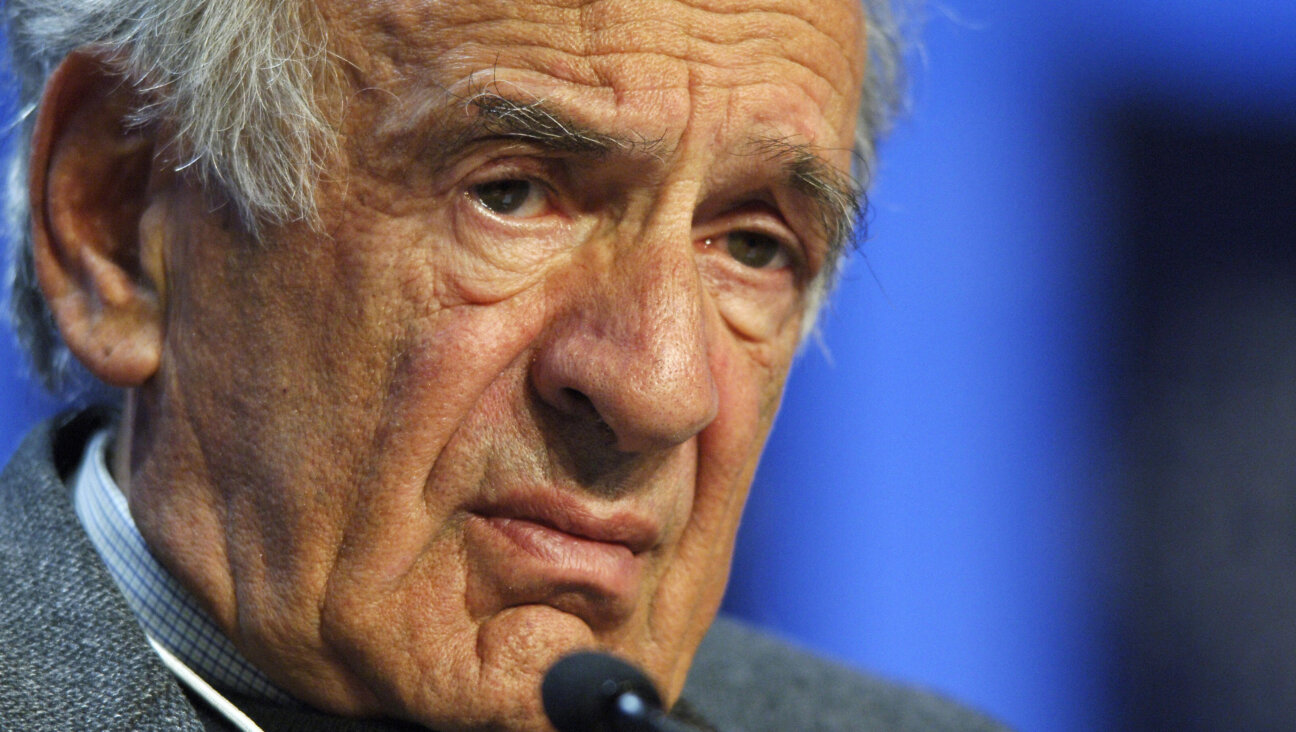
Rabbi Pinchas Goldschmidt, who is also the president of the European Conference of Rabbis, spoke of his “concern” over the trend in an interview Tuesday with JTA during a gathering of the standing committee of the Conference in Vienna.
Goldschmidt was referring to a minute of silence on May 25 in memory of Symon Petliura, a 1920s statesman whom a Russian Jew killed 90 years ago because the killer blamed Petliura for mass murders of Jews committed in the years 1917-1921 by militias under Petliura’s command.
A French court acquitted the killer in 1927, in what many interpreted as confirmation of Petliura’s culpability for pogroms that claimed the lives of 50,000 Jews. Earlier this week, a government official said Kiev would name streets after Stepan Bandera and Roman Shukhevych — Ukrainian nationalists who collaborated with Nazi Germany and whose troops also killed Jews.
“Russian Jews and Ukrainian Jews share our concern by this celebration of the memory of known anti-Semites and collaborators,” said Goldschmidt. But he noted that Ukraine also has a Ukrainian prime minister, Volodymyr Groysman. “We are counting on Ukrainian Jews to stop the revisionist commemoration of the Holocaust,” Goldschmidt said.
In Ukraine, celebrations of controversial figures like Petliura have become more widespread since 2014, when a revolution spearheaded by nationalists swept from power former president Viktor Yanukovych, who was accused of being a corrupt Kremlin stooge. They are held in high esteem for their opposition to Russia.
Ukrainian Jewish leaders are split on this issue, with the Ukrainian Jewish Committee condemning it, whereas the Vaad Jewish association calling the preoccupation a distraction from working on a harmonious future in an independent multicultural Ukraine.
At the meeting in Vienna, 40 members of the standing committee of the Conference of European Rabbis discussed threats facing the continent’s Jewish communities, including the targeting of Jews over Israel by Islamists and the rising far right.
Last month, a politician from Austria’s far Right Freedom Party, which the local Jewish community has shunned for what the community called neo-Nazi tendencies, lost the second round of the presidential election by less than a percent of the vote.
“It’s a definite sign of the difficult times and the fear of many Austrians of Islamic radicalism,” Goldschmidt said about the nationalist party’s popularity. He added this shift to the right was also occurring among some Jewish voters. The key to solving both the Islamic threat and the “dangerous backlash” it is producing, Goldschmidt said, was education and dialogue.
This is a moment of great uncertainty. Here’s what you can do about it.
We hope you appreciated this article. Before you go, we’d like to ask you to please support the Forward’s independent Jewish news. All donations are still being matched by the Forward Board - up to $100,000 until April 24.
This is a moment of great uncertainty for the news media, for the Jewish people, and for our sacred democracy. It is a time of confusion and declining trust in public institutions. An era in which we need humans to report facts, conduct investigations that hold power to account, tell stories that matter and share honest discourse on all that divides us.
With no paywall or subscriptions, the Forward is entirely supported by readers like you. Every dollar you give is invested in the future of the Forward — and telling the American Jewish story fully and fairly.
The Forward doesn’t rely on funding from institutions like governments or your local Jewish federation. There are thousands of readers like you who give us $18 or $36 or $100 each month or year.

Support our mission to tell the Jewish story fully and fairly.