FIFA Executive Does Not Reach Decision on Israel’s West Bank Soccer Teams

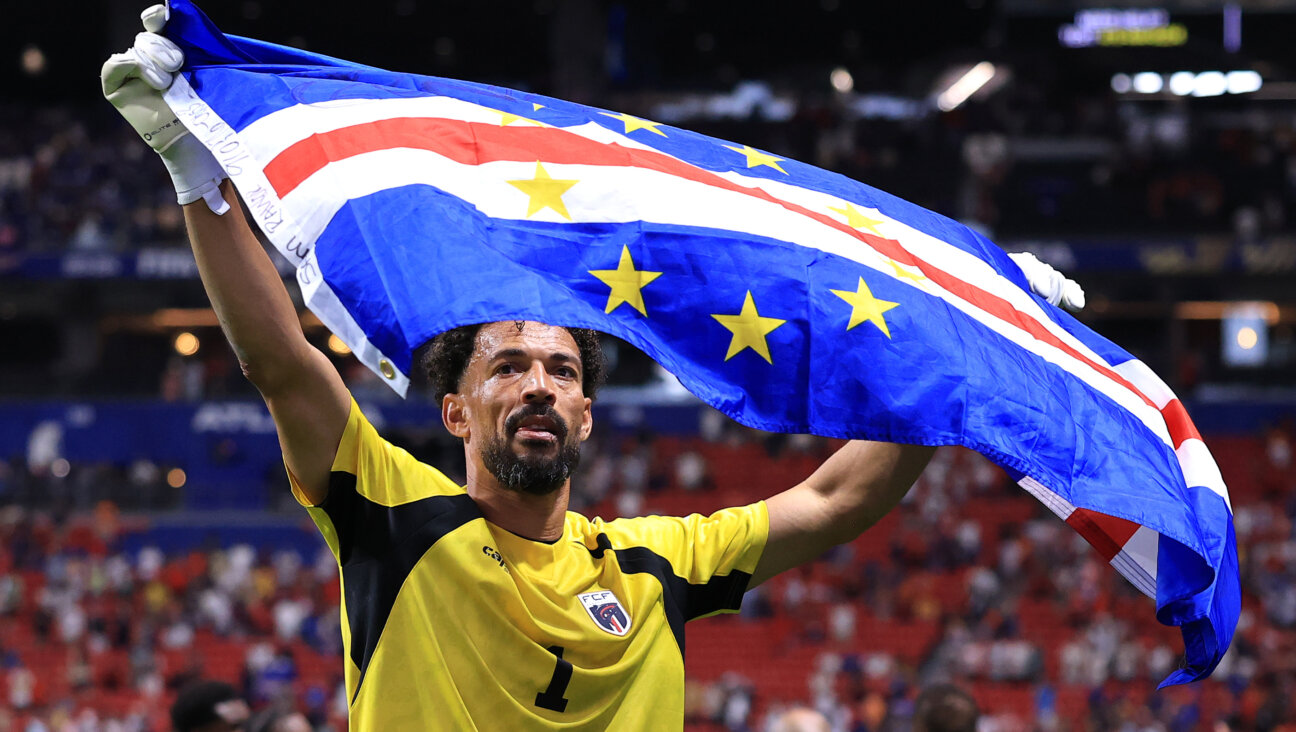
Goal Guy: Israeli soccer star Itay Schechter celebrates a goal in 2010. The country?s lower leagues ended a ban on wearing yarmulkes during games after protests. Image by getty images
The governing body of international soccer, FIFA, did not reach a decision on preventing Israeli teams from playing in West Bank settlements.
The organization was expected to discuss the issue at its executive committee meeting, which ended on Friday, but did not make any decisions, Haaretz reported. It was to have considered a special committees recommendations and come up with a solution to be presented at the FIFA world congress, scheduled for May 2017.
Six Israeli teams play their home matches in West Bank settlements.
The international NGO Human Rights Watch late last month called on FIFA to quit sponsoring matches held by the Israel Football Association on West Bank pitches.
Human Rights Watch said it had conducted an investigation of the Israel Football Association, a FIFA member, and found that the group holds games in West Bank settlements “on land unlawfully taken from Palestinians.”
The Palestinian Football Association has accused its Israeli counterpart of violating FIFA rules by holding games without permission on the territory of another member group. Jibril Rajoub, the head of the Palestinian Football Association, has threatened to take the issue to the Court of Arbitration for Sport for a ruling on the issue if FIFA does not deal with it.
New FIFA President Gianni Infantino earlier this month told the French news agency AFP that he would make finding a resolution to the conflict over West Bank Israeli soccer teams “a priority.”
The West Bank soccer teams are in Ma’aleh Adumim, Ariel, Kiryat Arba, Givat Ze’ev, the Jordan Valley and Oranit.
Did you know that only 2% of Forward readers donate to support our nonprofit newsroom? That 2% make it possible for millions to read the Forward without a paywall or subscription — removing any barriers to the full and fair Jewish story.
But while the Forward is free to read, it isn’t free to produce. Big stories — like deep dives into the antisemitism data, political scoops or reporting trips to college campuses — take months of research and fact-checking. All while we keep you informed of what you need to know each day.
— Rachel Fishman Feddersen, Forward Publisher & CEO
Support our mission to tell the Jewish story fully and fairly.