To kick off 2025, Netherlands throws open archive of suspected Nazi collaborators
Dutch privacy laws shielded the names from public view until the end of 2024
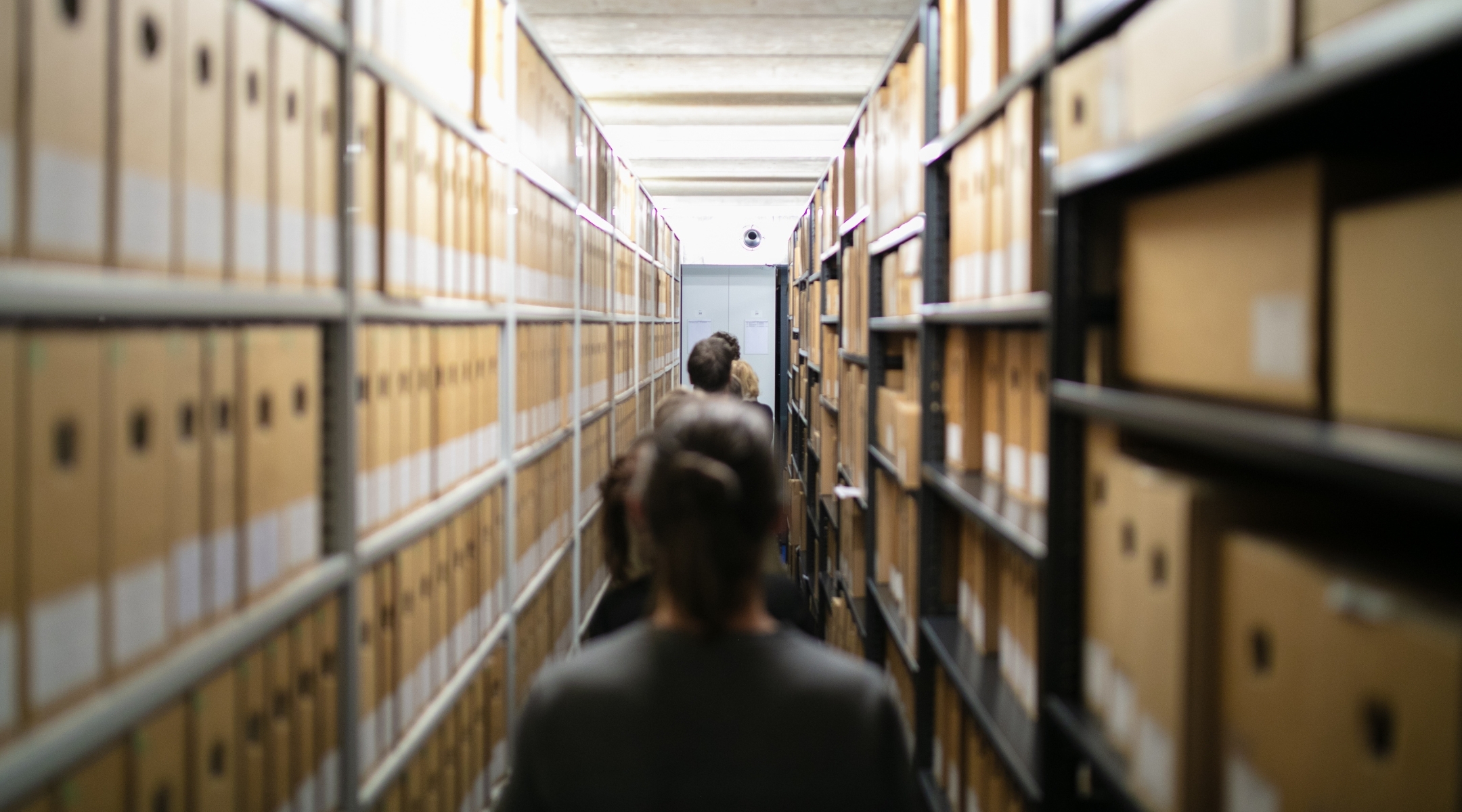
Until Jan. 1, 2025, public access to the Central Archives of the Special Administration of Justice (CABR) is limited. (Wikimedia)
(JTA) — A massive trove of documents about suspected Nazi collaborators in the Netherlands is now open to the public for the first time.
For the past seven decades, only researchers and relatives of those accused of collaborating with the Nazis could access the information held by the Dutch Central Archives of the Special Administration of Justice. But two years ago, The War in Court, a Dutch consortium devoted to preserving history, announced that it would make the records available online when they were no longer shielded by the country’s privacy laws.
That went into effect this month, and visitors to the consortium’s website can now view a list of 425,000 people investigated for potential collaboration during the Holocaust. Dossiers about the people, including what investigators found, can be viewed in person at the Dutch National Archive in the Hague. About a quarter of the archive has been digitized so far.
The impending availability of the material has been controversial in the Netherlands because relatively few of the people in the database were ever formally charged with crimes. Not all even faced formal investigations.
The Dutch government investigated 300,000 people for collaborating with the Nazis and more than 65,000 of them stood trial in a special court system in the years after World War II.
Collaboration enabled the Nazis to murder an estimated three quarters of Dutch Jews, including their most famous victim, Anne Frank, and her family. The identity of the person who exposed Frank’s hiding place has been a matter of debate.
It was not until 2020 that the Dutch government apologized for failing to protect Jews during the Holocaust, long after other European leaders and after local Jews had requested an apology.
More recently, some institutions in the Netherlands have sought to make amends for their role in the Holocaust locally. The Dutch public tram company GVB, for example, sought compensation after the war for having transported Jews to their deaths; earlier this year, it announced that it would place memorials at three deportation hubs, and the city of Amsterdam pledged 100,000 euros — and potentially more in the future — to local Jewish groups to divest itself of its revenue from collaborating with the Nazis.
The Netherlands also opened its first national Holocaust museum this year.

Did you know that only 2% of Forward readers donate to support our nonprofit newsroom? That 2% make it possible for millions to read the Forward without a paywall or subscription — removing any barriers to the full and fair Jewish story.
But while the Forward is free to read, it isn’t free to produce. Big stories — like deep dives into the antisemitism data, political scoops or reporting trips to college campuses — take months of research and fact-checking. All while we keep you informed of what you need to know each day.
— Rachel Fishman Feddersen, Forward Publisher & CEO
Support our mission to tell the Jewish story fully and fairly.