The ‘godfather of denim’ was an Italian designer whose Jewish father was murdered at Auschwitz
Adriano Goldschmied, who died April 5, helped build brands like Diesel and pioneered premium denim worldwide
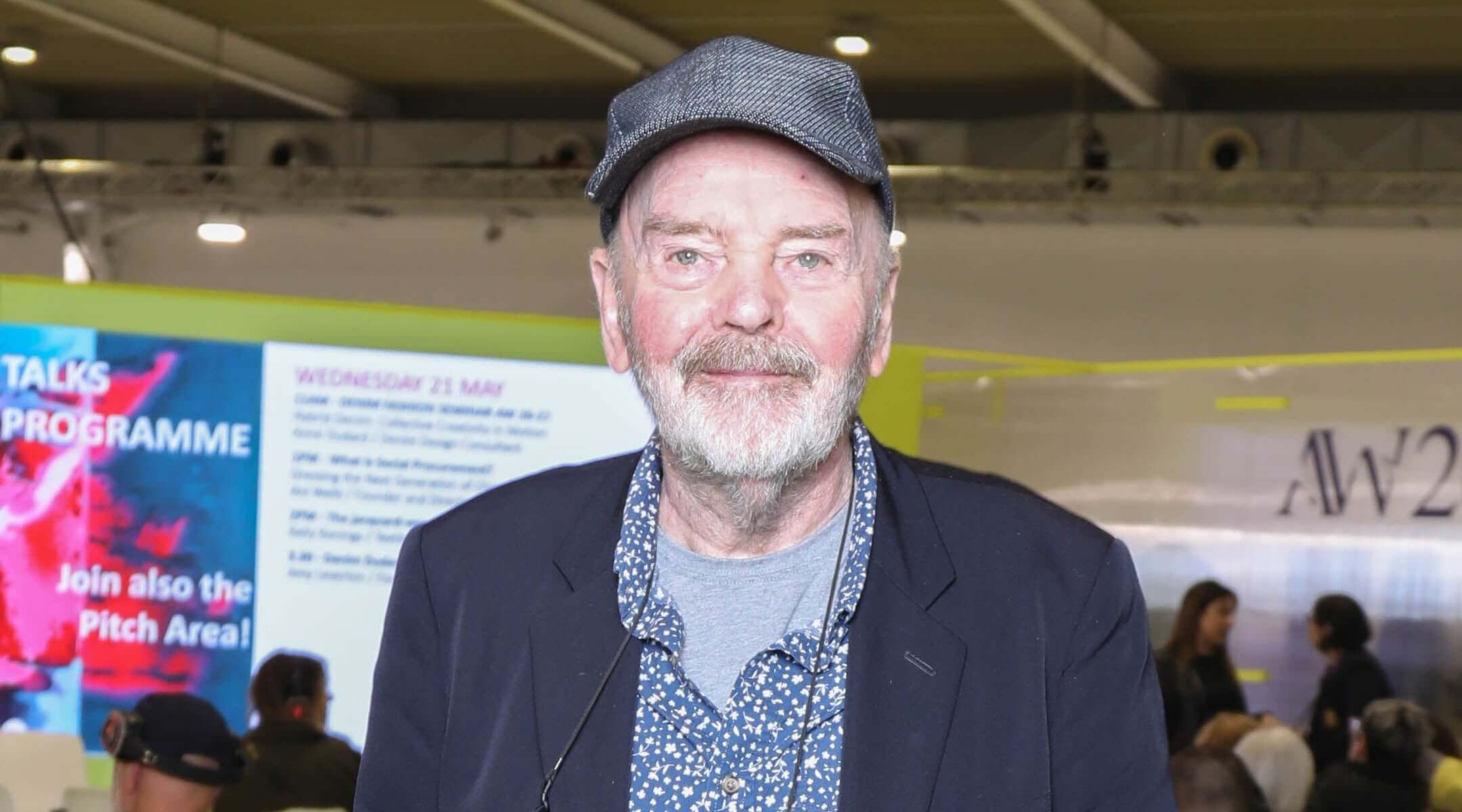
Adriano Goldschmied attends Denim Première Vision 2025 at Superstudio Più on May 22, 2025 in Milan, Italy. Photo by Benedetta Bressani/Getty Images
(JTA) — Adriano Goldschmied became known as the “godfather of denim” for elevating jeans from casual wear to a luxury staple. His own father’s story was equally riveting.
Goldschmied, who died April 5 at 82, following a battle with cancer in a hospital in Castelfranco Veneto, Italy, credited himself with founding or developing at least 50 brands, including Diesel, AG, Replay, Gap 1969, A Golde and Goldsign.
He was just an infant in 1944 when his Italian Jewish father was arrested by the Nazis.
Goldschmied’s mother, Sofia, was in hiding with his sister at the time of his birth on Nov. 29, 1943, in Vico Canavese, Italy. The Nazis had invaded Italy just months earlier.
His father, Livio, had joined the Italian resistance after the Nazis took over. When he tried to visit his wife, daughter and newborn son, he was apprehended en route. One of six people with his last name deported by the Nazis via Milan’s central station, he was ultimately sent to Auschwitz, where he was killed several months later.
According to a testimony made by a survivor to Yad Vashem, Israel’s Holocaust center, Livio was denounced by a midwife and received permission to visit his son briefly after his arrest. The testimony, which cannot be independently verified, said he had rejected an offer to move to the United States to work with the physicist Enrico Fermi because he would not have been able to bring his family, and had also declined an opportunity to escape from the train that took him to Auschwitz.
Following the war, Goldschmied moved with his mother to Trieste. He later spent a stint pursuing skiing in the 1960s in Cortina, the ski resort in the Southern Alps.
He did not speak readily about his family’s Holocaust history, and unlike his sister, he did not connect with his Jewish heritage. Diana was responsible for installing Stolpersteine, small memorials embedded in sidewalks documenting the Jews who lived at that address before the Holocaust, to commemorate their family members who were murdered.
“Like my father, my brother was a man of great intelligence and extraordinary intuition,” Diana told the Italian-Jewish news outlet Moked. “However, he did not want to talk about our family history. I think memory was working inside him, though.”
Goldschmied got his start in fashion in the 1970s, when he launched his shop, King’s Shop, in Cortina d’Ampezzo, and started a denim line, Daily Blue.
“That first production was going to a fabric store in my hometown, buying crazy fabrics for a very high price and going through manufacturing with my tailor,” Goldschmied told Women’s Wear Daily in 2023. “The product was extremely expensive, and in some way, I created a premium denim by accident.”
In 1981, Goldschmied went on to found the Genius Group, a collective that backed emerging labels like Diesel, Replay and Goldie.
Among Goldschmied’s innovations throughout his career were the development of the stonewash technique, experimenting with Tencel fibers, creating super-stretch denim and pioneering sustainable production methods as early as the 1990s.
“He was the architect of a global staple,” Mariette Hoitink, the co-founder of House of Denim, told Women’s Wear Daily. “Adriano didn’t just design jeans; he orchestrated the greatest transformation in the history of apparel. He was the singular force who elevated denim from rugged workwear into a global fashion staple.”
Goldschmied is survived by his wife, Michela; his daughters Sara, Marta and Glenda; two grandchildren; and his sister.
“Adriano and I led very separate lives,” Diana told Moked. “I rediscovered my Jewish identity. He took a different path, but everyone carries the past within them.”
This article originally appeared on JTA.org.

Did you know that only 2% of Forward readers donate to support our nonprofit newsroom? That 2% make it possible for millions to read the Forward without a paywall or subscription — removing any barriers to the full and fair Jewish story.
But while the Forward is free to read, it isn’t free to produce. Big stories — like deep dives into the antisemitism data, political scoops or reporting trips to college campuses — take months of research and fact-checking. All while we keep you informed of what you need to know each day.
— Rachel Fishman Feddersen, Forward Publisher & CEO
Support our mission to tell the Jewish story fully and fairly.