EU sanctions Israeli settlers after Hungary, under new leadership, clears path
“Extremisms and violence carry consequences,” said the EU’s top diplomat, who said Hamas figures are also being sanctioned
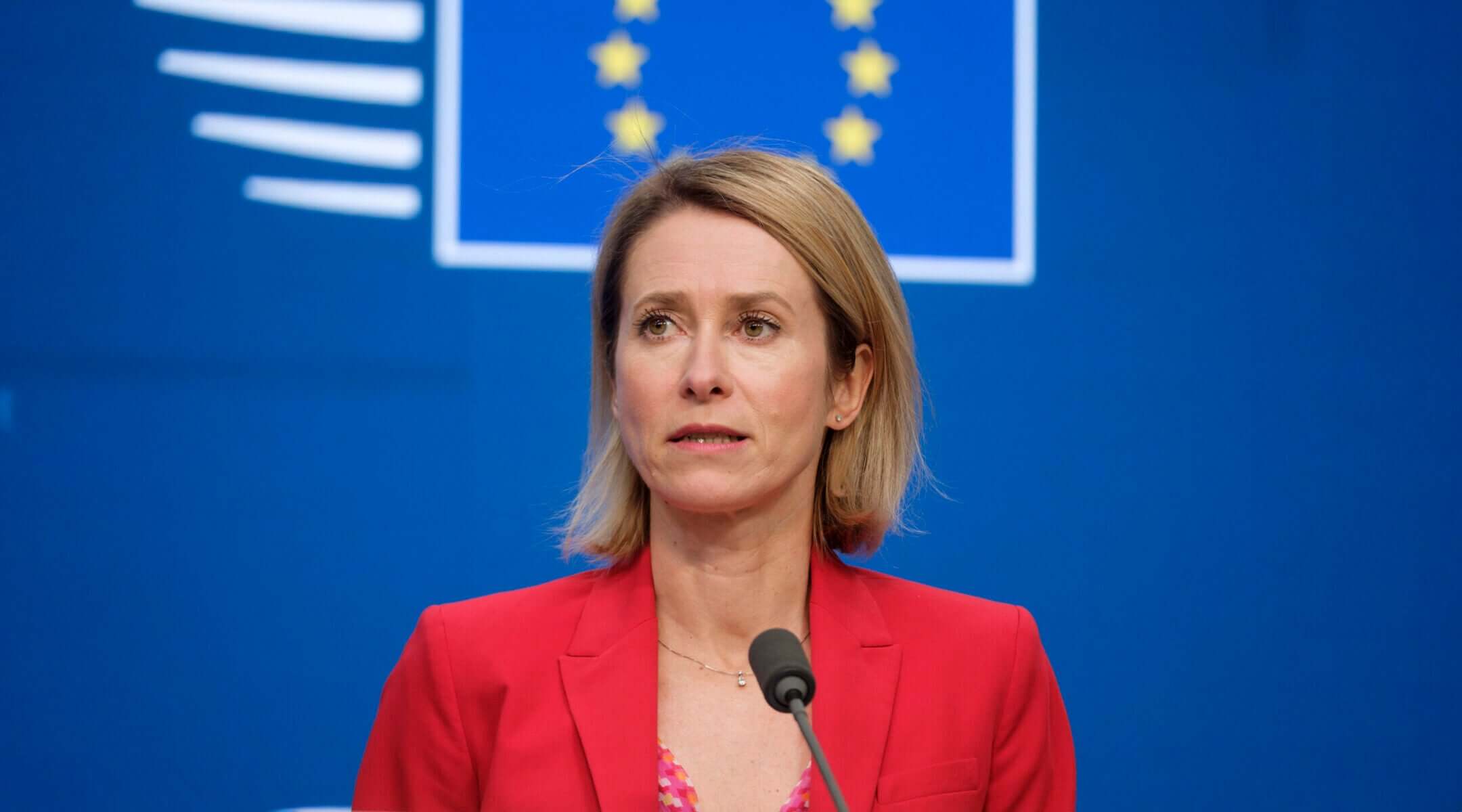
EU Commission Vice-President and High Representative for Foreign Affairs and Security Policy Kaja Kallas talks to media at the EU Council headquarters in Brussels, May 11, 2026. Photo by Thierry Monasse/Getty Images
(JTA) — The European Union decided to sanction Israeli settlers over violence against Palestinians in the West Bank on Monday, moving forward a measure that had been blocked for months.
The EU’s 27 foreign ministers agreed on the sanctions at a meeting in Brussels after Hungary’s new government gave its approval.
The measure had been blocked by a close ally of Israeli Prime Minister Benjamin Netanyahu, Viktor Orban, who was Hungary’s president for 16 years before being unseated in April.
The backing from Peter Magyar, who was sworn in as Orban’s replacement on Saturday, is seen as portending a new era in which the consensus-oriented European Union adopts a more united tone against Israeli policies.
Magyar has pledged to restore ties with the EU after Orban’s far-right politics isolated Hungary. He also said he would pursue a “pragmatic relationship” with Israel and vowed to recommit Hungary to the International Criminal Court, which Orban withdrew from after the court issued an arrest warrant for Netanyahu over alleged war crimes.
“It was high time we move from deadlock to delivery. Extremisms and violence carry consequences,” Kaja Kallas, the EU’s top diplomat, said on X.
Kallas said ministers also agreed to impose “new sanctions on leading Hamas figures,” who were not specified.
Kallas did not name the Israelis that will now be sanctioned or specify whether they will be organizations, individuals, or both. Several groups play crucial roles in promoting, developing, financing and defending Israeli settlements, while multiple individuals have previously faced sanctions by individual governments over their alleged involvement in violence against Palestinians.
Settler violence in the West Bank surged after the Gaza war began in October 2023 and further intensified since the U.S.-Israeli war with Iran broke out in February. In March, thousands of Diaspora Jewish leaders called on Israeli President Isaac Herzog to take action to stop the violence.
Israel’s foreign minister Gideon Saar said Israel “firmly rejects” the EU’s decision and accused the bloc of imposing sanctions on Israeli citizens and groups “because of their political views and without any basis.”
“Equally outrageous is the unacceptable comparison the European Union has chosen to make between Israeli citizens and Hamas terrorists. This is a completely distorted moral equivalence,” Saar said on X. He added that Jewish people have a “moral and historical right” to “settle in the heart of our homeland.”
Peace Now, which advocates for a two-state solution to the Israeli-Palestinian conflict, said the EU had sent “a grave warning sign” and “a call to the Israeli public to wake up to the reality we have created through decades of occupation.”
“The rampant violence of settlers in the West Bank, encouraged and supported by the government, is leading Israel into a moral abyss and casting an indelible stain on the state of Israel,” the group said in a statement.
Broader measures against Israel remain stalled by a lack of support. Spain, Ireland and Slovenia have pushed for the EU to suspend its trade agreement with Israel and sanction its far-right cabinet ministers, Itamar Ben-Gvir and Bezalel Smotrich. France and Sweden have called for tariffs on imported products from settlements in the West Bank. Other member states, such as Germany and Italy, have refused to support those measures.
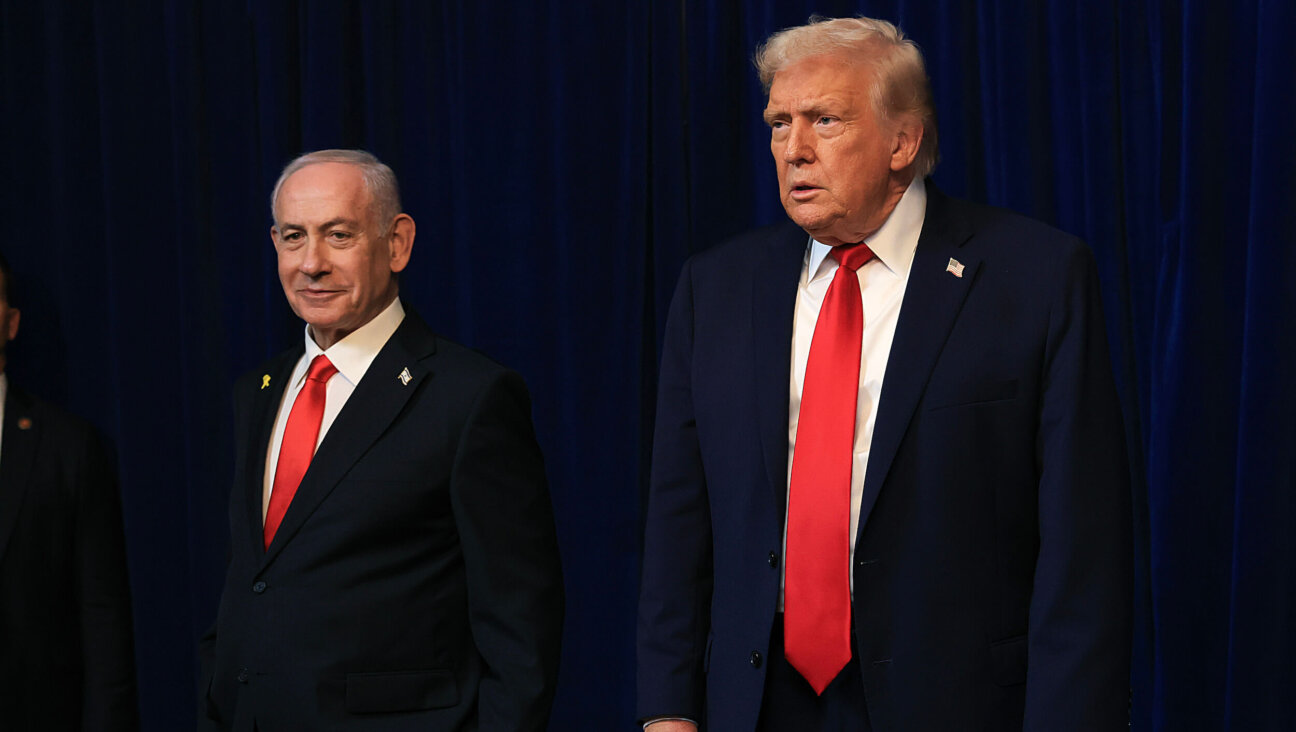
Under the Biden administration, the United States sanctioned multiple settler leaders, settler groups and West Bank outposts in 2024. Trump canceled the sanctions a day after reentering office in January 2025.
In March, Trump’s secretary of state, Marco Rubio, said the administration had expressed concerns about settler violence to the Israeli government and anticipated that the government would take action.
This article originally appeared on JTA.org.

Did you know that only 2% of Forward readers donate to support our nonprofit newsroom? That 2% make it possible for millions to read the Forward without a paywall or subscription — removing any barriers to the full and fair Jewish story.
But while the Forward is free to read, it isn’t free to produce. Big stories — like deep dives into the antisemitism data, political scoops or reporting trips to college campuses — take months of research and fact-checking. All while we keep you informed of what you need to know each day.
— Rachel Fishman Feddersen, Forward Publisher & CEO
Support our mission to tell the Jewish story fully and fairly.