Texas candidate’s antisemitic rhetoric sparks outrage ahead of Tuesday runoff. Did it fuel her rise?
The contest for the Democratic congressional candidate for a South Texas seat will test the resonance of Maureen Galindo’s extreme comments

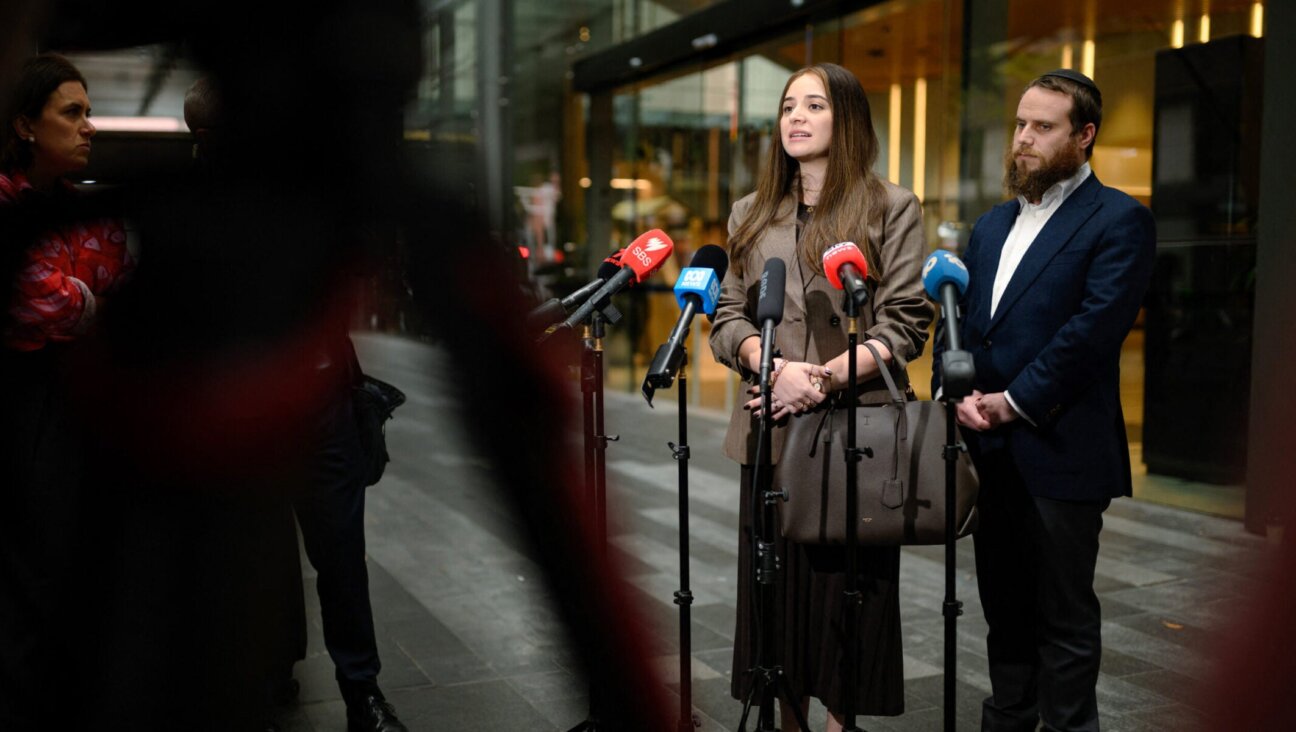
Maureen Galindo participates in a forum held by the League of Women Voters of the San Antonio Area in San Antonio on May 6, 2026. Photo by Katina Zentz/San Antonio Express-News via Getty Images
(JTA) — When Maureen Galindo finished first in a crowded Democratic primary for a newly redrawn South Texas congressional district in March, the result surprised even seasoned observers of San Antonio politics.
With voters set to decide the Democratic nomination Tuesday, as Galindo faces off with sheriff’s deputy Johnny Garcia, local officials and political observers are grappling with how a little-known candidate with a history of inflammatory remarks about Israel and Jews has come within striking distance of a seat in Congress.
The local housing activist went into the race with little political profile, having received less than 3% of the vote in a San Antonio City Council race last year. Local officials familiar with the contest chalked up Galindo’s success to a litany of factors, including low voter awareness of the candidates and a newly drawn Republican-leaning district that attracted few high-profile Democratic contenders.
What they did not credit for her success was her antisemitic rhetoric. While the race heading into Tuesday night’s runoff has been defined by scrutiny and criticism of Galindo’s views toward Zionists, local political analysts and activists told the Jewish Telegraphic Agency that her controversial positions were not widely known ahead of her March win and, if anything, are hurting her chances against Garcia.
Israel is a growing flashpoint in a number of Democratic primaries across the country, and several candidates have drawn allegations of antisemitism as they employ harsh criticism of Zionism. Galindo’s rhetoric has been even more extreme – including vows to turn a local immigrant detention center “into a prison for American Zionists” – but San Antonio political observers caution against lumping her early success in with the recent wins of progressive candidates in urban districts.
Jon Taylor, a political science professor at University of Texas San Antonio, told JTA that Galindo’s antisemitic rhetoric had been largely unknown at the time of the primary.
“What I can tell from previous candidate forums, she talked about the 1%, she talked about going after Trump and ICE,” Taylor said. “None of the stuff on Zionism, from what I could tell, was ever mentioned.”
Now that her antisemitic tirades have received so much attention, Taylor predicted they would turn off voters in the socially conservative district, where elections are usually driven by pocketbook issues.
“To be honest, talking about Israel, talking about some sort of Zionist conspiracy, is not what voters are looking for,” Taylor said.
Galindo has previously told local outlets that it was her “perception that Zionist billionaires run the world” and posted on social media that “ZIOS=GENOCIDAL EUROPEAN COLONIZER FREAKS,” After Texas Senate candidate James Talarico revealed to JTA that he would not back or campaign with Galindo, she told JTA that “coordinated media attacks declaring my anti-Zionist rhetoric as anti-Semitic” were “causing MORE harm to the Jews of San Antonio by playing into all the stigmas that they own the media.”
Galindo, who has raised almost no direct funding for her campaign, has benefitted from an opaque, newly formed Political Action Committee, which Democrats are charging is Republican-backed.
For some Jewish Democrats, the purported GOP-backed funding is evidence that Galindo’s anti-Israel rhetoric is a political liability rather than a strength.
“Republican dark money groups are spending big to elevate anti-Israel Democratic candidates who are out of touch with voters — because they’d rather face a weaker opponent in races that will decide the House majority in November. It’s cynical and it’s disturbing,” the president and CEO of the Democratic Majority for Israel, Brian Romick, said in a statement to JTA.
Taylor noted that the GOP would only be promoting Galindo because the party wants Democrats “to nominate the worst candidate possible,” backing up the notion that her views are not appealing to voters.
The newly launched Lead Left PAC, which has not disclosed its donors, has spent more than $900,000 on ads and mailers promoting Galindo. Campaign finance watchdogs accuse the group of structuring its activity in a way that allowed it to bypass donor disclosures before voters cast their ballots.
Last week, the Campaign Legal Center filed a complaint with the Federal Election Commission accusing the PAC of having “strategically gamed federal reporting deadlines” in order to not disclose the sources of its funds ahead of the primaries.
The alleged GOP interference in the Texas race also spurred a row between the Republican Jewish Coalition and the Democratic Majority for Israel, which, after it called on Democrats to condemn Galindo, asked the RJC if it would “condemn the Republican Super PACs promoting her?”
The RJC, Texas GOP and Winred – a Republican donation platform that reportedly was at one point linked in the metadata for the website of Lead Left PAC – did not respond to a request for comment from JTA.
A local Democratic Party official familiar with the race told JTA in an emailed statement that it was likely voters did not know much about Galindo ahead of the race, but that with “more knowledge and media attention, voters are now much better equipped about their choices.”
The race has unfolded against the backdrop of a major Republican redistricting overhaul. Congressional District 35, where Galindo is competing, was impacted so heavily that the incumbent Rep. Greg Casar is now running for a different seat, while roughly 43% of residents of Bexar Country, which the district partially covers, were placed in a new district, according to the San Antonio Report.
On Wednesday, a host of Texas Democratic Party leaders released a joint statement decrying Galindo’s rhetoric, writing that her comments “do not reflect our values as Democrats or as Texans.”
Casar, who chairs the U.S. House Progressive Caucus and currently represents much of the district, made the unusual move last week of endorsing Garcia, Galindo’s moderate runoff opponent, telling the San Antonio Express-News that Galindo’s “very inappropriate remarks” sealed the deal.
“I’m a progressive Democrat. Johnny has been endorsed by the more conservative Blue Dogs. But we can all agree that he’s the candidate who can win this race,” Casar told the outlet.
Rabbi Mara Nathan, the senior rabbi of Temple Beth El, a Reform congregation in San Antonio, told JTA that she did not think Galindo had drummed up support heading into her campaign from voters over her antisemitic rhetoric, adding that “if that had been the case, we would have heard about it much earlier on.”
She explained, “An alarm would have been sounded pretty early, and not necessarily from Jewish people, but from other people in the San Antonio community who are our friends and allies.”
Looking to Tuesday’s primary, Taylor said he believed the public spotlight on Galindo’s remarks had changed the race by making voters more aware of her record.
“With this animus now out there and highly visible, people are really alerted to the danger of this woman and what her rhetoric could mean,” Taylor said.
This article originally appeared on JTA.org.

Hello, fellow Forward reader! I’m Joel Brown, a Forward reader and supporter for more than 15 years, and currently the chair of the board of directors.
I’m an avid Forward reader because it ticks so many of my essential boxes: excellent journalism, Jewish focus and diverse viewpoints. In today’s political climate, what I most appreciate is the Forward’s independence — made possible by the generosity of its membership.
The Forward is committed to bringing you unbiased, nuanced Jewish news. From my position as board chair, I see an exciting future as we expand our position as the definitive independent voice of contemporary American Judaism.
That’s why I’m paying it Forward, by matching $36,000 of reader gifts. It’s an investment in the Forward’s newsroom, to continue telling the American Jewish story with truth and independence.
— Joel Brown, Forward board chair
Support our mission to tell the Jewish story fully and fairly.