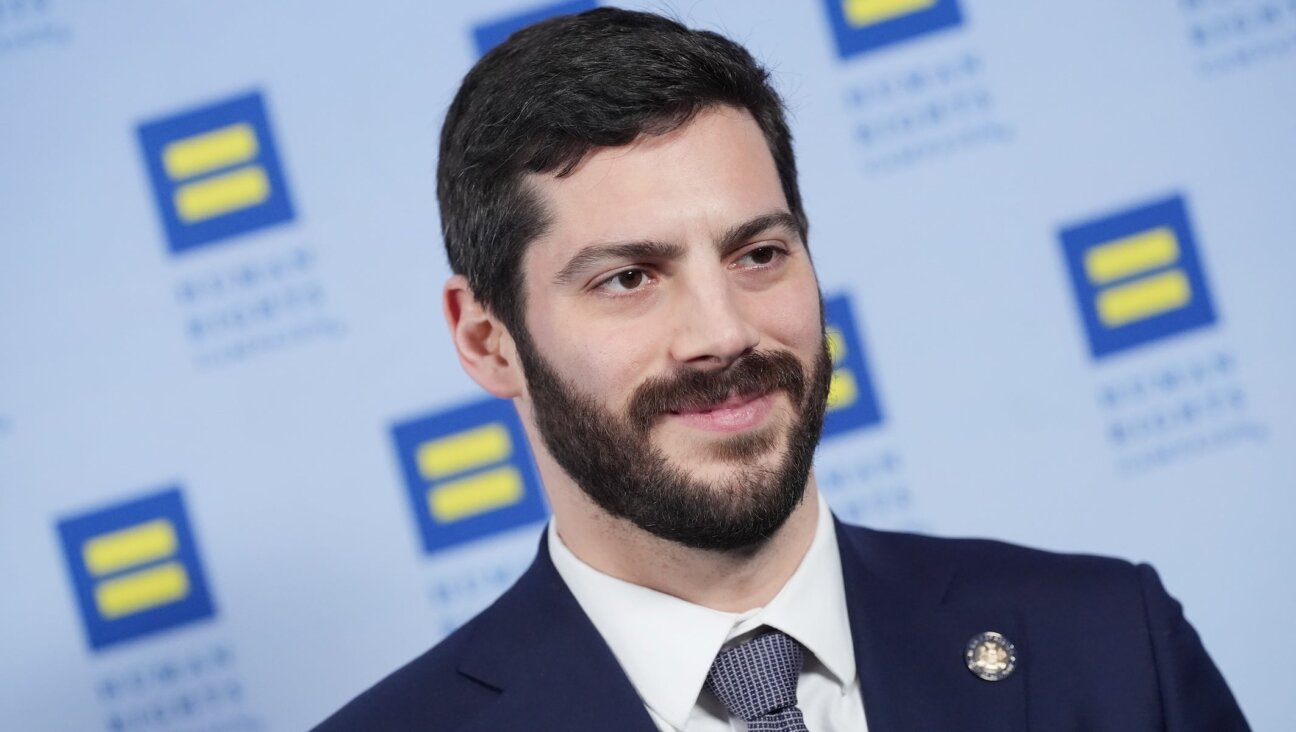
Alex Bores’ supporters disagree on Israel. They agree on him.
The NY-12 candidate’s coalition includes both pro-Israel rabbis and DSA elected officials calling for divestment from Israel
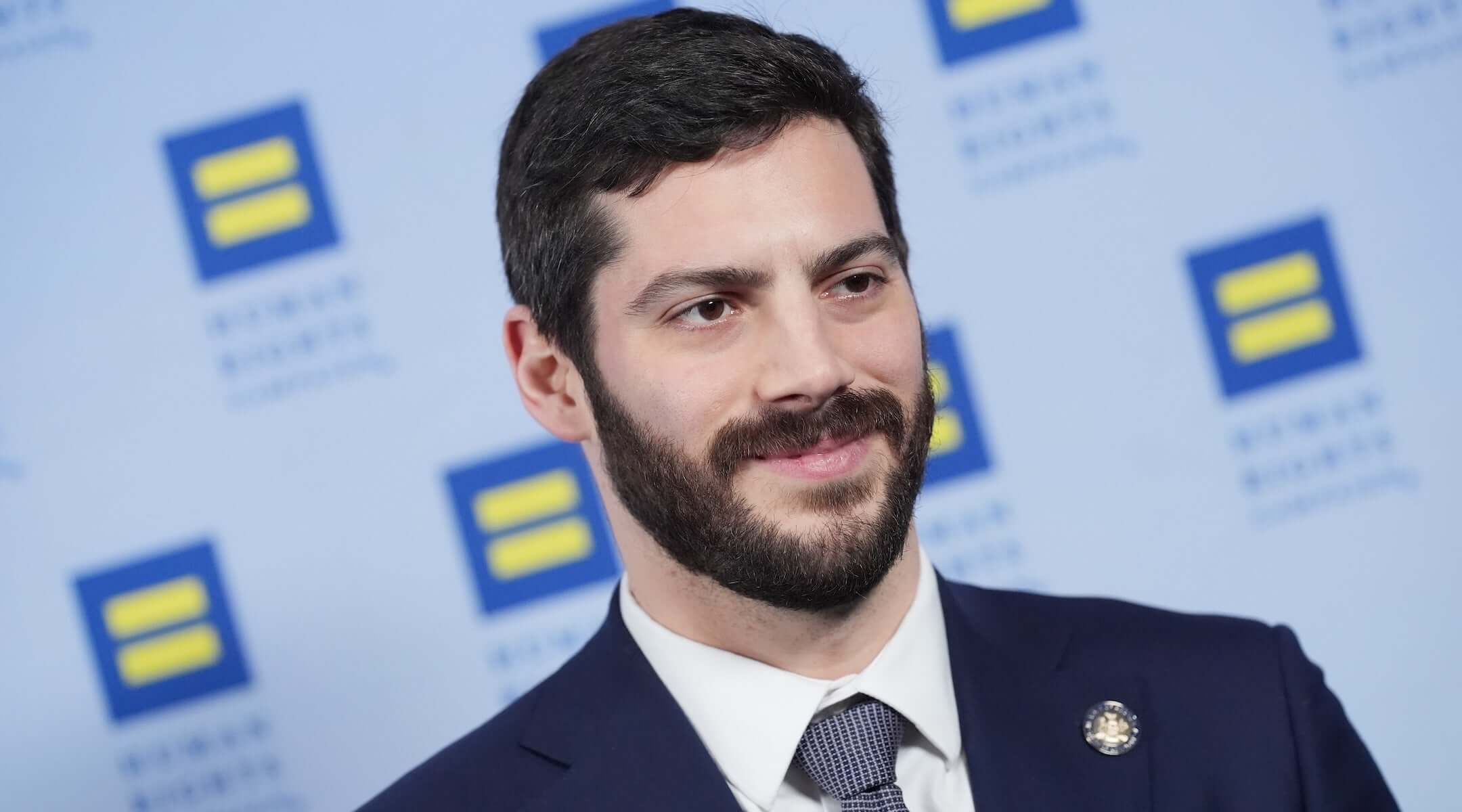
Alex Bores at Human Rights Campaign Greater New York Dinner held at the Marriott Marquis, New York, New York, Feb. 7, 2026. (John Nacion/Variety via Getty Images)
(New York Jewish Week) — Alex Bores, who’s running to succeed Rep. Jerry Nadler in Congress, is threading a very delicate needle.
On the one hand, Bores, a two-term New York State Assembly member from the Upper East Side, has garnered support from a number of Jewish leaders and political moderates who tout his support for Israel. He marches annually in the city’s Israel Day Parade and has resisted growing calls for Democratic politicians to support conditioning military aid to Israel.
At the same time, he’s being backed by a number of the left-wing groups and individuals calling for those very conditions.
Those two camps seldom coexist on a single candidate’s list of endorsements, especially as Israel has become a major wedge issue this midterm election cycle. But Bores, who has put a promise to regulate artificial intelligence at the center of his campaign for New York’s 12th Congressional District, has managed to maintain the coalition.
“You could make a sitcom,” said Cameron Kasky, a former candidate in the race who’s now backing Bores, referring to what he called the “Boalition.” “If you put 12 Alex Bores endorsers in a mansion together and showed up with a reality TV crew, you could make the most must-watch television in the entire world.”
Scroll through the “Endorsements” page on Bores’ campaign website and you’ll find Chi Osse, the democratic socialist City Council member who’s called for divesting city pension funds from Israel bonds, just a couple rows down from Carolyn Maloney, the former Upper East Side representative who was a staunch supporter of Israel in Congress.
Progressive groups such as Bernie Sanders’ Our Revolution and PSC-CUNY, the City University of New York’s staff-faculty union, are backing the same candidate who drew the support of ActJew, which supports more centrist candidates and calls itself “a response to a political and social landscape that normalizes antisemitic and anti-Israel activity and rhetoric.” (ActJew endorsed both Bores and Micah Lasher in the race.)
Bores’ endorsers include some of Mayor Zohran Mamdani’s political allies, such as failed City Council candidate Lindsey Boylan, and vocal critics of the mayor including Fabien Levy, a Jewish spokesperson for Mamdani’s predecessor, Eric Adams.
“I can’t imagine the Bores campaign hasn’t occasionally looked at each other and been like, ‘What is happening right now?’” Kasky said.
So how is Bores pulling it off?
For progressive groups, the answer lies, at least in part, in Bores’ work on AI.
“He put forward the country’s strongest regulation of the AI industry to protect Americans from those who want no rules and only care about unfettered power and profit,” wrote Our Revolution’s executive director, Joseph Geevarghese, in an endorsement announcement. Geevarghese was referring to the RAISE Act, a state law that Bores introduced to impart transparency and safety regulations on AI models.
As an elected official, Bores is no political outsider, though the 35-year-old’s background in the tech industry differentiates him from fellow frontrunner Lasher, who’s spent decades working for politicians such as Nadler, Gov. Kathy Hochul and Mike Bloomberg, the former mayor.
Bores’ resume includes a nearly five-year stint at the tech company Palantir, starting as a data scientist in 2014 and working his way up to become the U.S. government lead. That gig has complicated how some progressives see Bores, given Palantir’s work with ICE, the Immigration and Customs Enforcement agency that Bores himself has called to abolish. He has repeatedly said that he quit Palantir over its contract with ICE back in 2019, and that he chose “principle over my career and millions of dollars.”
Pundits such as center-left commentator Matthew Yglesias — who has also joined the Bores coalition — say there is a “unique value” to him winning because of his promise to enforce AI regulations and the message that it would send to the anti-regulation PACs that have been spending against him. Yglesias added that Lasher, too, would be “an above-average House member.”
But in a race with little daylight between the two frontrunners — particularly regarding the U.S.-Israel relationship — Bores’ AI focus is setting him apart. And rather than sit out the race due to differences on Israel, a number of progressive groups are backing him anyways.
“I think progressives see something in Alex that is a testament to a resolve he’s going to bring,” said Kasky, who has advocated for policies such as an arms embargo on Israel. “And I think that that is enough for progressive groups to cede ground on the issue of Israel-Palestine, and frankly the issue of Israel and the Middle East region as a whole, which is getting increasingly severe.”
The makeup of the district itself plays a role as well: As one of the country’s most heavily Jewish districts, NY-12 is seen as less hospitable than other deep-blue districts for a “Squad”-type insurgent candidate. John F. Kennedy’s grandson Jack Schlossberg is the only major candidate who calls for conditioning aid and blocking weapons sales to Israel, but he has dropped in recent polls as he’s faced questions over his lack of experience.
Bores, Lasher and Schlossberg are all listed as “primary approved” candidates by J Street, the liberal pro-Israel organization.
Bores has confirmed that Our Revolution asked him about Israel and gave him its endorsement despite not being aligned on the issue. During a candidate forum in May, he said that “we need to make it acceptable for there to be people in progressive spaces that still believe in the right of Israel to exist and to defend itself.”
Michael Miller, who was CEO of the Jewish Community Relations Council of New York for 36 years, is endorsing Bores and wrote in a Facebook post that Bores is a “steadfast supporter of Israel as a Jewish and democratic state.”
In an interview, Miller — whom Bores named in a recent Temple Emanu-El forum as a Jewish American that he admires — said he felt assured that Bores’ support from groups such as Our Revolution had mostly to do with his AI work.
“The fact that he’s receiving support from a coalition that includes decidedly left-wing supporters doesn’t trouble me for as long as the issues of central concern to me — antisemitism and support for Israel — are those issues where he has given his support, and with which he has identified,” Miller said.
Miller added that he believes Bores’ Jewish family — his wife, Darya (who recently appeared in a campaign ad), and son, Charlie, are both Jewish — plays a “large role in how he thinks about matters of concern to the Jewish community.”
A number of Jewish celebrities in the district have embraced Bores. The Oscar-winning songwriter Benj Pasek and Jewish cookbook author Jake Cohen posted photos on social media showing them at a Bores event in a private home that included a conversation with journalist Laurie Segall about AI.
On the same day, Miller and more than 20 other local Jewish leaders and elected officials signed a letter endorsing Bores. The letter emphasized his record of combating antisemitism, pointing to measures such as securing funds for Holocaust survivor programs, funding security for synagogues and Jewish institutions, and organizing trips for students to Jewish museums.
But for some Jewish groups, Bores’ support from left-wing groups critical of Israel has given them pause.
Moshe Spern, a board member of the group ActJew, called on Bores to drop his PSC-CUNY endorsement back in March, saying the union is “consistently calling for divestments from Israel” and has “downplayed and ignored Jewish students/faculty experiences since 10/7.” PSC-CUNY revoked a pro-BDS resolution against Israel in February 2025, after its initial passage sparked backlash, including from Hochul and CUNY itself. Spern told JTA he pushed for the group to rescind its endorsement, but was outvoted.
Bores replied to Spern’s tweet, writing that “every major candidate pursued” PSC-CUNY’s endorsement, and that his endorsement interview focused on funding public education and regulating AI. Bores added that he has “spoken out against antisemitic incidents on campuses (including CUNY specifically) and will continue to do so.”
Meanwhile, some progressive groups have refrained from endorsing Bores because of his pro-Israel politics.
“It’s pretty much a non-starter for us to endorse someone who wouldn’t sign on to the Block the Bombs,” said Sophie Ellman-Golan, director of communications of Jews for Racial and Economic Justice, referring to the Block the Bombs to Israel Act that would prohibit certain weapons sales to the country. She added that Bores also voted for a statewide “buffer zone” bill meant to curb protests outside houses of worship, which Lasher introduced, and which JFREJ has vehemently opposed throughout the year.
According to the latest polling data, despite Bores’ greater support from the left, there’s been little difference in the number of voters who are responding to each candidate.
“You go into any Jewish WhatsApp chat — I see this as an Upper East Side resident myself — and there’s no consensus,” said Michael Harris, ActJew’s CEO. “The consensus is Bores or Lasher.”
Did you know that only 2% of Forward readers donate to support our nonprofit newsroom? That 2% make it possible for millions to read the Forward without a paywall or subscription — removing any barriers to the full and fair Jewish story.
But while the Forward is free to read, it isn’t free to produce. Big stories — like deep dives into the antisemitism data, political scoops or reporting trips to college campuses — take months of research and fact-checking. All while we keep you informed of what you need to know each day.
— Rachel Fishman Feddersen, Forward Publisher & CEO
Support our mission to tell the Jewish story fully and fairly.